
Last updated November 24, 2026
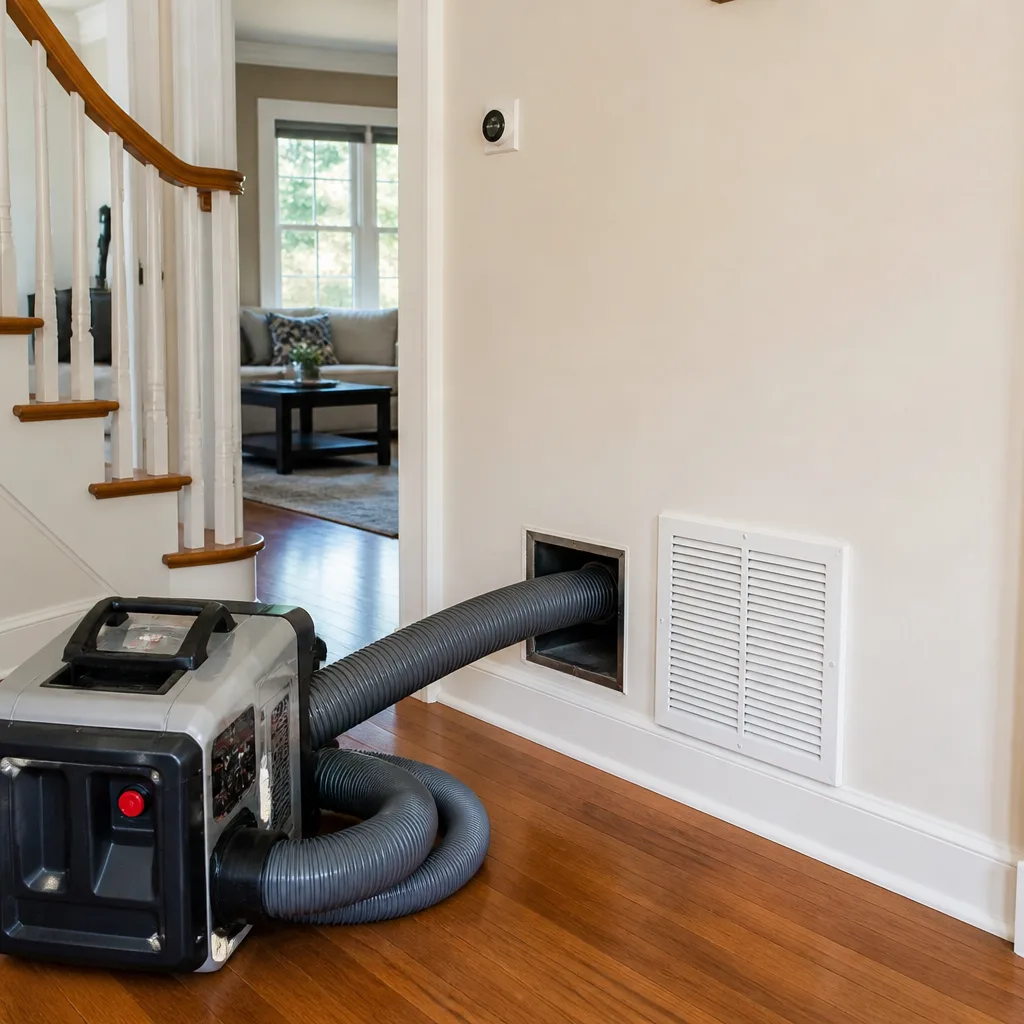 Whole-home duct cleaning
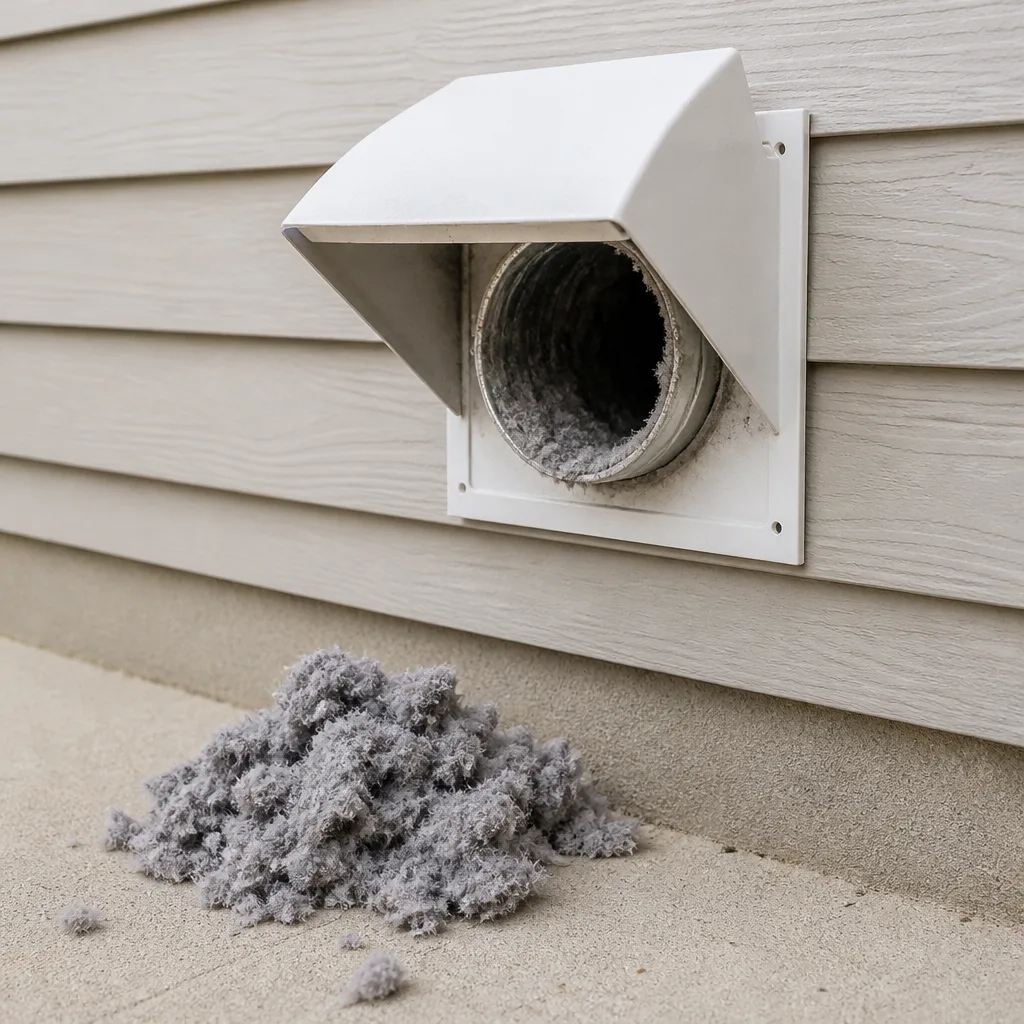 Dryer vent cleaning
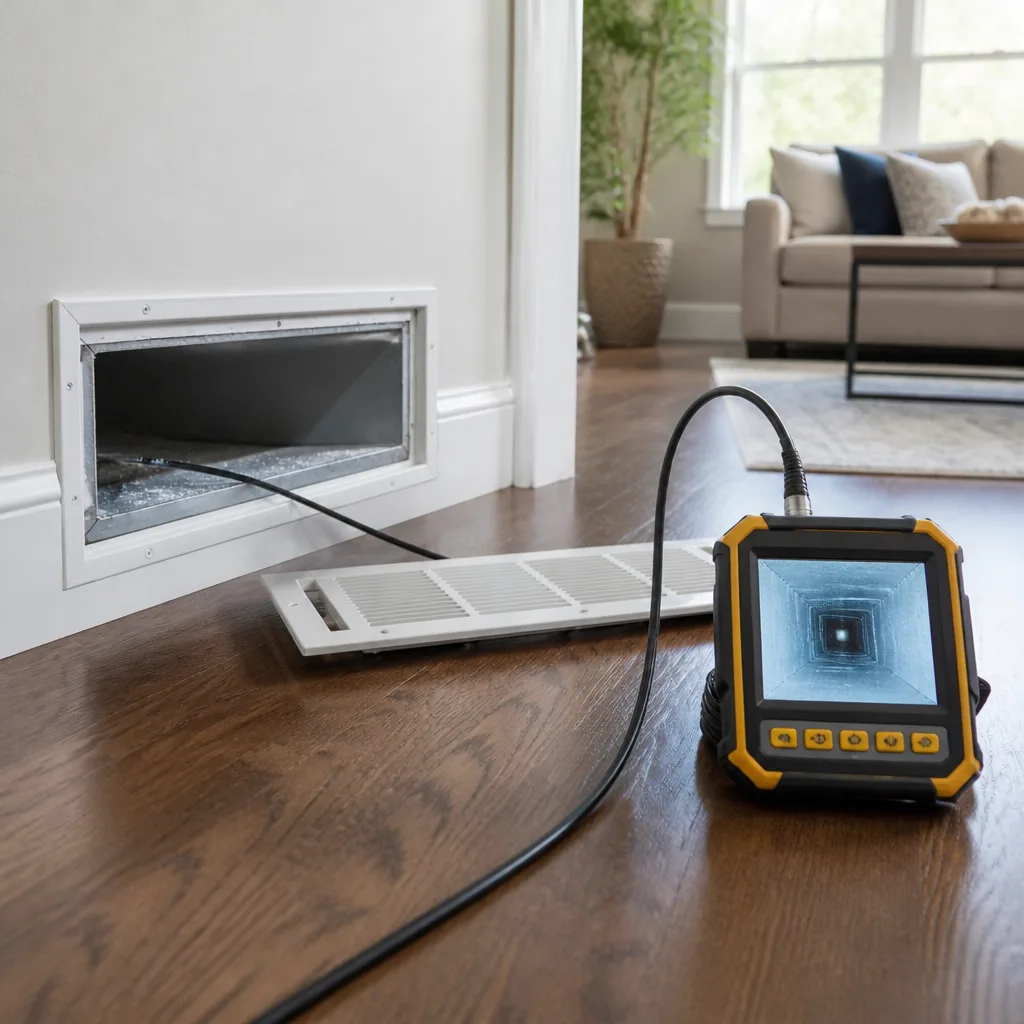 Camera inspection
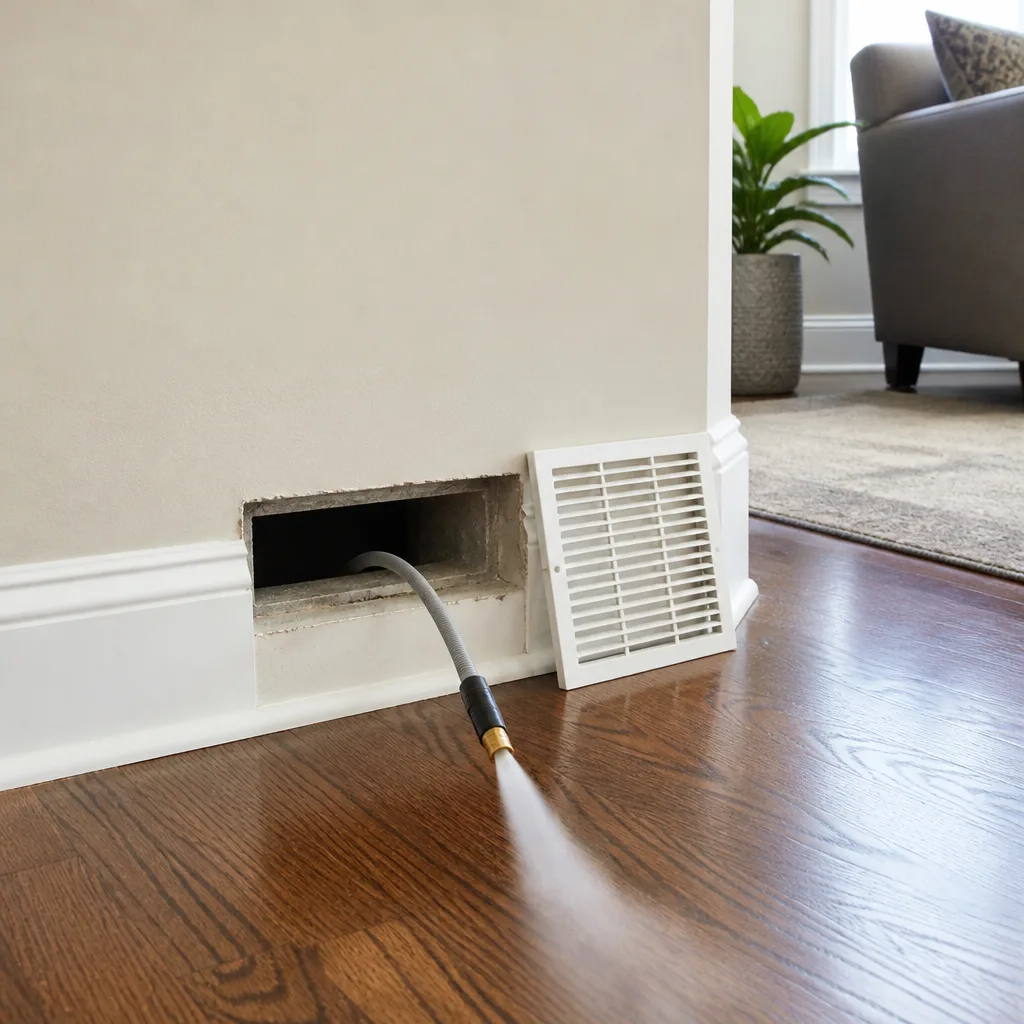 Sanitizing & deodorizing
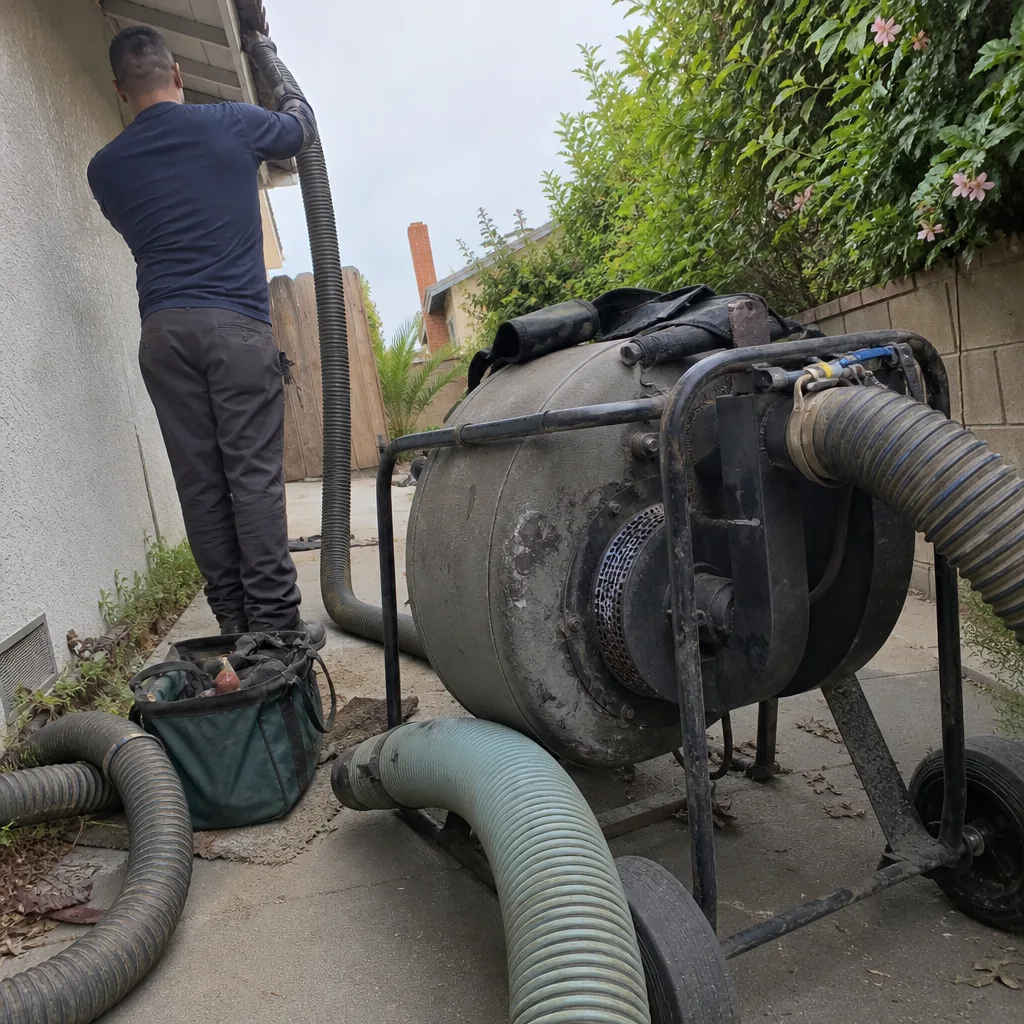
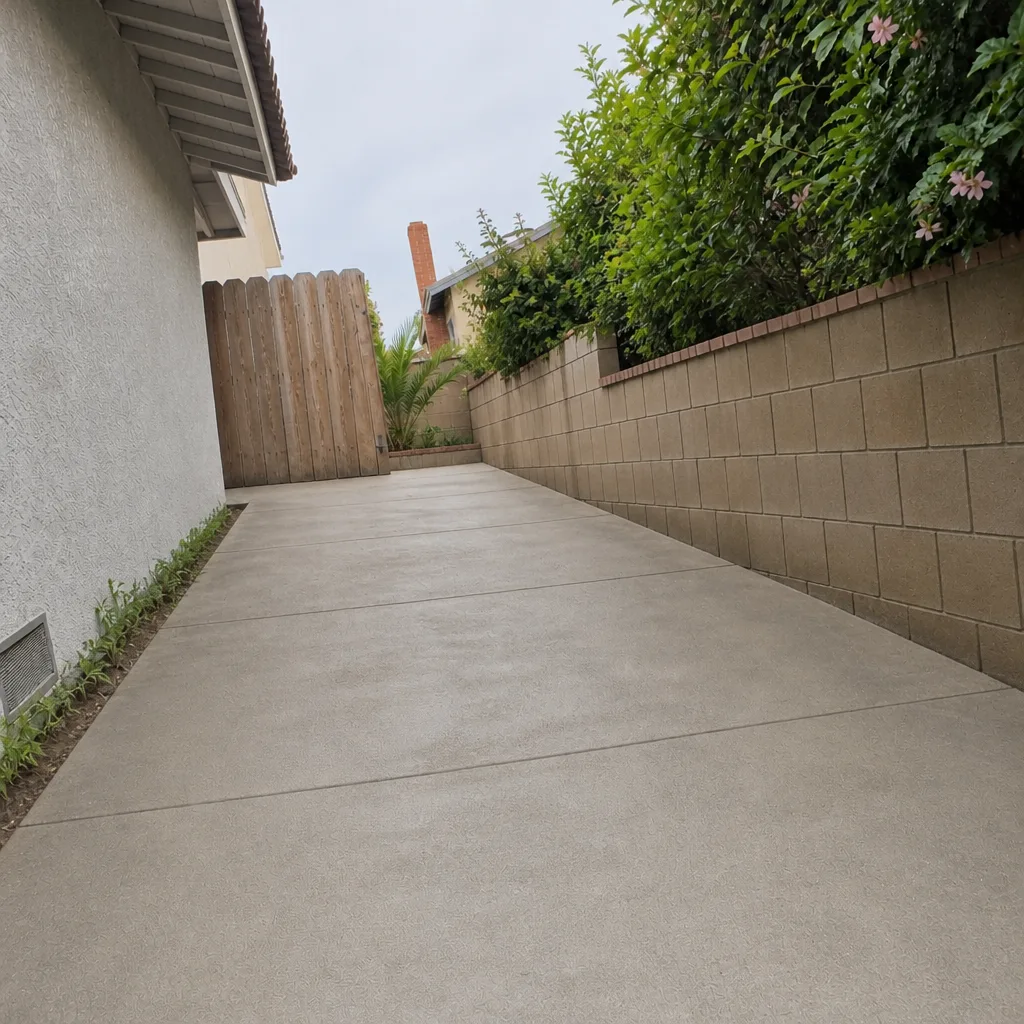
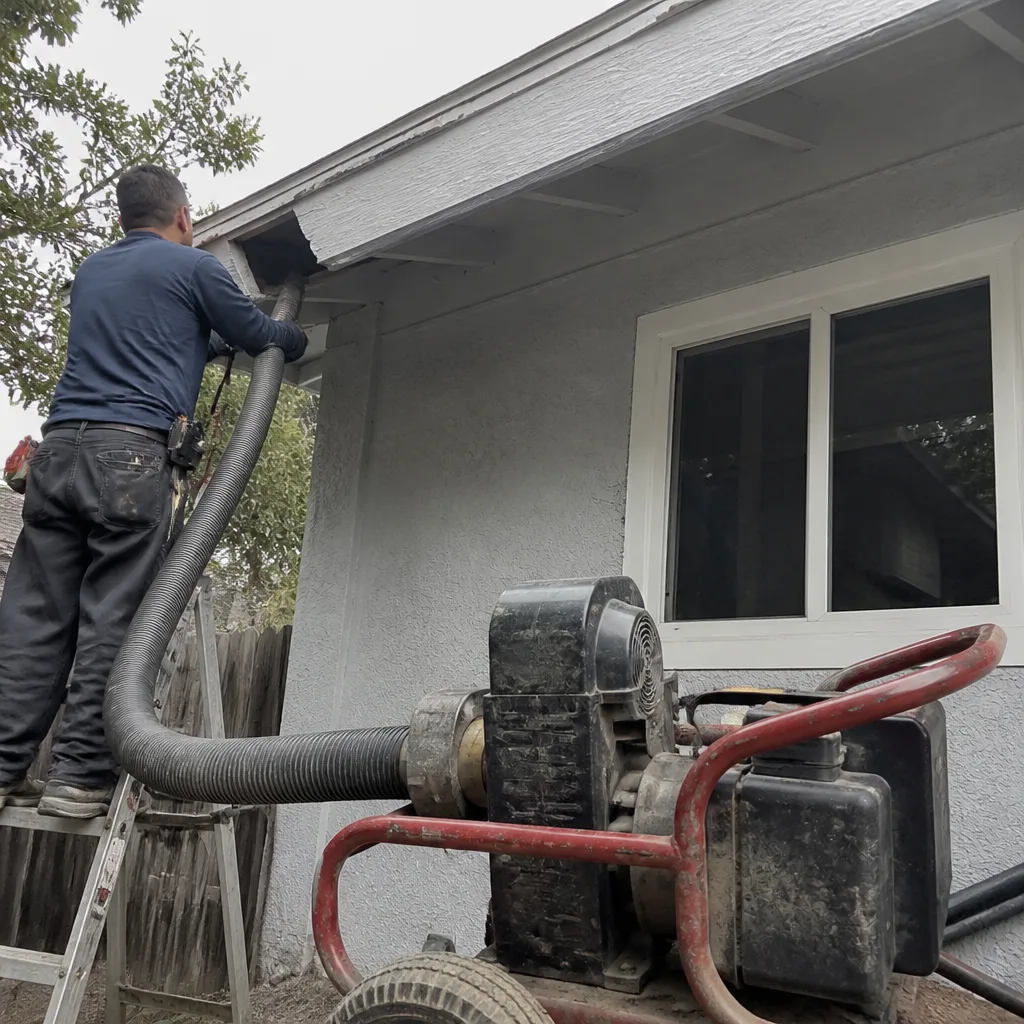
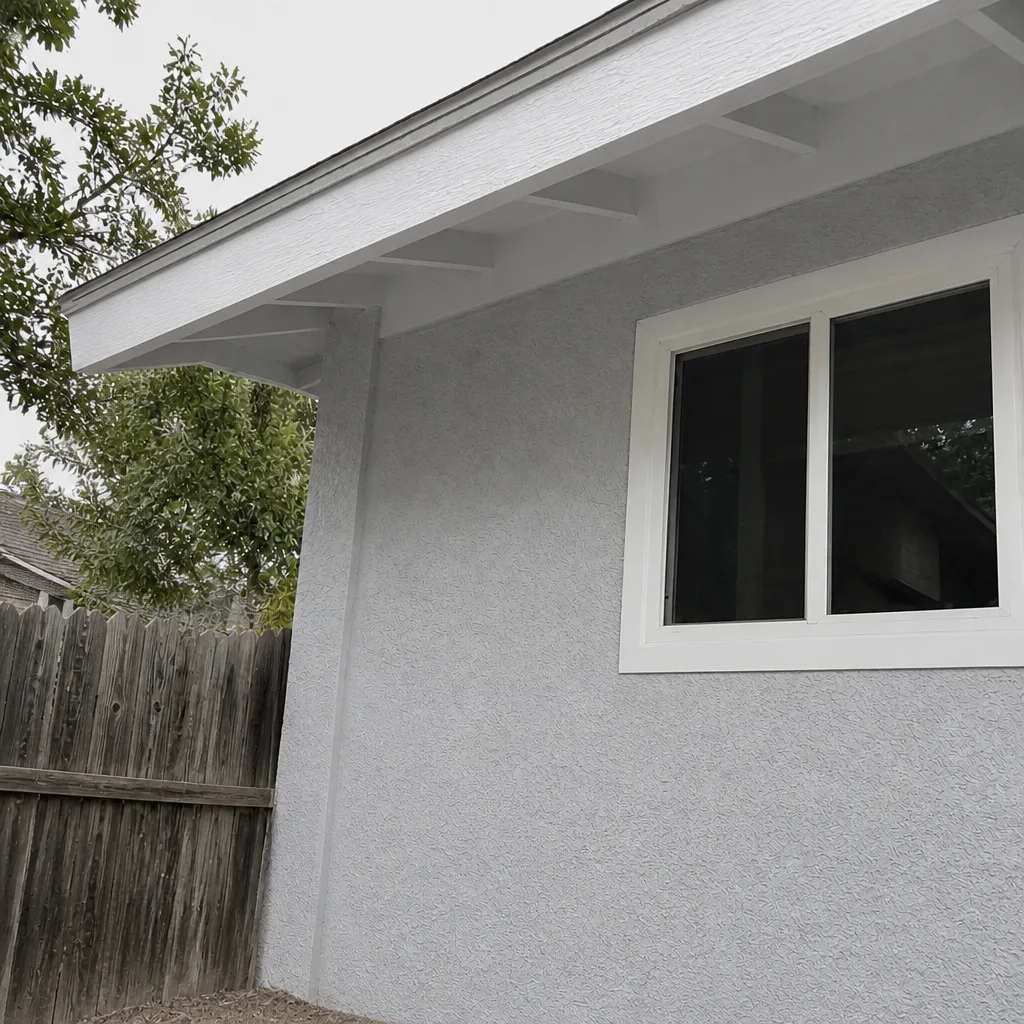
Whole-system duct and dryer vent check with before-and-after photos - you see exactly what came out of your vents
That "$99 whole-house special" is a bait ad - the real number appears once they are in your hallway, or the "clean" is a shop-vac at the register. We photograph the inside of your ducts before and after instead.
Air Duct Cleaning Troubleshooting in East Anaheim: Common Problems and How to Fix Them
A homeowner who keeps changing air filters every three weeks isn’t facing a filter problem. They’re facing a duct problem, and no filter on the shelf will solve it. That’s the hardest part of duct troubleshooting: the symptom is rarely where the cause lives. A musty smell at startup, a bedroom that never gets warm, a register that pushes air like a whisper, a filter that turns grey in a month instead of three. Each of those points to a different mechanical or contamination condition, and each one needs a different response. This guide is written from East Anaheim, where we work on these systems regularly. We map symptoms to root causes so you stop paying for the wrong fix and start with the job that actually solves it.
Quick Answer
Air duct problems usually trace back to one of four conditions: contamination buildup (dust, debris, or biological growth in the ductwork), duct leakage (breaks or disconnected runs losing air inside walls or attics), airflow imbalance (the duct system is intact but poorly proportioned), or a mechanical issue with the blower or air handler. Cleaning solves contamination. Sealing solves leakage. Balancing solves airflow. A service call solves mechanical. The four are often confused in East Anaheim because the symptoms overlap. Getting the category right first is what separates a fix from a guessing game.
Styles & brands we work with
- Whole-home duct cleaning
- Dryer vent cleaning
- Camera inspection
- Sanitizing & deodorizing
Table of Contents
- The Symptom-to-Root-Cause Map
- Contamination Buildup: The Debris Bloom
- Mold Growth vs. Dust Buildup: Reading the Odor
- Duct Leakage and the Filter-Clogging Pattern
- Uneven Temperatures: Balance Problem or Leakage?
- Blower and Mechanical Issues
- What You Can Check Yourself and What Needs a Pressure Test
- The Four Fixes and What Each One Involves
The Symptom-to-Root-Cause Map
Before touching anything, learn to read the symptom. Duct systems telegraph what’s wrong through sensory cues people walk past every day. A homeowner who notices the filter clogging schedule, the smell on startup, or the temperature split between rooms is already holding the diagnostic information. They just haven’t sorted it into a category yet.
Here’s the map we use during a walkthrough:
- Filter clogs every 2 to 4 weeks instead of every 2 to 3 months: almost always a return duct breach pulling air from a wall cavity, attic, or garage into the system. This is leakage, not contamination.
- Musty, damp, or earthy smell at HVAC startup: biological growth somewhere in the system, usually on a coil, drain pan, or insulated duct interior. Odor is a contamination signal, not a cleaning-buildup signal.
- Dusty, dry, chalky smell at startup: accumulated dry debris in the ducts or on the heat exchanger, typical when a system hasn’t been serviced in a long time.
- Visible dust blowing out of a register when you turn the system on: active debris in the run feeding that register, or a return duct breach near it.
- Weak airflow from some registers, strong from others: imbalance or a disconnected run. If the return registers are also weak, suspect a blower problem.
- Whistling or rattling at registers: airflow is being choked, either at a filter, a damper, or a crushed duct section.
- Rooms that never match each other by 4 or more degrees: the balance of the system, not the cleanliness of it.
East Anaheim homes built during the mid-century tract buildout sit on a mix of original sheet metal and later flex duct. That combination tends to fail at the same joints – flex runs at the plenum collar, crimped joints on the sheet metal trunks – and it’s one reason the filter-clogging pattern shows up so often here. Read the symptom, then read the category. The fix follows.
Contamination Buildup: The Debris Bloom
Contamination is the category most homeowners assume they have, and it’s the one that gets diagnosed wrong most often. True contamination means a measurable layer of dust, construction debris, pet hair, or biological growth has accumulated inside the ductwork itself. That’s not the same as dust on the grille or inside the return plenum. Each of those can be cleaned. Only one of them requires a full duct clearing.
Three conditions point to real contamination:
- Dust plumes visible when you shine a light into a supply register. Shine a flashlight at an angle across the register opening while the system is off. If you see a fur-like coating on the duct walls, that’s debris that isn’t going to move on its own.
- Pet dander and hair visible in the return grille. East Anaheim’s housing stock includes a lot of single-family homes with pets, and a return grille that looks like a fur mat tells you dander is being pulled into the return run on every cycle.
- A dry, chalky odor that gets stronger over the first 30 seconds after startup. This is the signature of accumulated dry debris being disturbed. Dusty smells are the distinction between “needs cleaning” and “needs attention now.”
When we handle air duct cleaning, the tool choice matters more than most homeowners realize. Improvised shop-vac work pulls surface dust but leaves the bonded layer against the duct wall. Purpose-built equipment from Rotobrush and Nikro uses agitation with negative pressure so the debris is loosened and captured at once. That’s the difference between a system that looks clean and one that stays clean for years.
The right response to confirmed contamination is a full cleaning of the supply and return side, then a look at whether the source of the contamination is still pulling air from somewhere it shouldn’t. Cleaning without addressing the source is why some homeowners end up back at the same problem in a year. We see it as two steps: clean it, then close the door the debris came through.
Mold Growth vs. Dust Buildup: Reading the Odor
Odor is the most underrated diagnostic tool in duct work. Airflow is invisible. Temperature is measurable. But the nose gets a direct read on what’s inside the system every time the air handler turns on, and the two dominant signatures tell you two different things.
Musty, damp, or earthy odor. This is a biological growth signal. It usually originates where moisture collects: the evaporator coil, the drain pan, wet insulation inside a duct run, or a return plenum that’s been drawing humid air from a crawlspace or wall cavity. East Anaheim’s mild, humid-enough spring and summer shoulder seasons can sustain that growth in a system that stays cool and slightly damp. If the musty smell is stronger near the indoor unit or at certain registers, that’s where the growth is.
Dusty, dry, chalky, or “old building” odor. This is debris. Dry dust, sheetrock dust from remodeling, pet hair, or construction particles. It gets disturbed on startup and settles when the system is off. It doesn’t smell like moisture because it isn’t.
Why the distinction matters: the fixes are different. Dust gets cleaned. Moisture growth gets cleaned, then sanitized, and then the moisture source has to be addressed or the growth returns. That’s why we offer air quality sanitizing as a step in the process, not as an upsell – the cleaning removes the growth, the sanitizing neutralizes what’s left in the system, and the moisture diagnosis prevents the recurrence.
We also carry Aprilaire and Honeywell whole-home filtration and humidity control systems because the best fix for recurring moisture growth is often to get indoor humidity under control at the source. If the system can hold a consistent humidity level, the coil and duct interior stay dry enough that growth doesn’t come back on the next season.
Duct Leakage and the Filter-Clogging Pattern
Here’s the pattern that fools most homeowners: they assume a filter that clogs fast means a dirty house. The real answer is almost always a return duct breach. If the filter clogs every three or four weeks instead of every 8 to 12, air is being pulled into the system from somewhere it should never come from – the attic, a wall cavity, a garage, or a crawlspace. That air is carrying insulation fibers, drywall dust, and framing debris directly into the filter.
You can confirm this at home in about 10 minutes:
- Check the filter slot for dust trails. Look at the housing around the filter. If there’s a visible line of dust streaking in from one side, air is entering from that direction.
- Look at the return-side duct joints you can see. Flex duct connections at the plenum and at any junction box are the first to fail. Loose tape, disconnected collars, and crushed runs are all breaches.
- Feel for air at the return grilles when the system is on but the fan is off. If you feel air moving at a return register when the system is quiet, the run is being pressurized by something else – and it’s probably connecting to a cavity.
- Sniff near a return grille. A dusty smell at the return registers (rather than at supplies) points to cavity air being pulled in.
Duct leakage is also an energy problem. Every cubic foot pulled from an attic or wall cavity has to be heated or cooled to match the house, and that’s why a leaking system shows up as high utility bills before the homeowner connects it to the ductwork. It’s also why we treat duct repair and sealing as a first-class service rather than an add-on to cleaning. HVAC cleaning is the right answer for a dirty system, but it doesn’t close a breach. Sealing does.
When we find a leak, we don’t just tape it. We map where the run is losing air, close the breach with the right sealant for the duct material, and confirm the run is now sealed to the pressure side. Guardsman-branded sealing products are in our process because the finish holds up through thermal cycling, which is where cheap tape fails first.
Uneven Temperatures: Balance Problem or Leakage?
East Anaheim has a specific housing pattern that makes this question show up constantly: homes built between the 1950s and 1980s with additions added later, sometimes multiple additions. The duct system was designed for the original footprint. The addition was tied into the same trunk. And now the back bedroom runs 5 degrees off the rest of the house.
Uneven temperatures can come from either imbalance or leakage, and they require different service. Here’s how to tell them apart before you pay for anything:
- Check airflow at the affected register first. If the register pushes air comparable to others, the problem is likely balance or leakage downstream. If it barely pushes any, the run may be disconnected, kinked, or crushed.
- Check the door-close test. Close the door to the affected room, then crack it open an inch. If air rushes in or out, the room is pressure-imbalanced, which often means the return is undersized for the room.
- Compare the affected room to the room next door with the system off and on. If the gap is constant regardless of the system running, it’s probably envelope insulation. If the gap widens when the system runs, it’s duct-related.
- Feel the duct at the register boot. If the boot feels cold while the register air feels warm, there’s leakage at the connection.
If you’ve confirmed the system is pushing air but not delivering it where it’s needed, you’re looking at either a leak that’s stealing conditioned air, or a system that was never balanced for the current footprint. That’s a different service from cleaning. Cleaning improves air quality. It does not equalize room temperatures. We say that plainly because a lot of homeowners pay for cleaning hoping it solves a temperature problem, and it doesn’t.
Blower and Mechanical Issues
If airflow is weak everywhere – all supply registers, all return registers, at the same time – the problem is upstream of the ducts. The blower, the air handler, the filter housing, or the evaporator coil is the bottleneck. Duct cleaning cannot fix any of that, and paying for it is a waste of money until the mechanical issue is resolved.
Signs you’re dealing with mechanical, not ductwork:
- Airflow is weak at every register, not just one. A single weak register is a duct problem. System-wide weakness is a blower or filter problem.
- The blower runs but the air feels weak up close. This can mean a dirty blower wheel, a failing motor, or a heavily loaded evaporator coil blocking the airflow path.
- Loud humming or grinding from the air handler. Motor or bearing wear. Turn the system off and get it looked at rather than running it through the problem.
- The system short-cycles or won’t hold temperature. Could be an oversized filter on a system that needs more airflow, a failing capacitor, or a refrigerant issue. All mechanical.
The good news for East Anaheim homeowners is that cleaning and mechanical service often pair naturally. If the blower wheel and coil are loaded with dust, the system runs longer, pulls more air, and clogs faster. Clean the mechanical side, then clean the ductwork on top of it, and the system runs at the airflow it was designed for. That’s why we offer full-system HVAC cleaning alongside ductwork, so the blower and coil are addressed in the same visit as the duct runs feeding them.
What we don’t do is pretend a cleaning visit can substitute for a mechanical repair. If our diagnostic walkthrough finds a mechanical fault, the honest answer is that the system needs a service call before cleaning makes sense. We’d rather tell you that upfront than charge you for cleaning a system that’s going to fail in six weeks.
What You Can Check Yourself and What Needs a Pressure Test
Not every symptom needs a truck in the driveway. A lot of the initial sorting can be done with a flashlight and a phone camera in about 30 minutes. The trick is knowing where the home-inspection boundary is – and where real equipment starts earning its place.
The flashlight and phone-camera inspection is enough for these tasks:
- Reading the register for visible debris (angle the light across the opening, don’t shine it straight in).
- Checking the return grille and filter housing for dust trails and air streaks.
- Photographing visible duct joints in the garage, attic access, and utility closet.
- Testing for the door-close pressure imbalance in a cold room.
- Doing the sniff test at the return, at the air handler, and at one or two supply registers in different rooms.
- Checking the filter monthly and writing down the date on the frame – this alone will tell you within two cycles whether you have the fast-clog pattern.
What a pressure test or camera scope is genuinely needed for:
- Confirming whether a duct breach exists in a section you can’t see. If the fast-clog pattern is present but you can’t find a visible breach in an accessible area, a pressure test on the return side will confirm it.
- Finding biological growth in the coil or duct interior. Growth inside a duct run, especially where insulation is involved, needs a camera scope to confirm and locate.
- Measuring whether a room’s airflow problem is balance or leakage. A real airflow measurement beats guessing at register velocity.
- Verifying the seal after a repair. Before-and-after pressure readings are the only way to know a leak is actually closed.
We use Abatement Technologies equipment for source-capture work because contamination control is a defined discipline, not a side benefit of cleaning. When we run an inspection that shows growth or heavy contamination inside a run, containment matters for what stays in the system and what leaves the house. That standard belongs in the diagnostic phase as much as in the cleaning phase.
The Four Fixes and What Each One Involves
Once the symptom is sorted into the right category, the fix is usually straightforward. Here’s how each response works, what it addresses, and how you know it’s done.
Cleaning addresses contamination. It uses agitation to loosen the bonded layer of debris from duct walls, then negative pressure to capture it. It covers supply and return side, plus the plenum, register boots, and grilles. You know it’s done when the inspection camera shows clean duct walls and there’s no visible dust plume at the registers when the system comes back on.
Sealing addresses leakage. Every breach in the return and supply runs gets closed with appropriate sealant, then the run is pressure-tested. You know it’s done when the filter-clogging pattern stops, the room temperatures match more closely, and the airflow at each register reaches the design spec.
Balancing addresses imbalance. Dampers get adjusted, return sizing gets checked, and any crushed or oversized runs get reworked. You know it’s done when each room’s airflow matches its load.
Service call addresses mechanical. Blower, motor, coil, or filter housing issue gets diagnosed and repaired by the appropriate trade. You know it’s done when system-wide airflow returns to normal and stays there.
In practice, most East Anaheim homes we look at need two of the four, not one. Cleaning plus sealing is the most common pair because contamination and leakage share the same root – a system that’s been quietly pulling attic air for years is both dirty and leaking. Repair comes in when a flex run has actually failed. Balancing comes in when an addition has changed the load the system is expected to serve.
We don’t send one technician with one tool and hope the rest sorts out. One call covers your entire air system: cleaning, sealing, sanitizing, and dryer vent cleaning for the fire-safety side of household airflow that duct-cleaning-only contractors leave out. That’s the case for calling a specialist rather than a generalist, especially in a market where the two categories get blurred.
Common Mistakes to Avoid
- Assuming every dusty smell means you need cleaning. A dry, chalky smell usually does, but a musty smell means moisture growth – and cleaning without addressing the moisture source will have you back at the same problem next season. In East Anaheim’s humid shoulder months, this is a real pattern we see.
- Changing the filter more often to “fix” the problem. A filter clogs fast because the air going into it is dirty at the source. Loading a new filter in every three weeks masks the return duct breach without fixing it, and you’ll be at the same spot in a year.
- Paying for cleaning to solve uneven room temperatures. Cleaning doesn’t balance airflow. If the room is cold and the other rooms are fine, you need a balance check or a sealing check before a cleaning visit.
- Sealing a duct leak with tape alone. Consumer tape lifts off within a season or two on a system that thermal-cycles daily. In East Anaheim’s climate the tape sees a lot of heat cycling inside the attic runs. Guardsman-grade sealant and proper mastic hold; tape doesn’t.
- Running a system with a failing blower to “see if it clears.” A stressed motor can seize and damage the air handler. If you hear grinding or the blower is clearly failing, stop running it until it’s looked at.
- Choosing a contractor purely on the lowest quoted price. The industry’s bait-and-switch reputation comes from teaser pricing that expands into a much larger invoice once the crew is on site. Whole-system pricing, agreed before work starts, is the standard that protects you.
- Skipping the dryer vent because “it’s separate.” Dryer vent cleaning is the fire-safety side of household airflow. A clogged dryer vent is a separate appliance risk entirely, and it’s often overlooked by duct-only contractors. Address it once, get it off the list.
See the difference
 Before
 After
 Before
 After
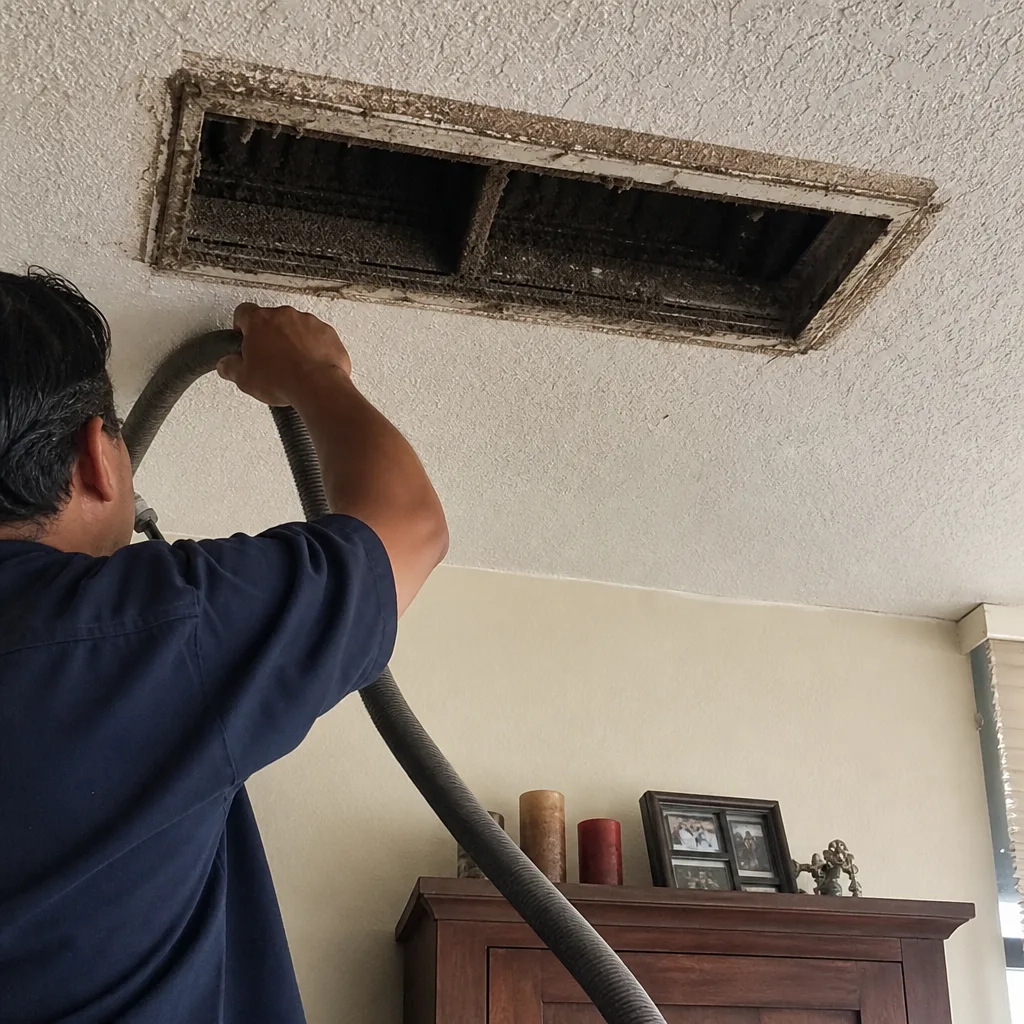 Before
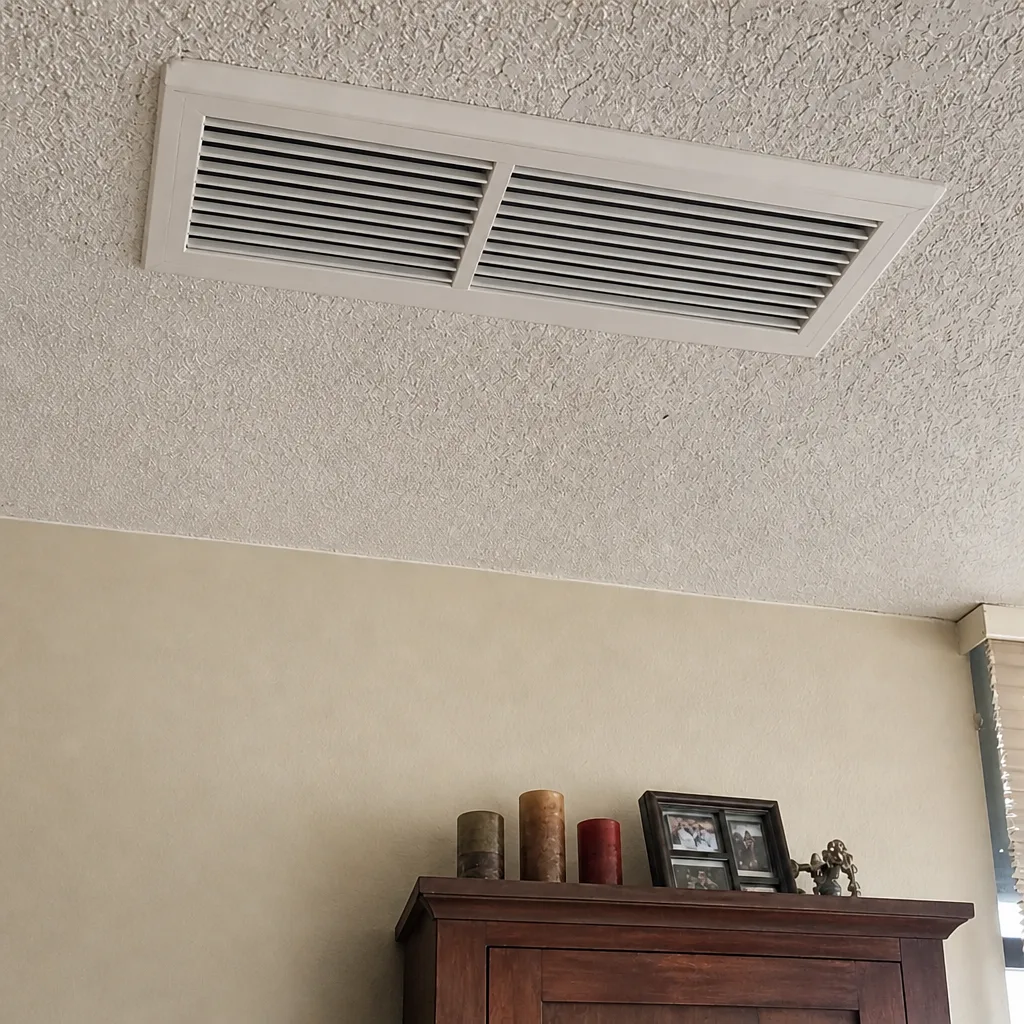 After
When to Call a Professional
Call a professional when your inspection turns up any of these: the fast-clog filter pattern (a filter turning grey in 3 to 4 weeks), visible dust plumes at a register with the system on, a musty smell at startup that doesn’t clear after 30 seconds, a room that runs 4 or more degrees off the rest of the house, a grinding or humming noise at the air handler, or a dryer that takes noticeably longer to dry a load than it used to. Any of those signals a condition outside the flashlight-and-phone-camera boundary. Get it looked at with proper equipment before it turns into a larger repair. Air Duct Cleaning East Anaheim offers free estimates in East Anaheim – call (844) 834-1661. We answer 24/7. Fast dispatch from 7am to 7pm, Sunday through Friday.
Frequently Asked Questions
Every 3 to 5 years is a reasonable baseline for most East Anaheim homes, but the real answer depends on your filter-clogging pattern and your home’s ductwork. If the filter clogs in a month, the cleaning schedule is secondary to finding the breach. If the filter runs its full 2 to 3 month cycle and the registers look clean, you can stretch the interval longer. Call (844) 834-1661 for an exact inspection-based recommendation – estimates are free.
Usually because the cheaper quote covers less: surface vacuuming without agitation, no return side, no verification, no sealing, or per-vent pricing that discourages a real full-system job. Purpose-built equipment from Rotobrush, Nikro, and Abatement Technologies costs more to run than a shop vac, and that shows up in a real whole-system quote. The better question is not “what’s the cheapest” but “what’s included, and is the price flat per system?” Call (844) 834-1661 for a written, whole-system estimate before any work starts.
Ask for before-and-after photos of your own ducts, not stock images. A serious contractor takes photos during the inspection and again after cleaning, shows the pressure readings if sealing was involved, and walks you through what changed. If a crew won’t photograph your system, that’s a signal. Call (844) 834-1661 to book an inspection with photo documentation – estimates are free.
Sealing, in most cases. That pattern signals a return duct breach pulling attic or wall cavity air into the system, which is a leakage problem, not a cleanliness one. Cleaning the ducts will not stop it. A pressure test confirms the breach location, and proper sealing closes it. Call (844) 834-1661 to have the return side pressure-tested – the estimate is free.
No. Cleaning improves air quality; it doesn’t rebalance airflow. Uneven temperatures come from duct leakage, undersized returns, or a system designed before an addition was built, and each of those is addressed by sealing or rebalancing, not by cleaning. If you have a room that’s 4 or more degrees off the rest of the house, ask for a balance and leakage inspection instead of a cleaning. Call (844) 834-1661 for a free walkthrough.
Musty means biological growth – the moisture-loving kind that shows up on coils, drain pans, and damp duct insulation. Dusty means dry debris being disturbed: sheetrock dust, pet hair, construction particles. Musty needs cleaning plus sanitizing plus a moisture-source fix. Dusty needs cleaning plus the source of the debris addressed. Different categories, different responses. Call (844) 834-1661 for a walkthrough that confirms which one you have – estimates are free.
The Bottom Line
Most duct “problems” in East Anaheim are one of four conditions: contamination, leakage, imbalance, or mechanical. The four overlap, which is why the same symptom can have three different explanations and why going straight to cleaning when the real issue is sealing leaves you back at the same filter in six weeks. Read the symptom, sort it into the category, then call the specialist who can handle all four. Air Duct Cleaning East Anaheim runs the full scope – cleaning, sealing, sanitizing, dryer vent work, and HVAC service – with purpose-built equipment from Rotobrush, Nikro, and Abatement Technologies, working with Aprilaire and Honeywell air quality systems. Call (844) 834-1661 for a free estimate. We answer 24/7. Fast dispatch from 7am to 7pm, Sunday through Friday. See what’s in your ducts before we start.
Written by the team at Air Duct Cleaning East Anaheim.