
Last updated November 24, 2026
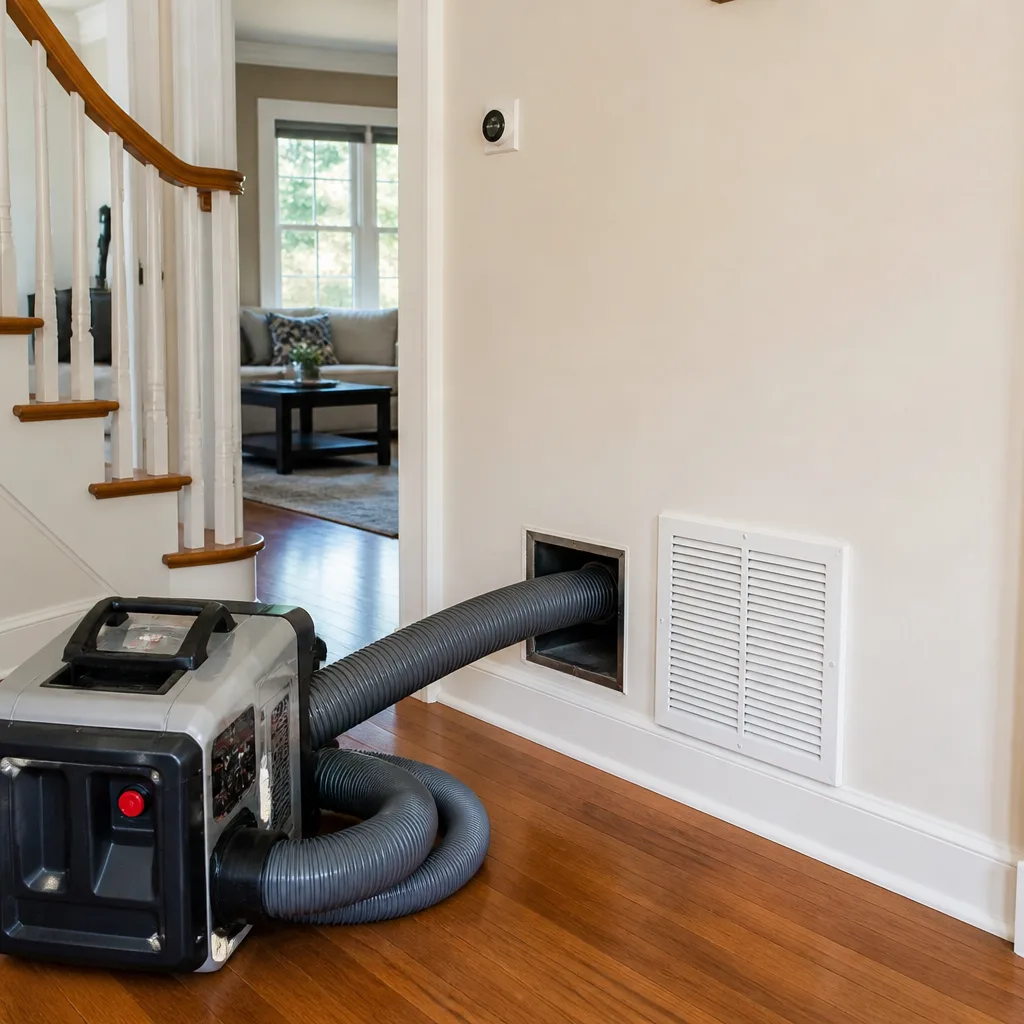 Whole-home duct cleaning
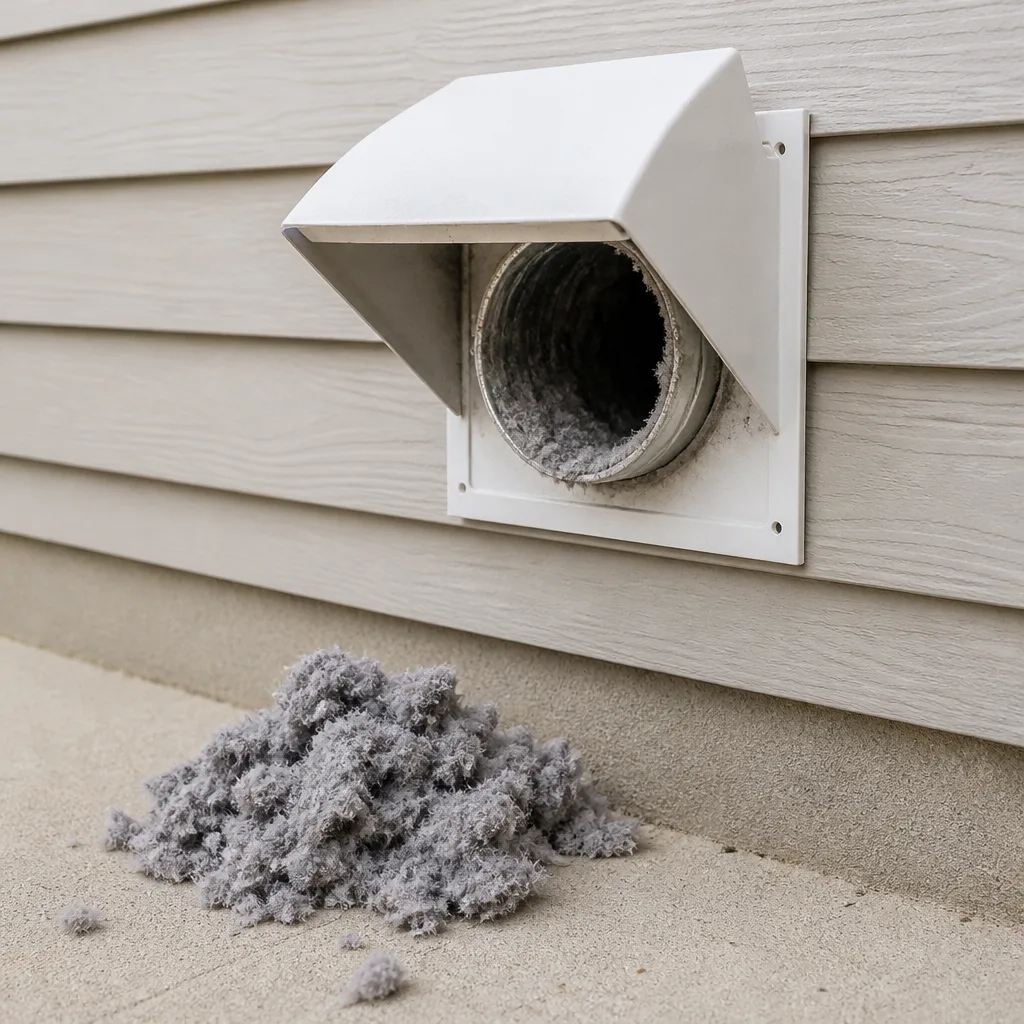 Dryer vent cleaning
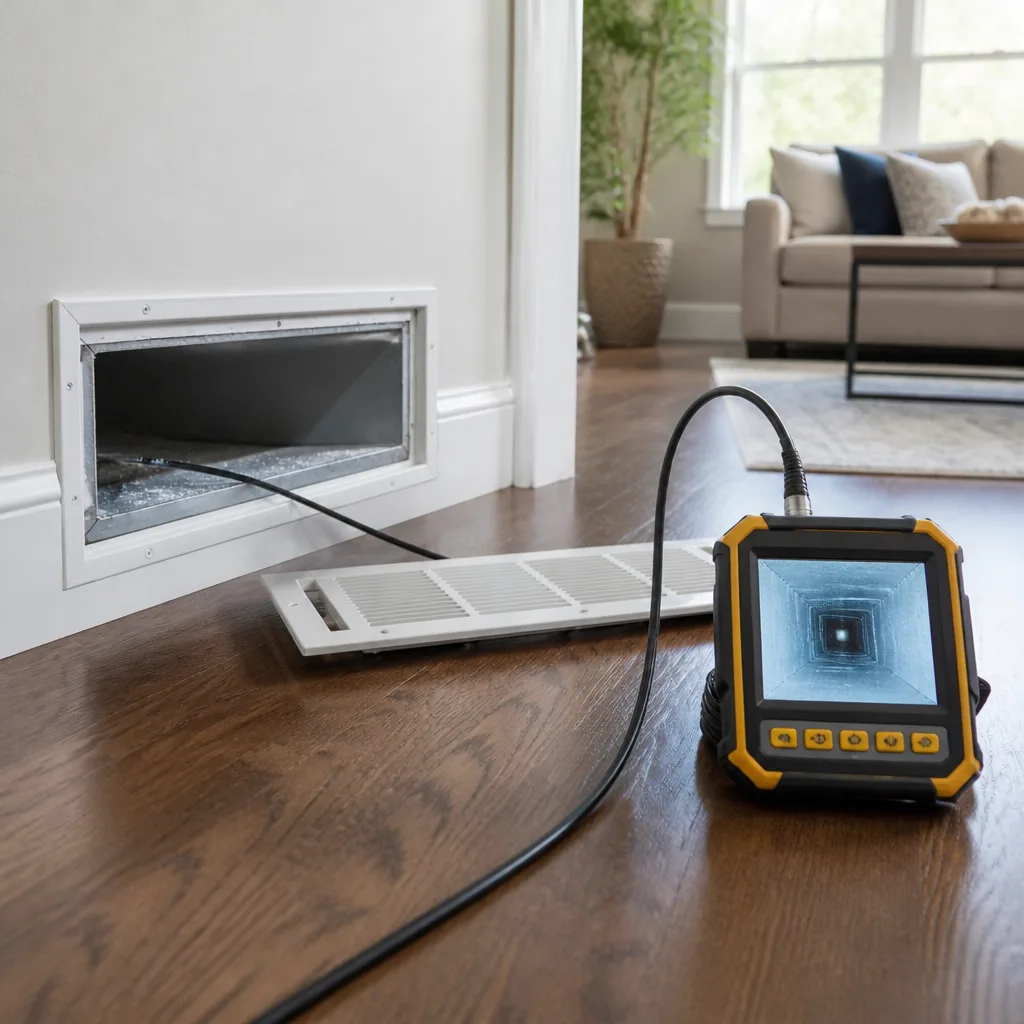 Camera inspection
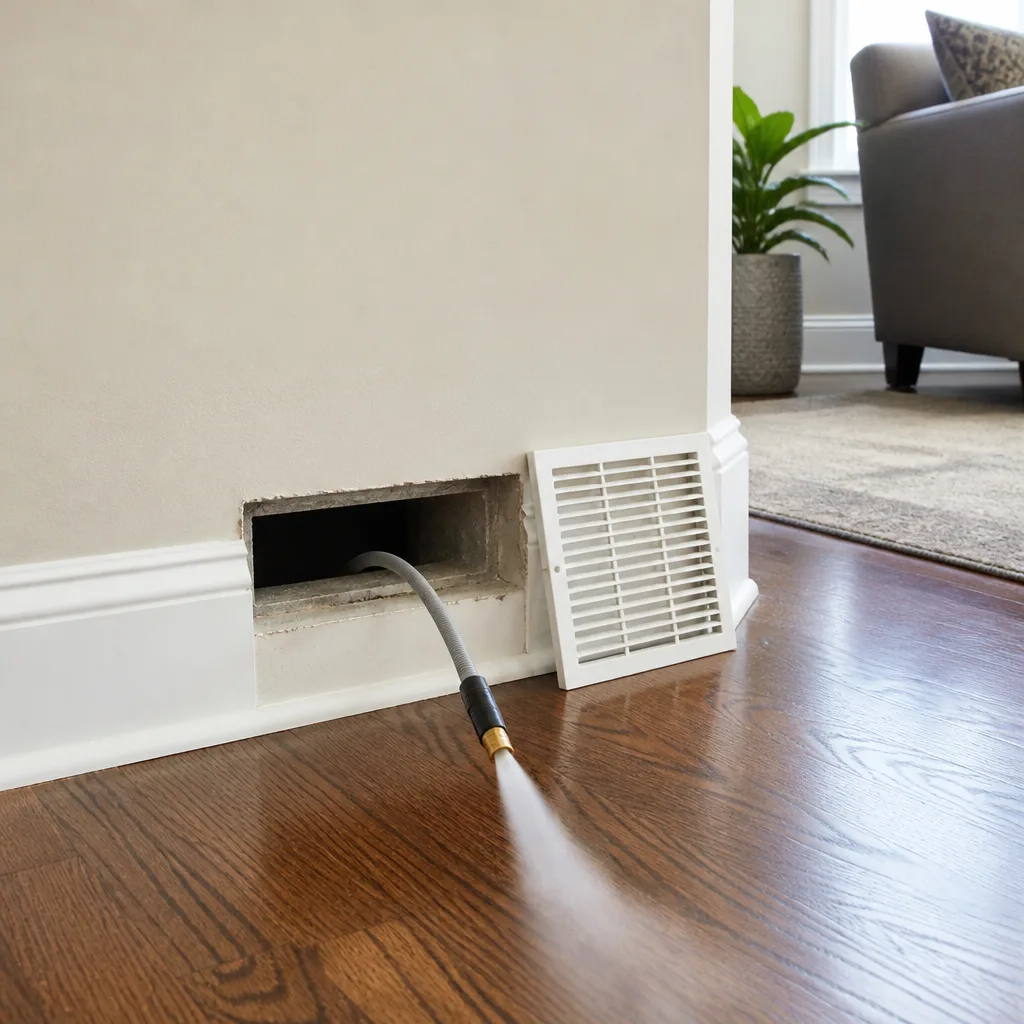 Sanitizing & deodorizing
Whole-system duct and dryer vent check with before-and-after photos - you see exactly what came out of your vents
That "$99 whole-house special" is a bait ad - the real number appears once they are in your hallway, or the "clean" is a shop-vac at the register. We photograph the inside of your ducts before and after instead.
Choosing the Right Air Duct Cleaning Brand: A Buyer’s Guide for East Anaheim
Any contractor who describes their equipment as “professional grade” without naming the manufacturer is telling you something specific: they don’t want you to look it up. That silence is the whole game. In a trade where the customer can’t see inside the ducts during or after the work, equipment becomes the one detail you can actually verify before you sign anything. Naming a machine is a small act of accountability. This guide walks through the equipment categories that matter, what the brand tiers look like in each one, how truck-mount and portable units differ in practice, and how to confirm an equipment claim in person. By the end you’ll be able to sort real bids from dressed-up ones across East Anaheim.
Quick Answer
The right air duct cleaning company is the one whose equipment you can name, see, and identify on arrival – rotary contact tools and negative air machines from purpose-built manufacturers like Rotobrush, Nikro, and Abatement Technologies, plus a source-capture vacuum sized to the home. Certification logos are worth little if the hardware doesn’t match the claim. Ask for make and model before you book, confirm it on site, and treat hesitation as your answer.
Styles & brands we work with
- Whole-home duct cleaning
- Dryer vent cleaning
- Camera inspection
- Sanitizing & deodorizing
Table of Contents
- The Four Equipment Categories That Decide the Job
- Truck-Mount vs. Portable Units: What CFM Really Means for an East Anaheim Home
- How to Verify an Equipment Claim in Person
- The Antimicrobial Question: EPA Registration and When It’s Warranted
- What NADCA Equipment Standards Require and How They Map to Named Brands
- East Anaheim Housing, Climate, and Why Equipment Choice Matters Here
- Comparing Bids: A Side-by-Side Framework
- When the Ducts Aren’t the Only Problem
The Four Equipment Categories That Decide the Job
Professional duct cleaning isn’t one machine. It’s a set of tools that each solve a different part of the problem, and a contractor who skips one category leaves work behind. Here’s what each does and how the brand tiers separate.
1. Negative air machines and source-capture vacuums. These pull the debris out of the system while holding the house under slight negative pressure, so dust travels toward the machine instead of into your living room. Purpose-built units come from manufacturers like Abatement Technologies and Nikro. A generic wet/dry vac from a hardware store can’t create the pressure differential, no matter how strong its motor feels.
2. Rotary contact tools. These are spinning brush or whip assemblies that physically scrub the inside wall of the duct as they travel through it. Rotobrush is the name most associated with this category and the one most worth recognizing on a truck. The key distinction is that the tool drives the cleaning through contact, not just airflow.
3. Air-driven agitation tools. These use compressed air to knock debris loose from duct walls and corners, particularly in branches and returns the rotary tool can’t reach as easily. They complement the rotary stage rather than replace it.
4. Inspection cameras. Before-and-after video is the only way either of you can see what’s actually happening inside the system. A camera is not a luxury add-on; it’s the evidence a job was done.
- Top tier: purpose-built machines from recognized duct-cleaning manufacturers in every category.
- Middle tier: one or two purpose-built tools, with generic equipment filling the gaps.
- Bottom tier: a shop vac, a shop-made brush, and a promise.
When you compare bids across East Anaheim, ask which of the four categories the crew brings. Any missing answer is a missing tool.
Truck-Mount vs. Portable Units: What CFM Really Means for an East Anaheim Home
CFM stands for cubic feet per minute – how much air the vacuum moves. For a typical 2,000 square foot East Anaheim home, a truck-mount unit has the power to keep the whole system under negative pressure at once. A portable unit usually can’t, and that difference shapes the entire job.
Truck-mount means the vacuum engine sits in a van or trailer outside and connects to the home through a hose. Because the engine size isn’t limited by what one person can carry, truck-mount units deliver far higher airflow. That matters when a crew wants to clean a full trunk-and-branch system in one pass while debris stays in the airstream heading out.
Portable units are legitimate when the job calls for them: condos and townhomes where parking or hose reach is a genuine obstacle, single-zone systems with short duct runs, and commercial spaces where the machine needs to work floor by floor. In those situations a good portable from a purpose-built brand still does competent work. What isn’t legitimate is a portable substitute presented as if it were truck-mount capability.
Practical questions to ask before you book:
- Is the primary vacuum truck-mounted or portable, and what brand and model is it?
- What CFM does the unit produce, and how many hose lengths will the crew run?
- How will they hold the home under negative pressure, and where does the vacuum connect?
- If it’s portable, why is portable the right choice for this property?
On a two-story East Anaheim house with a long attic run and several return branches, that last question is the one that separates a real capability answer from a sales answer. A crew that explains the reasoning has thought about your house.
How to Verify an Equipment Claim in Person
The most reliable signal isn’t a badge on a website. It’s a contractor who is comfortable walking you to the equipment and naming it. Here’s a short sequence anyone can run before the work begins.
- Ask for make and model before booking. A phone or email answer in writing gives you something to look up yourself. If the answer is “we use the best available,” that’s a data point.
- Watch what comes out of the vehicle. Recognizable branded housings, hoses, and tool cases are the giveaway. Improvised tools usually look improvised – mismatched parts, taped fittings, consumer-grade vacuums.
- Ask to see the machine. A contractor confident in their equipment will show you. One who brushes the request aside is telling you the equipment isn’t a selling point because it isn’t impressive.
- Look for the camera. The presence of an inspection camera, and a plan to show you the before-and-after footage, tells you the crew expects to prove the work.
- Ask how the vacuum connects and whether the home goes under negative pressure. A technical answer is a good sign. A vague one usually means no real pressure setup.
This verification approach outperforms any single logo, because it’s checking the actual machinery rather than the paperwork around it. In our experience at Air Duct Cleaning East Anaheim, the equipment on the truck and the willingness to show it are the same conversation. If a contractor hesitates on step three, that’s the entire answer to your question.
The Antimicrobial Question: EPA Registration and When It’s Warranted
Antimicrobial products sprayed into ducts fall under EPA regulation as pesticides, and any legitimate manufacturer registers its product with the agency. That registration number should be available on the product label and on request. If a contractor can’t name the product or produce a label, that’s not a product you want circulating through your home.
What to ask for by name:
- The product name and its EPA registration number.
- Whether it’s labeled for use in occupied HVAC systems.
- The safety data sheet, which a professional company will have on hand.
- How it’s applied, and whether it’s fogged or wiped in targeted areas.
Now the honest part. Sanitizing is genuinely warranted in specific conditions: after a confirmed biological problem like standing water in a system, after a rodent or pest intrusion that left contamination, following certain water damage events, or when a homeowner has a documented sensitivity and a contractor wants to reduce microbial load on cleaned surfaces. That last one is worth discussing with your doctor rather than deciding on the spot.
Sanitizing is generally upsold when it’s applied automatically to every job regardless of condition, or when it’s pitched as a replacement for cleaning rather than a step after it. A contractor who tells you “your system looks clean, you don’t need this today” is giving you the more valuable answer. Cleaning, sealing, and airflow correction do most of the work. Sanitizing is the finish, not the foundation.
What NADCA Equipment Standards Require and How They Map to Named Brands
NADCA, the National Air Duct Cleaners Association, publishes an assessment, cleaning, and restoration standard for HVAC systems. The core equipment requirements are straightforward: source removal with a vacuum powerful enough to hold the system under negative pressure, agitation tools that put the duct wall in contact with the cleaning head, and some method of documenting conditions before and after. The standard sets the bar; it doesn’t endorse particular manufacturers.
That’s where the named brands become useful. A homeowner can’t easily benchmark a school, but anyone can research a Rotobrush rotary tool or an Abatement Technologies negative air machine in ten minutes and learn what it’s designed for and what tier it sits in. The named brand gives the standard something concrete to map onto.
You can also look up whether a contractor’s company holds NADCA membership or individual certifications through the association’s own directory – verify the claim on the association’s site, not the contractor’s. Certification is a useful filter, but it describes training, not the machine that shows up. A well-certified crew with weak hardware is still under-equipped.
What to check when you compare:
- Does the contractor’s equipment meet the NADCA standard’s core requirements in each category?
- Are the tools branded and identifiable, or generic and improvised?
- Can the contractor show before-and-after documentation from the same visit?
A contractor who meets the standard and uses branded equipment has nothing to hide from a homeowner who wants to look it up. That’s the combination to look for in East Anaheim.
East Anaheim Housing, Climate, and Why Equipment Choice Matters Here
East Anaheim includes established neighborhoods like Anaheim Hills, portions of the eastern flatlands toward Orange, and pockets around the 91 that mix older single-family homes with newer construction. The housing stock is varied, and that variety shapes duct cleaning needs in ways a generic national sales pitch doesn’t address.
Older homes here often have original or partially modified ductwork – flex runs added later, returns that feed from unexpected spots, attic branches that have had minor wear from decades of warm, dry summers. Newer homes tend to be tighter, with better-sealed envelopes but often with more aggressive filtration and more mechanical complexity in the HVAC cabinet. Each pattern makes different demands on a cleaning crew.
The mild winters mean the air conditioning side of the system carries most of the load, so ductwork sits in warm, dry conditions through the summer and dust in the return side has plenty of time to accumulate. That doesn’t create a dramatic problem; it just makes routine cleaning more useful for anyone with allergies or pets in the house, and it makes the return side and the air handler cabinet worth inspecting, not just the supply branches.
When a crew shows up with a portable unit that can’t hold a full system under negative pressure, the risk on a two-story East Anaheim home with a long attic run is that debris gets redistributed instead of removed. When a truck-mounted unit is set up properly, the whole house can be pulled at once. The hardware matters for the layout you actually have.
The equipment question and the cleaning itself are one conversation. The best signal is a crew that names the brand and can walk you through how their machine handles this specific house.
Comparing Bids: A Side-by-Side Framework
Most homeowner anxiety about duct cleaning traces to a specific fear: that a low headline price will balloon into a bigger invoice once the technician is on site. The fix isn’t hunting for the cheapest quote. It’s asking the same questions of every bidder and checking that the answers line up with what they bring.
Ask these questions of three bidders and the picture sorts itself out quickly:
- What brands and models are your primary vacuum and agitation tools? A named answer is the baseline.
- Is the job priced per system or per vent? Whole-system pricing is the honest model. Per-vent pricing can end up costing more than it first appears.
- Will I see before-and-after photos or video of my actual ducts? Individual home documentation, not stock imagery.
- What does the written estimate cover, and when is the final price confirmed? A flat price per system agreed before work starts, with no surprises.
- Do you offer duct repair and sealing if you find leaks? Cleaning and sealing are separate services; a crew that does both can address the root cause.
For additional context on the trade and what to expect from a full-service visit, you can review the Air Duct Cleaning East Anaheim overview before you start making calls. The pattern to watch is simple: bidders who answer in specifics tend to have the equipment to back up their answers.
When the Ducts Aren’t the Only Problem
A thorough job often turns up adjacent work: a leaky duct joint reducing efficiency, a return that needs sealing, a dryer vent that’s clogged, or an air handler cabinet that needs cleaning along with the ducts. In those cases, having one contractor who handles all of it is a real advantage over assembling multiple trades.
Services that belong to the same scope of work:
- air duct cleaning across supply, return, and trunk lines with source capture.
- dryer vent cleaning, which is separate from ductwork but part of whole-home air and fire safety.
- HVAC cleaning hitting the air handler cabinet and coil face, not just the duct runs.
- Duct repair and sealing to close off the leaks that let conditioned air escape.
- Air quality sanitizing where conditions warrant it, after cleaning.
Our approach at Air Duct Cleaning East Anaheim is to handle the entire system in one visit, because that’s how the results hold up. Equipment from Rotobrush, Nikro, and Abatement Technologies, product lines from Honeywell and Aprilaire for filtration and humidity upgrades, and Guardsman products in the finishing stages together make up the process. One company, one scope, one flat price per system agreed before work starts, with before-and-after photos of your own ducts.
Common Mistakes to Avoid
- Judging a crew by the logo on their website instead of the machine in the driveway. Certifications and badges are easy to display. The equipment is the harder thing to fake, so look at the equipment.
- Hiring a company that also cleans carpets, does plumbing, and sells roofing. Duct cleaning is a specialized trade with its own tools and protocols. A general contractor running a side service usually doesn’t own the right equipment.
- Choosing the lowest quote without asking what’s in it. A low price often means a portable vacuum, a quick surface pass, and no camera documentation. The invoice tells you what the job was actually built to include.
- Accepting a per-vent price without asking about whole-system pricing. Per-vent pricing can climb unpredictably once the crew counts registers on site. Ask for a flat price per system in writing.
- Skipping the before-and-after documentation. Without photos or video of your own ducts, you have no way to know what was actually done. Ask in advance and confirm it in the estimate.
- Letting sanitizing be added as an automatic step. Ask what product, what EPA registration, and whether it’s warranted for your specific system. A contractor who says “you don’t need it today” is the one to trust.
- Ignoring the dryer vent and the air handler cabinet. In a full visit, those are part of the system, and a duct-only crew that skips them leaves real issues unaddressed.
See the difference
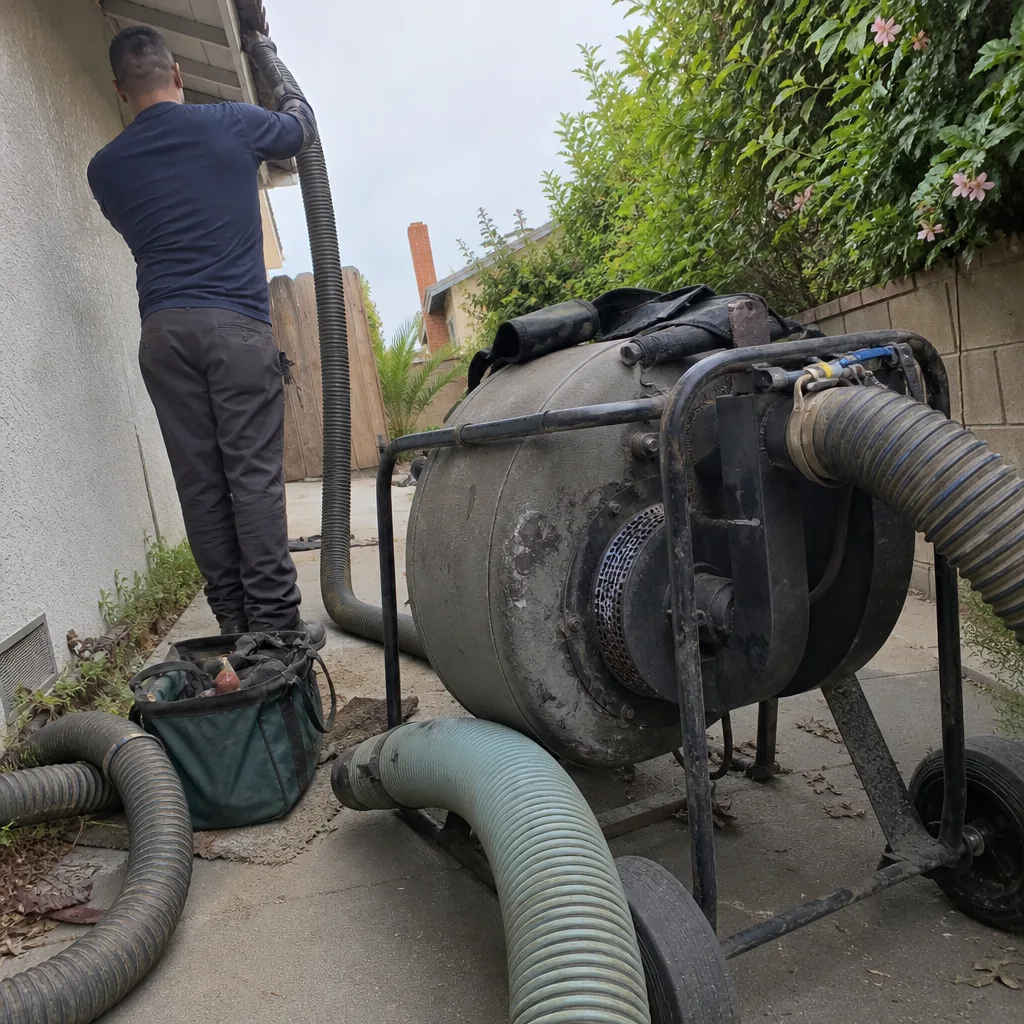 Before
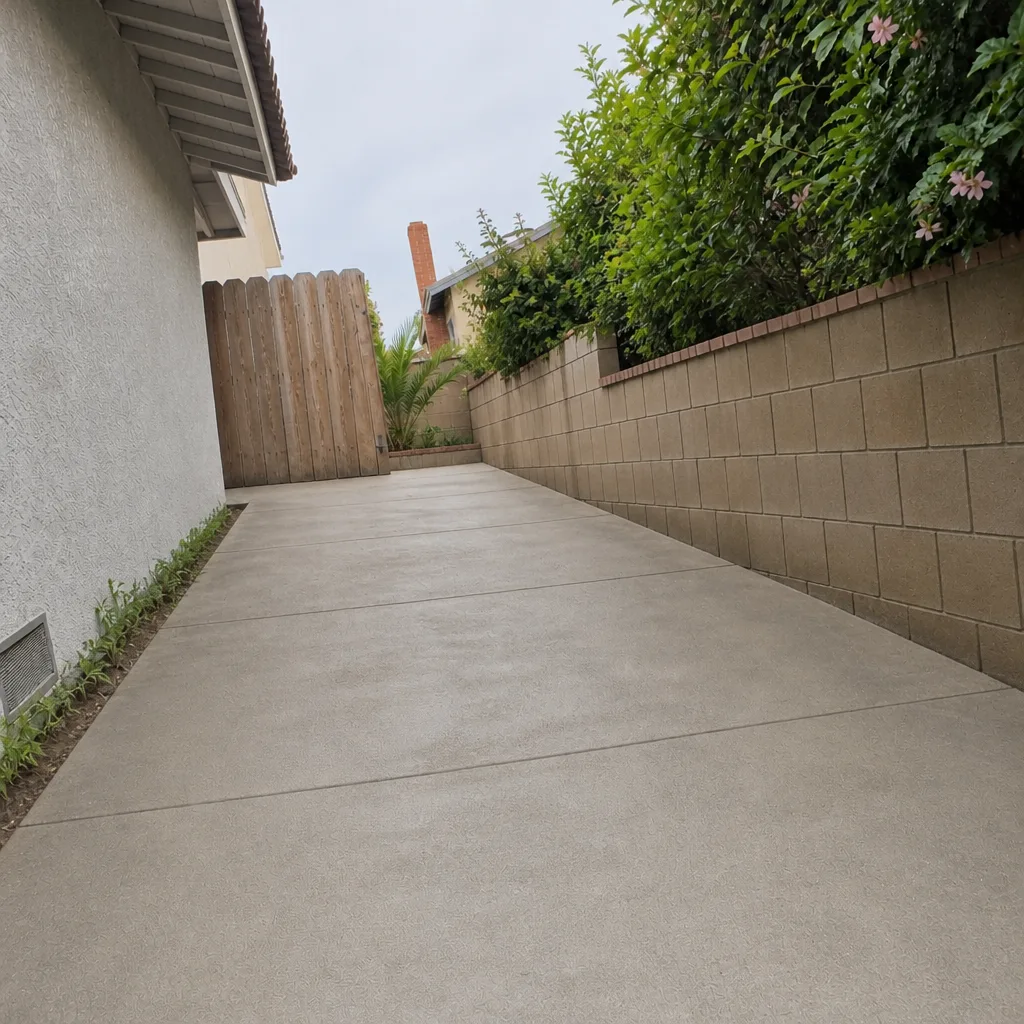 After
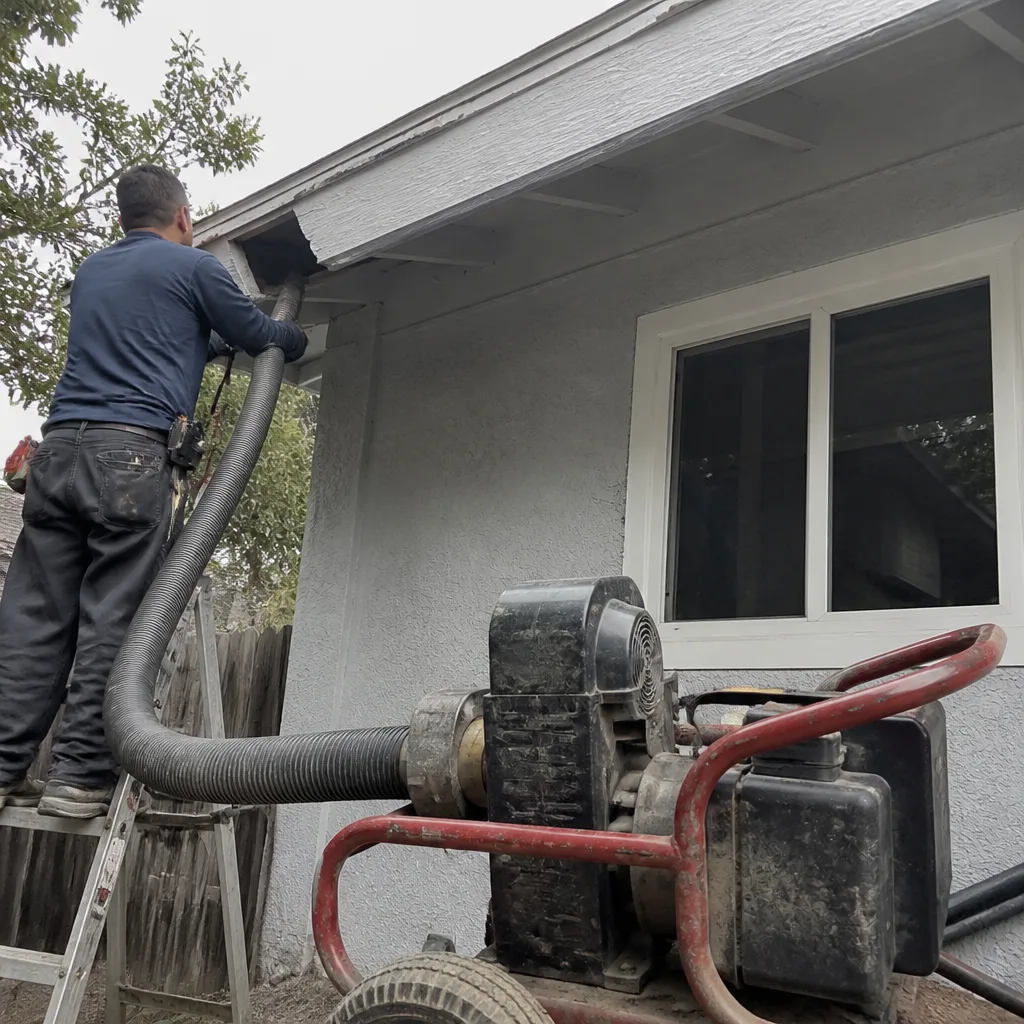 Before
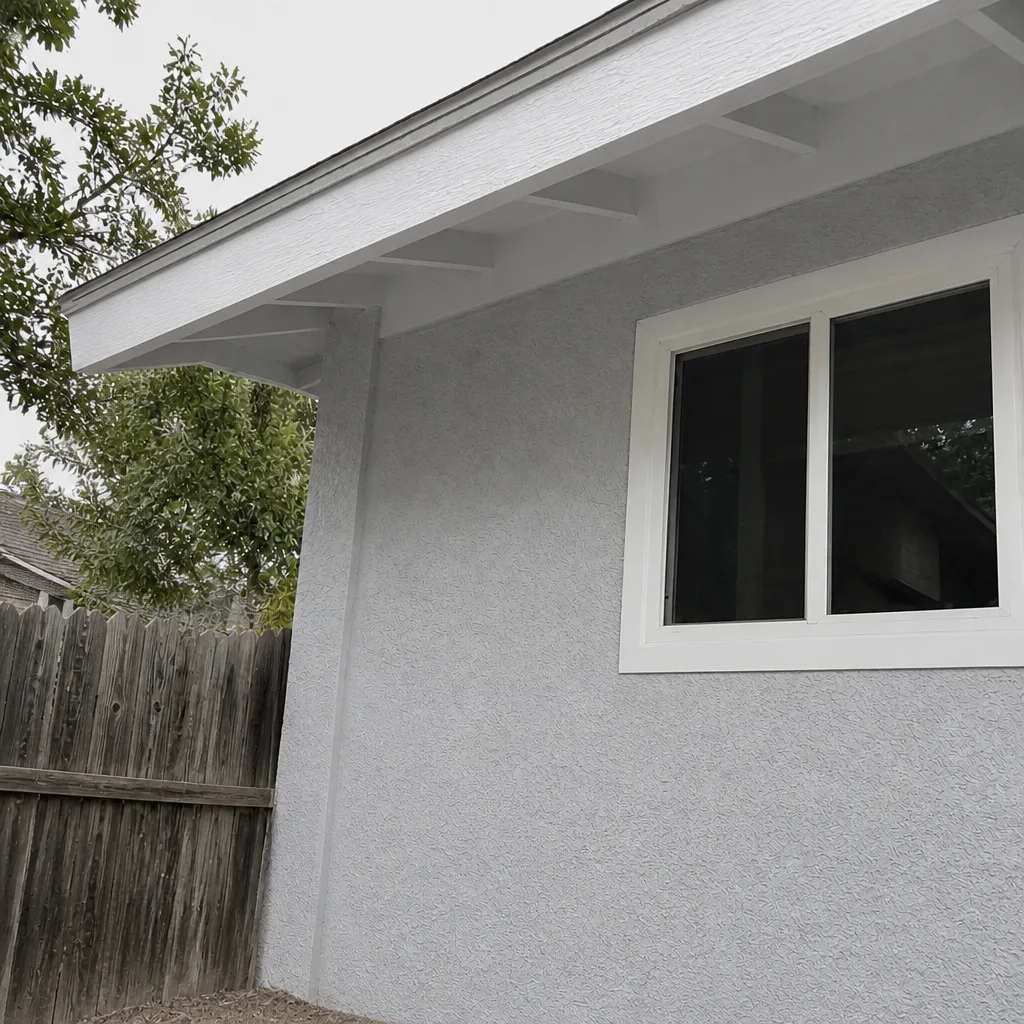 After
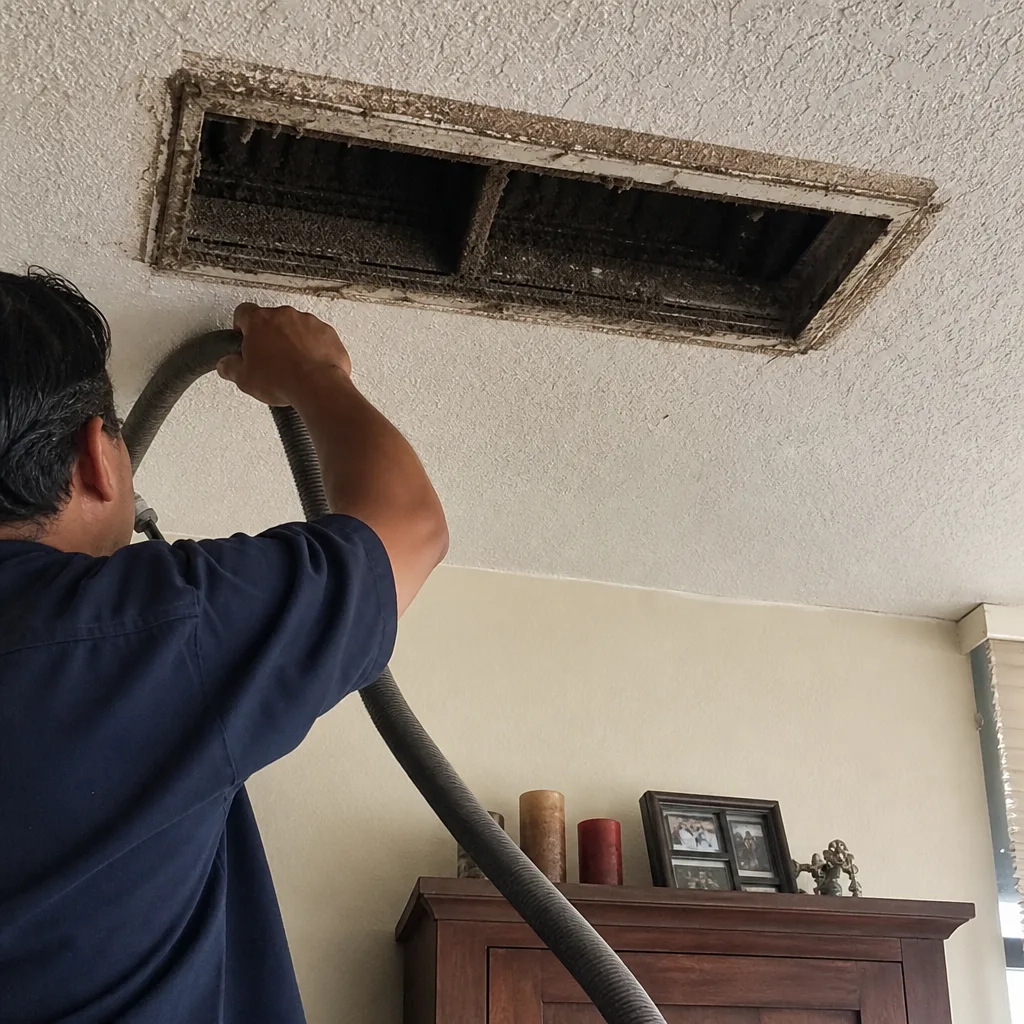 Before
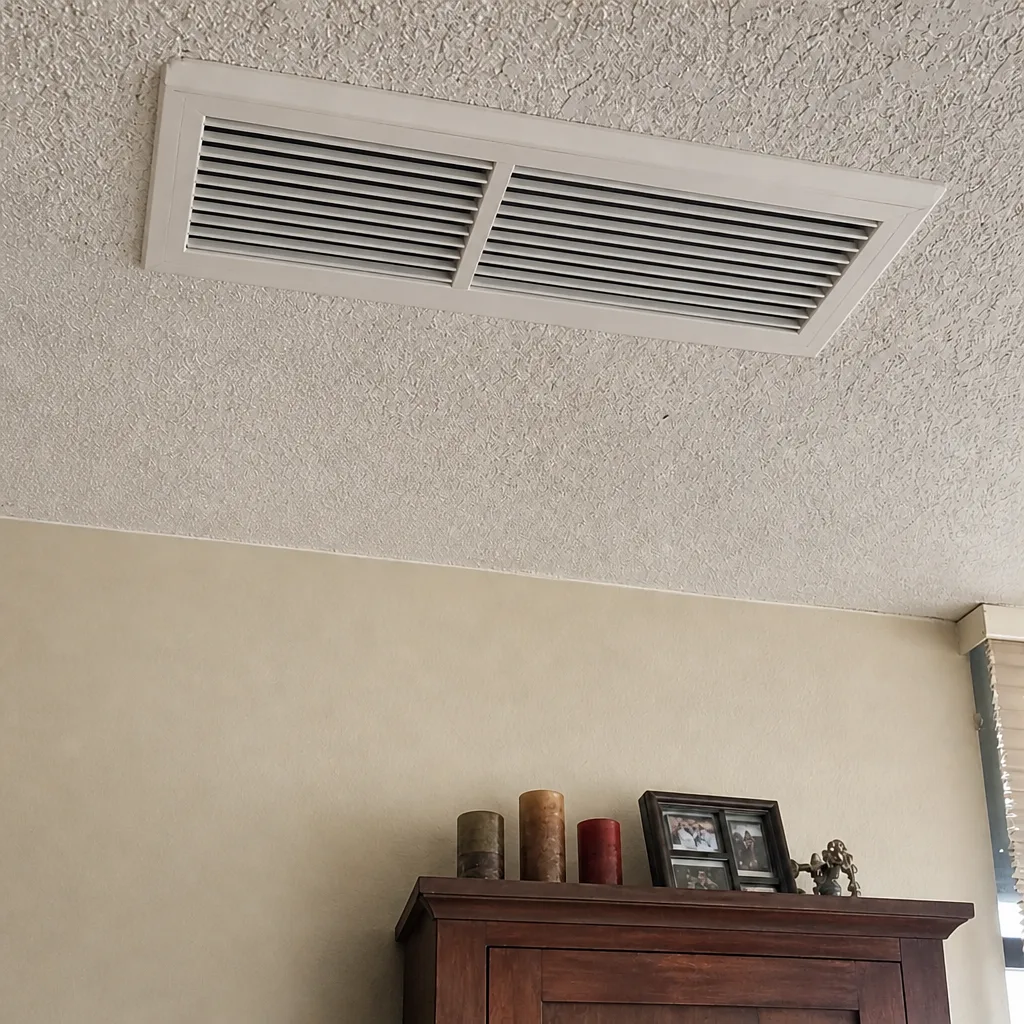 After
When to Call a Professional
A professional visit makes sense when the ducts have never been serviced, or when the family notices more dust settling than usual, allergy symptoms that flare indoors, musty odors when the system starts, or visible dust in the air after the HVAC comes on. Pets, recent renovation work, or a home with young children also push the case for a proper cleaning rather than a surface pass. A dryer vent that hasn’t been cleaned is a separate but real fire-safety concern. Same-day service is possible once the visit is booked.
Air Duct Cleaning East Anaheim offers free estimates in East Anaheim. Call (844) 834-1661. We answer 24/7. Fast dispatch from 7am to 7pm, Sunday through Friday.
Frequently Asked Questions
Rotobrush, Nikro, and Abatement Technologies are the brands worth recognizing – purpose-built duct cleaning hardware rather than repurposed consumer tools. You don’t need to know every model. You need to see at least one named, branded tool for the vacuum, agitation, and inspection stages, and verify it yourself. Call (844) 834-1661 for a free estimate and we’ll walk you through what we bring.
Pricing is set per system by a written estimate, agreed before work starts. The honest answer to “how much does it cost” is that a quote depends on system size, number of branches, and condition – which is exactly why per-vent and teaser pricing is a red flag. Call (844) 834-1661 for an exact quote on your home; estimates are free.
Cheap quotes usually reflect a smaller machine and a shorter job: a portable unit that can’t hold the home under full negative pressure, no camera, and a quick surface pass. The invoice ends up matching the ceiling, not the work. The right comparison is what equipment shows up, not just the price on paper. Call (844) 834-1661 to see the difference in what we bring.
Ask for before-and-after photos or video of your own ducts, taken at the same locations before and after. That’s the proof. A crew that plans to document the visit has nothing to hide. If a company can’t or won’t produce that documentation, that’s your answer. Call (844) 834-1661 to book a visit with documented results.
Not always. Sanitizing is warranted when there’s a confirmed contamination issue – standing water, pest intrusion, certain water damage – or when a specific sensitivity calls for reduced microbial load, and the product should have a valid EPA registration for occupied HVAC systems. Many homes don’t need it. Ask for the product name and registration number, and skip it if the answer is vague. Call (844) 834-1661 for a free assessment.
Most homes benefit from professional cleaning every few years, sooner with pets, allergies, recent renovations, or smokers in the house. Homes in East Anaheim with heavy air conditioning use in the summer tend to accumulate more in the return side and can benefit from earlier attention. There’s no universal rule. The right interval depends on your household. Call (844) 834-1661 for a free estimate and we can look at your actual system.
The Bottom Line
The right air duct cleaning company names their equipment because they’re proud of it, shows it when you ask, and puts it to work in every category: negative air, rotary contact, air agitation, and camera inspection. Purpose-built brands like Rotobrush, Nikro, and Abatement Technologies give you something to check. A certified crew with weak hardware is still under-equipped. In East Anaheim, where homes range from older properties with mixed ductwork to newer tight envelopes, the machine matters for how thoroughly the system is cleaned and how much stays in the ducts when it’s done. Flat price per system, before-and-after documentation, and a crew that doesn’t hesitate to show you the equipment – that’s the winning bid.
Get a Free Estimate
If you’re ready to compare equipment, pricing, and process face to face, we’re happy to help. Air Duct Cleaning East Anaheim offers free written estimates, a flat price per system agreed before work starts, and before-and-after photos of your own ducts. Call (844) 834-1661. We answer 24/7. Fast dispatch from 7am to 7pm, Sunday through Friday.
Written by the team at Air Duct Cleaning East Anaheim.