
Last updated November 24, 2026
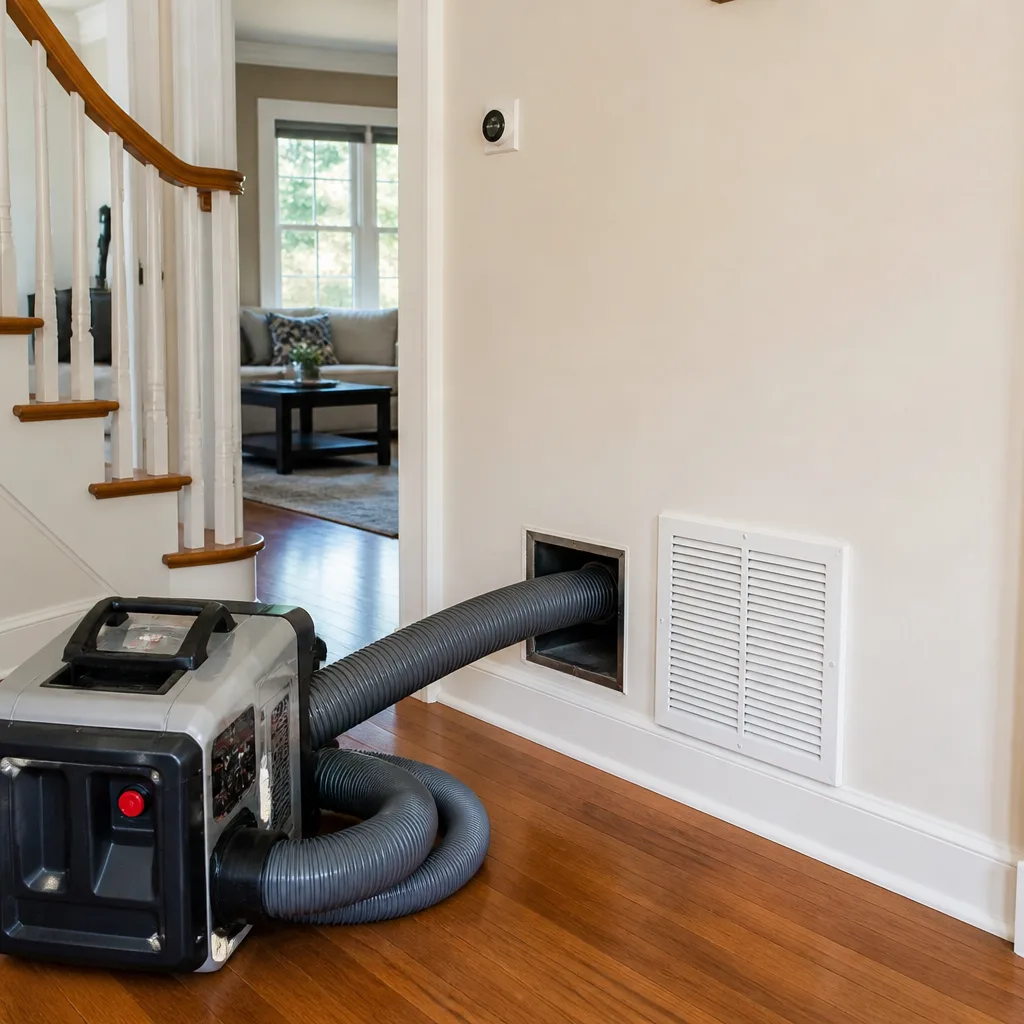 Whole-home duct cleaning
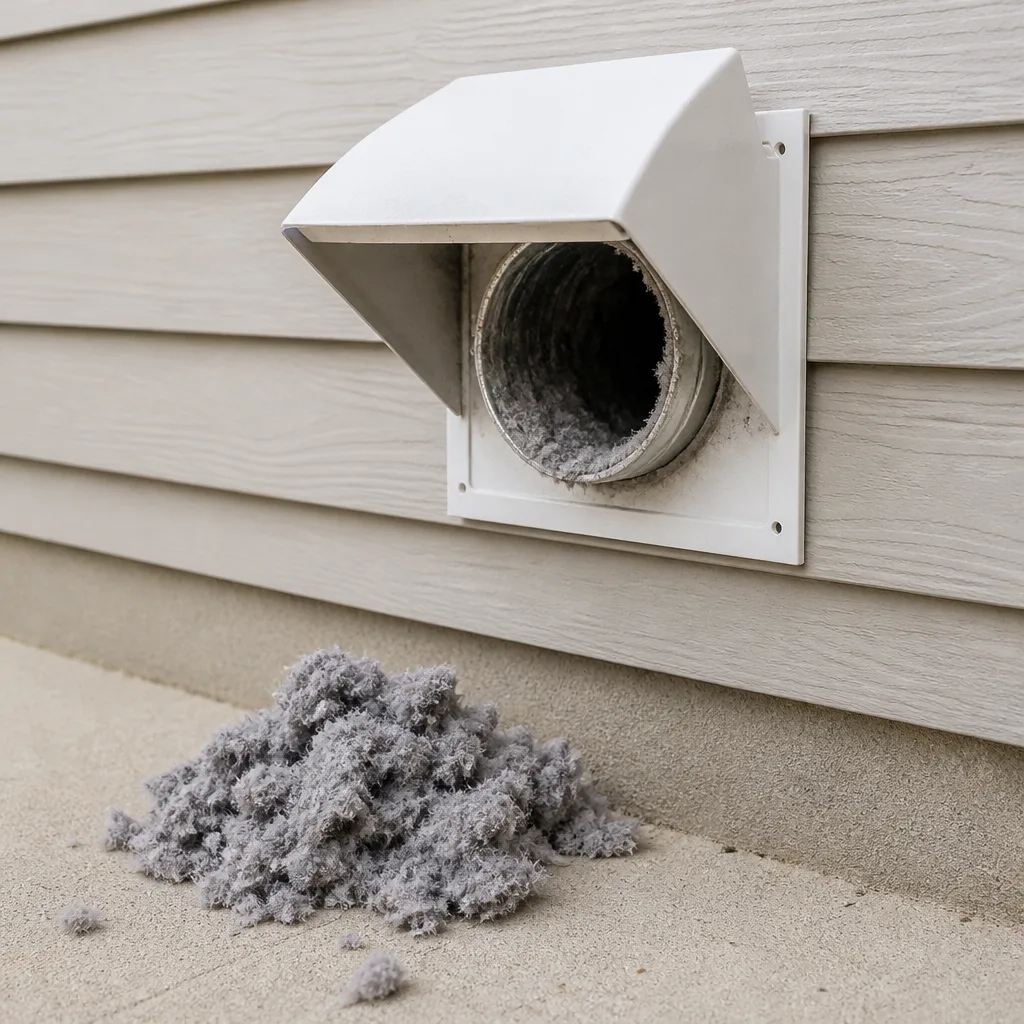 Dryer vent cleaning
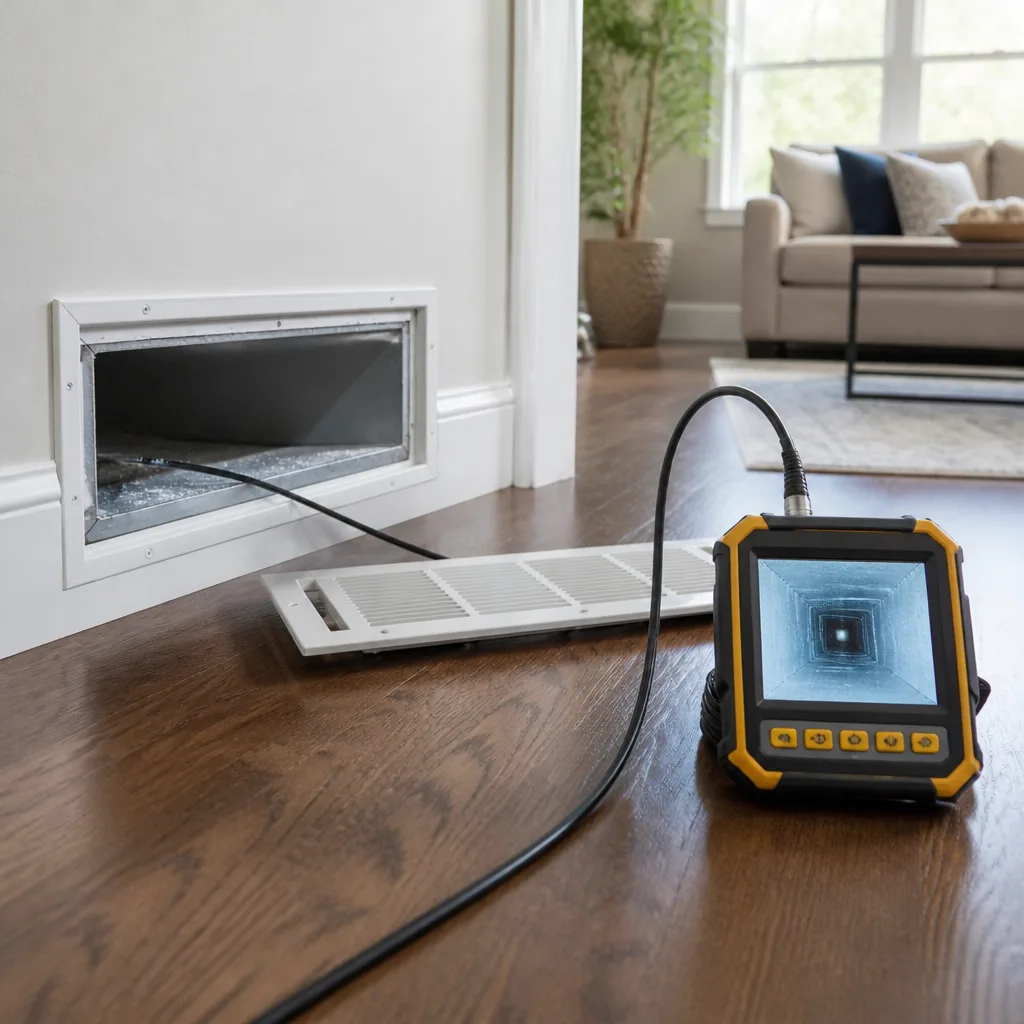 Camera inspection
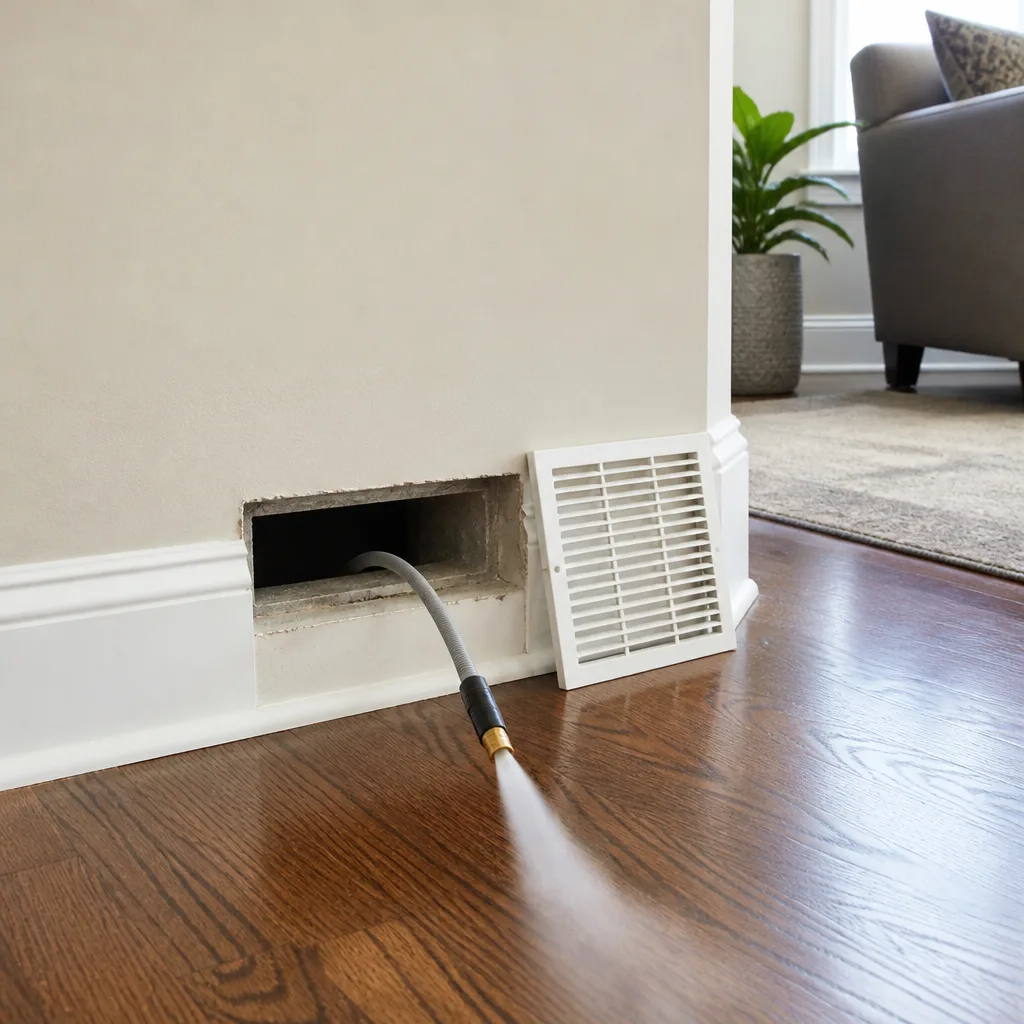 Sanitizing & deodorizing
Whole-system duct and dryer vent check with before-and-after photos - you see exactly what came out of your vents
That "$99 whole-house special" is a bait ad - the real number appears once they are in your hallway, or the "clean" is a shop-vac at the register. We photograph the inside of your ducts before and after instead.
Air Duct Cleaning Warning Signs: An East Anaheim Homeowner’s Reference Guide
Most homeowners wait for something dramatic before they think about their ducts. Visible mold on a vent, a smell that won’t leave the hallway, a family member whose allergies suddenly get worse. By the time evidence that obvious shows up, the system has usually been circulating contaminated air for months. The quieter signals are the useful ones: a single room that’s always dustier despite the same cleaning routine, a supply register with a dark halo around its edges, a system that runs longer than it used to for the same thermostat setting. Those aren’t cosmetic annoyances. They’re diagnostic clues about what’s happening inside the ductwork. This guide walks through each signal in plain terms, explains what it points to, and helps East Anaheim homeowners read their own house before spending money on anything.
Quick Answer
The main warning signs that air ducts need cleaning are uneven dust around supply registers, musty or stale odors when the system first starts, a room that’s consistently dustier than the rest of the house, and increased HVAC runtime without a matching comfort improvement. Visible mold or a persistent chemical smell means you should stop guessing and get an inspection. Most subtle signs point to one specific duct or branch run, not the whole system, which is why a proper inspection matters more than an immediate cleaning.
Styles & brands we work with
- Whole-home duct cleaning
- Dryer vent cleaning
- Camera inspection
- Sanitizing & deodorizing
Table of Contents
- Register-Level Diagnostics: Reading the Dust Patterns on Your Vents
- The Odor Identification Guide: Four Smells and What They Mean
- Allergy and Respiratory Patterns That Point to Ducts (and Ones That Don’t)
- HVAC Performance Signals: What Your System Is Telling You About Duct Condition
- Post-Event Triggers in East Anaheim: Renovation, Rodents, Vacancy, Wildfire Smoke
- What You Can Check Yourself Before Calling Anyone
- What a Real Inspection Looks Like
- Common Mistakes to Avoid
Register-Level Diagnostics: Reading the Dust Patterns on Your Vents
Your supply registers are the most honest diagnostic tool in the house. They’re where the system’s output becomes visible, and the shape of the dust around them tells you something specific if you know what to look for.
Dark halos around supply vents. A ring or crescent of dark dust forming on the ceiling or wall right at the edge of a supply register is a strong indicator of a leaky boot connection or an undersized duct that’s pushing more air than it can handle. Air escaping at the seam carries dust, and that dust settles in a defined ring. The problem is at that register, not in the whole system.
Heavy streaking below the vent. Vertical dirt trails running down from a supply grille usually mean the duct interior is shedding material and the grille is the last filter catching it. Depending on how long it’s been happening, you may be looking at accumulation, degraded flex duct, or duct liner that’s coming apart.
Even, light dust everywhere. If every register looks uniformly dusty and the house has a routine cleaning schedule, that’s more likely a filtration and humidity issue than a duct contamination issue. East Anaheim’s dry, mild climate means humidity isn’t usually the driver, so look at your filter and its change interval before assuming the ducts are the problem.
Return grille debris patterns. Returns pull air back into the system, and the debris they collect looks different. Lint, pet hair, and fuzz that accumulates on the return face suggests the system is pulling from a living space with a lot of airborne particulate. But when debris appears wedged between the return bars, it can indicate a return duct that’s undersized or partially blocked, forcing the blower to pull harder.
The pattern is the point. A dust halo at one register is a local duct issue. Debris at a return points at filtration and pressure. Uniform light dust everywhere points at humidity, filter maintenance, or source control. Knowing which one you’re seeing is the difference between a targeted repair and an unnecessary cleaning. That’s why our air duct cleaning process starts with the inspection step, not the vacuum.
The Odor Identification Guide: Four Smells and What They Mean
Odor is the most overlooked diagnostic in ductwork, and the most misread. Homeowners tend to lump every unpleasant smell into “musty,” which overshoots the diagnosis. The truth is more useful when you separate the four types.
- Musty or earthy. Musty smells point to biological growth, which requires moisture. In East Anaheim’s dry climate, that typically means one of three sources: a leaky condensate line or drain pan on the AC system, a condensing or high-humidity area above a bathroom, or ductwork that passes through unconditioned attic space where temperature swings cause condensation. Musty odor is a stop-and-investigate smell, not a wait-and-see.
- Dusty or stale. The smell of a closed-up room when the system starts. This is accumulation. It’s the most benign of the four and usually correlates with a system that hasn’t been cleaned, an undersized or dirty filter, or a home with long vacancy periods.
- Burning or hot electrical. Often strongest the first time the heat comes on for the season. First-use contamination (dust that settled on the heat exchanger over the summer burning off) produces a harmless smell that fades within minutes. If the smell persists after the system stabilizes, or it smells acrid or plastic-like, shut it down and get a professional to look. That’s a safety call, not a cleaning call.
- Chemical or solvent-like. Sharp, factory-fresh, glue-like, or vaguely similar to off-gassing plastic. Two likely causes: duct liner or coated interior that’s breaking down and off-gassing, or pest residue (rodent urine and droppings in ductwork have a distinct ammonia-adjacent sharpness). Neither is a cleaning-only fix; both need diagnosis and, in the pest case, remediation-grade attention.
If the smell changes with the system cycling (present at the start, fades after a few minutes), that’s a sign the contamination is sitting in the duct and getting blown into the house at startup, which points to a cleaning. If the smell is constant regardless of the system, look elsewhere first. When we inspect a home, we use Abatement Technologies equipment in part because the source-capture side of that brand is built for exactly the situation where odor and airborne contamination need to be isolated, not just vacuumed.
Allergy and Respiratory Patterns That Point to Ducts (and Ones That Don’t)
It’s tempting to connect every respiratory symptom to the ducts. The honest way to isolate the variable is to look at pattern, not severity.
Patterns that correlate with duct issues:
- Symptoms that flare within 20 to 30 minutes of the system starting, then ease when it shuts off.
- Symptoms that are worse in one room and better in others, especially rooms at the far end of the duct run.
- Symptoms that improve noticeably when you’re away from home for several days and return within a day of being back.
- Worse symptoms during the shoulder seasons (spring and fall) when the system cycles but isn’t running constantly, meaning whatever is in the duct has more accumulation time between runs.
Patterns that usually don’t point to ducts:
- Symptoms that match the local pollen calendar more than the HVAC cycle. East Anaheim’s inland position produces a real spring and late summer pollen load, and those symptoms will track the plants, not the thermostat.
- Symptoms that are constant through the day and don’t respond to the system running.
- Symptoms that also show up when you’re away from home, which suggests the trigger isn’t in your house.
- New symptoms that started after a change in pets, bedding, cleaning products, or a home addition, which each have their own cause.
The best test is a simple log. Write down when symptoms start, what the system is doing at that moment, and which room you’re in. Two weeks of notes tells you more than any one-time inspection can. If the pattern points at the HVAC cycle, that’s when a professional duct inspection makes sense. If it doesn’t, the ducts may still need cleaning for other reasons, but they aren’t the answer to the symptom question.
HVAC Performance Signals: What Your System Is Telling You About Duct Condition
A duct problem often shows up first in how the HVAC system behaves, not in what comes out of the vents. The four signals below are the ones our technicians watch for most.
- Increased static pressure. Static pressure is resistance, and rising static pressure means the blower is pushing against something. A dirty duct interior, a collapsed flex duct, or a filter loaded with debris all raise static pressure. Homeowners don’t have a gauge for this, but the symptom is real: the blower runs, the air feels weak, and the system doesn’t keep up.
- Reduced airflow at specific registers. If you can walk the house and identify a run of registers with noticeably weaker airflow than others, that’s a branch-level issue. It could be a disconnected duct in the attic, a crushed flex section, or a partially closed damper. It’s rarely a whole-system problem.
- Elevated runtime before setpoint. If the system used to reach your set temperature in a reasonable time and now runs much longer to get there, that’s a clue that either airflow is compromised or the system is working harder to move the same air. Duct condition is one of several possible causes, along with refrigerant level, coil condition, and equipment age.
- Uneven room temperatures. A bedroom that never fully cools in summer or a room that stays cold in winter can point to a duct that’s leaking air into the attic before it reaches the room, or a supply that’s not delivering enough volume. This is common in older homes where the duct design predated current equipment.
The single best move when you see any of these is a combined service visit rather than duct cleaning alone. Our HVAC cleaning covers the air handler, coils, and blower along with the ducts, which is what you need to answer the “why is airflow compromised” question properly. Cleaning just the ducts while leaving a dirty blower or coil in the loop is doing half the job.
Post-Event Triggers in East Anaheim: Renovation, Rodents, Vacancy, Wildfire Smoke
Most homes don’t have chronic duct problems. They have triggered ones. Something happened, the ducts took in debris, and the contamination settled in. East Anaheim has four triggers that come up repeatedly.
Renovation. Drywall dust is the single biggest duct contaminant produced by a remodeling project. Fine gypsum dust moves farther through ductwork than almost any other material because it stays suspended in air longer. If the system was running at all during sanding, drywall work, or demo, assume ductwork took on debris. Check after any renovation that involved cutting into walls, ceilings, or running new electrical through the framing.
Rodent intrusion. East Anaheim’s inland geography puts homes near open space and hillside, and rodent intrusion into attic ductwork is a real category of problem. The signs: droppings in attic near duct runs, chewed flex duct insulation visible from the attic access, a sharp ammonia smell on system startup, or rodent activity you’ve already had to address with pest control. Rodent contamination is a remediation-level job, not a standard cleaning. This is where our Abatement Technologies equipment and Guardsman-branded protection products matter most: source-capture work and protective finishing are what keep the problem from recurring.
Prolonged vacancy. A home that’s sat empty for months (a rental turnover, a vacation property, an inherited home before sale) picks up a stale smell that’s usually a mix of low-level biological growth and dust accumulation. In East Anaheim’s dry climate this is less about humidity than about stagnant air, closed-up conditions, and any moisture event during the vacancy. If the house was closed up and there was ever a leak, condensate overflow, or a storm event, be more suspicious.
Wildfire smoke exposure. Southern California’s smoke events push fine particulate into homes through every gap, and HVAC systems running during a smoke event pull that particulate into the filter and ductwork. If you experienced a smoke event with the system running, and the house has a persistent “campfire” or smoky smell since, that’s a duct-level issue. Sanitizing the system is usually part of the fix, not just cleaning.
What You Can Check Yourself Before Calling Anyone
A home inspection gives you better information to work with, and a professional will save you from the worst mistake in this business, which is calling a cheap crew and getting a low-effort job. Check these five things first.
- Walk the registers. Note which ones have heavy dust, halos, or visible debris. Compare supply to return patterns. Write down which rooms feel weak.
- Change the filter and note the condition. A filter that’s fully loaded in a month means the system is pulling a lot of particulate, and the source may be a dirty duct interior or a return that’s drawing from an unfiltered space. A filter that looks clean after months in a dusty house means air isn’t moving through it at the expected volume.
- Do a paper-towel test at weak registers. Hold a single piece of tissue up to the grille while the system is running. If it barely moves, that register is delivering low airflow. Compare against a register in a room that’s comfortable.
- Check the attic access if you have one. Look for disconnected flex duct, sagging duct runs, or visible debris near the air handler. Don’t move or reconnect anything yourself; just note what you see.
- Log the odor and its timing. Which odor, and when does it appear? Startup-only smells and constant smells tell different stories, and this log makes a professional inspection more useful.
What you shouldn’t do: open ductwork to inspect interiors yourself, spray anything into a running system, or try to “clear” a duct with a shop vac. The risk isn’t worth it, and you’ll only disturb contamination into the living space. If a self-check turns up one or more warning signs, an inspection is the next step.
What a Real Inspection Looks Like
A proper inspection is not a sales pitch, and it’s not a flashlight glance into a register. Here’s what to expect.
Before anyone touches a piece of equipment, they should walk the house with you, look at each register you flagged, check the filter and air handler, and ask about the history of the home (renovations, water events, pest issues, vacancy). That conversation often identifies the source category before the inspection starts.
Then the technical part. A camera inspection lets the technician see the duct interior from multiple points, including the main trunk, branch runs, and the connection at the air handler. Combined with a static pressure reading and an airflow check at the registers, the inspection should be able to tell you three things: how contaminated the ductwork is, where the contamination is concentrated, and what the likely sources are.
When the equipment comes out, it should be professional-grade. Rotobrush systems and Nikro equipment are purpose-built for duct cleaning; they’re not shop vacs with a longer hose. Guardsman-branded products often play a role in protecting the interior coating and finishing the job. Any contractor who shows up with consumer tools isn’t doing an inspection that means anything.
Ask to see the before-and-after photos of your own ducts. A real inspection can show you what was found, and a real cleaning can show you what it looked like before and after. If someone refuses to show you the inside of your own ductwork, that’s your answer about whether the work was done.
Our Air Duct Cleaning East Anaheim team treats the inspection as the first step of the job, not a formality. You see what’s in the ductwork before anything is cleaned, and you get a written estimate that sets the price before any work starts.
Common Mistakes to Avoid
- Assuming one dusty room means the whole system is contaminated. In most homes, one problem room points to one branch run. Cleaning the whole system without diagnosing the branch first leaves the actual issue in place.
- Replacing filters more often instead of investigating the source. If a filter loads up in a few weeks, the source is usually a loose return, a leaky return boot, or unfiltered return air from an attic. A higher-change-interval habit doesn’t fix any of those.
- Calling a cheap crew with consumer-grade equipment. A shop vac and a hose doesn’t move debris the way a Rotobrush or Nikro system does, and it won’t reach the lengths of duct that matter. The visible before-and-after photos are the tell.
- Cleaning ducts and skipping the air handler. If the blower, coil, and drain pan aren’t part of the service, contamination in those components just reseeds the ductwork. Look for a contractor that treats the whole system as one job.
- Overlooking the dryer vent. A dryer vent packed with lint is a genuine safety issue in any climate, and East Anaheim homes are no exception. Our dryer vent cleaning is booked alongside duct service for that reason.
- Deciding based on a smell alone. A musty smell needs diagnosis, not a cleaning. Burning smells need the system off. A cleaning-only approach to either problem is likely to leave the real cause in place.
- Waiting until there’s visible mold. By the time mold is visible at a register, the duct interior has likely been a moisture problem long enough to affect more than one run. Earlier signals are cheaper to fix.
See the difference
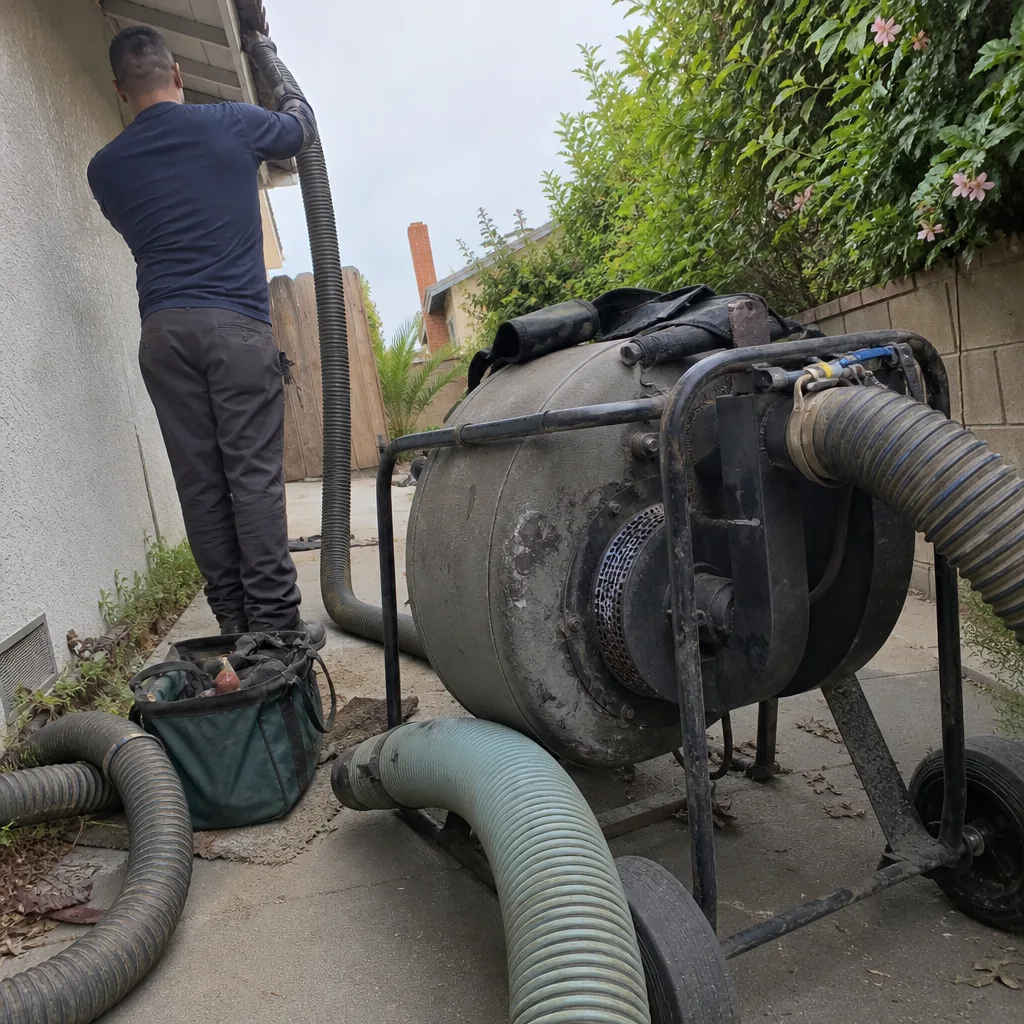 Before
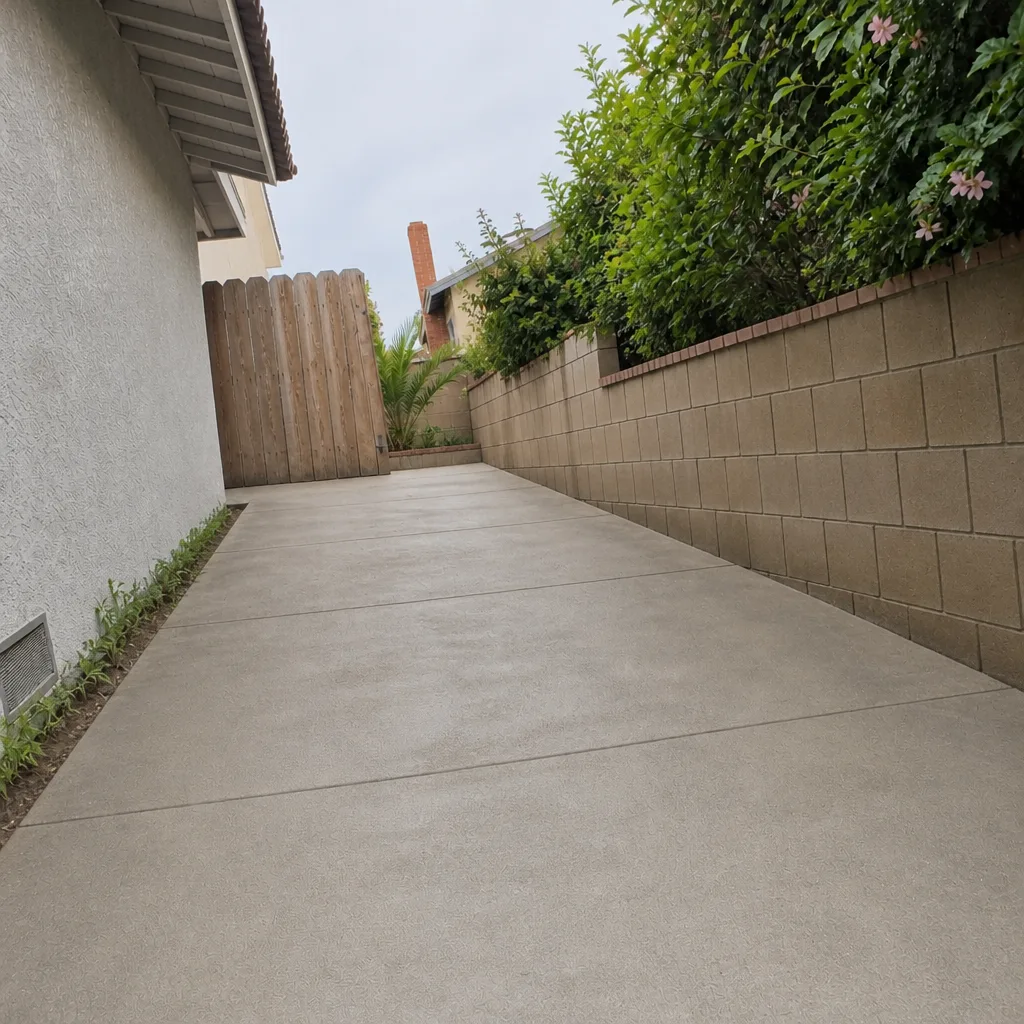 After
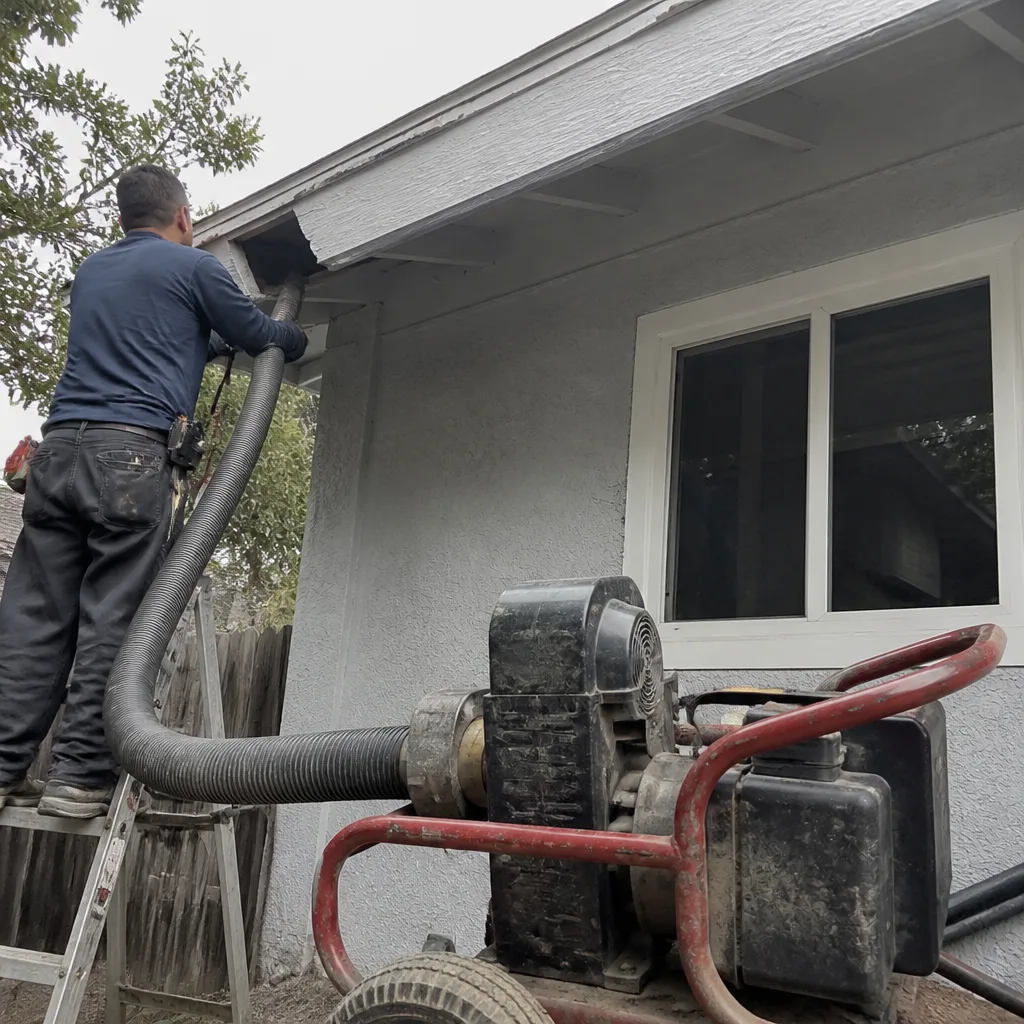 Before
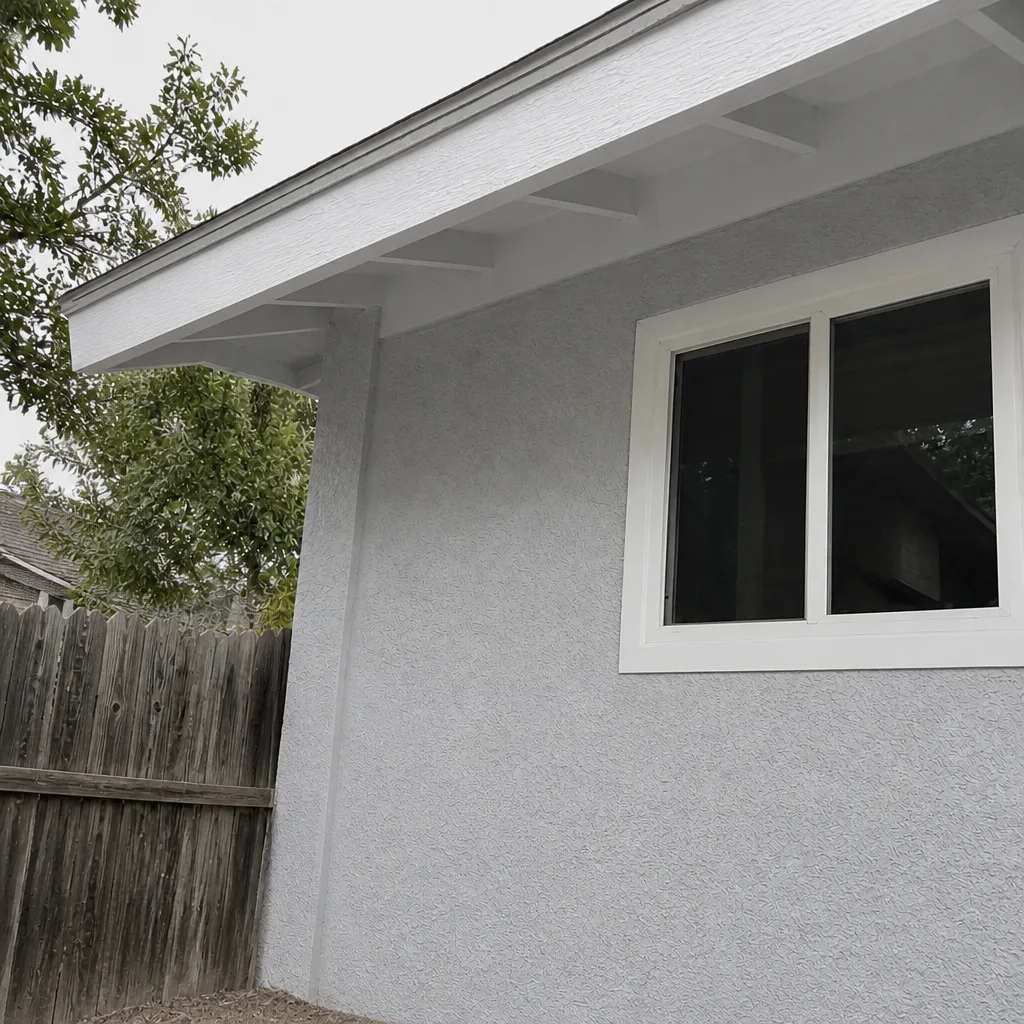 After
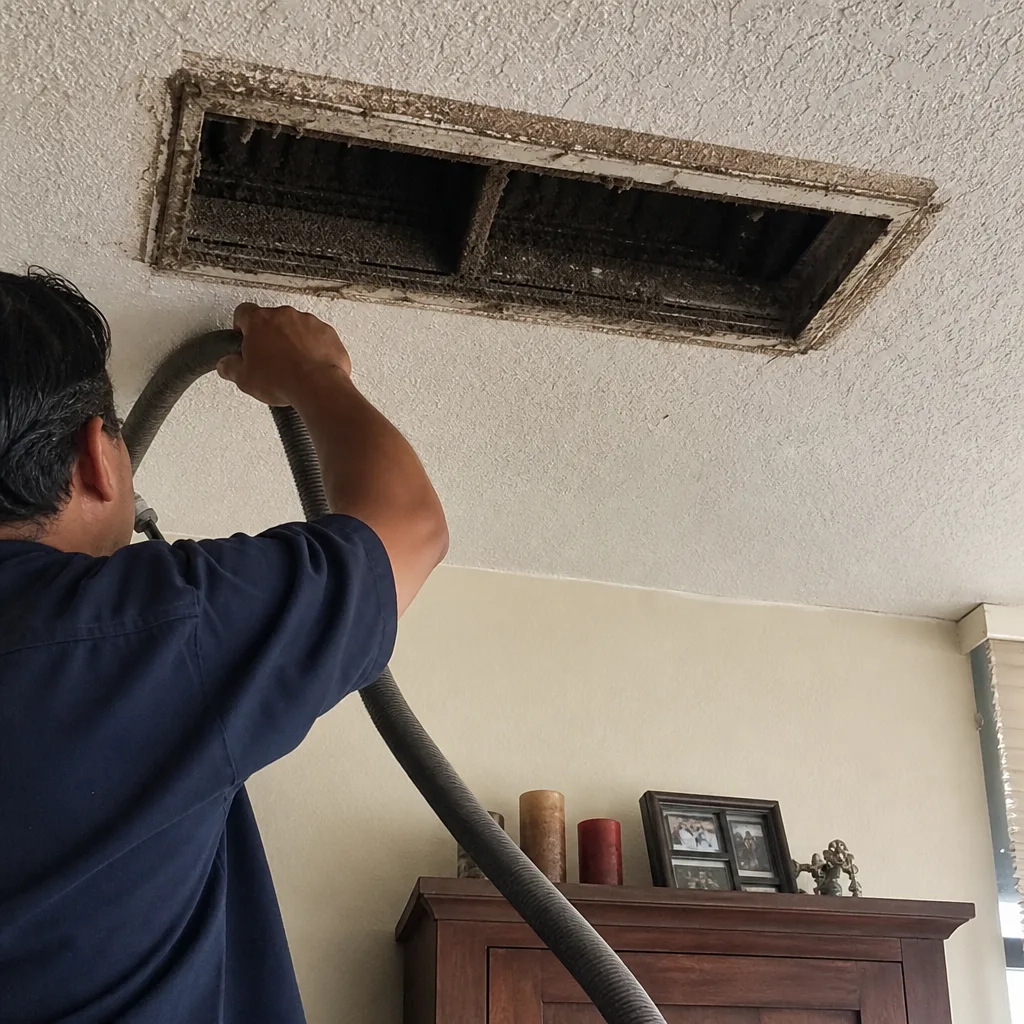 Before
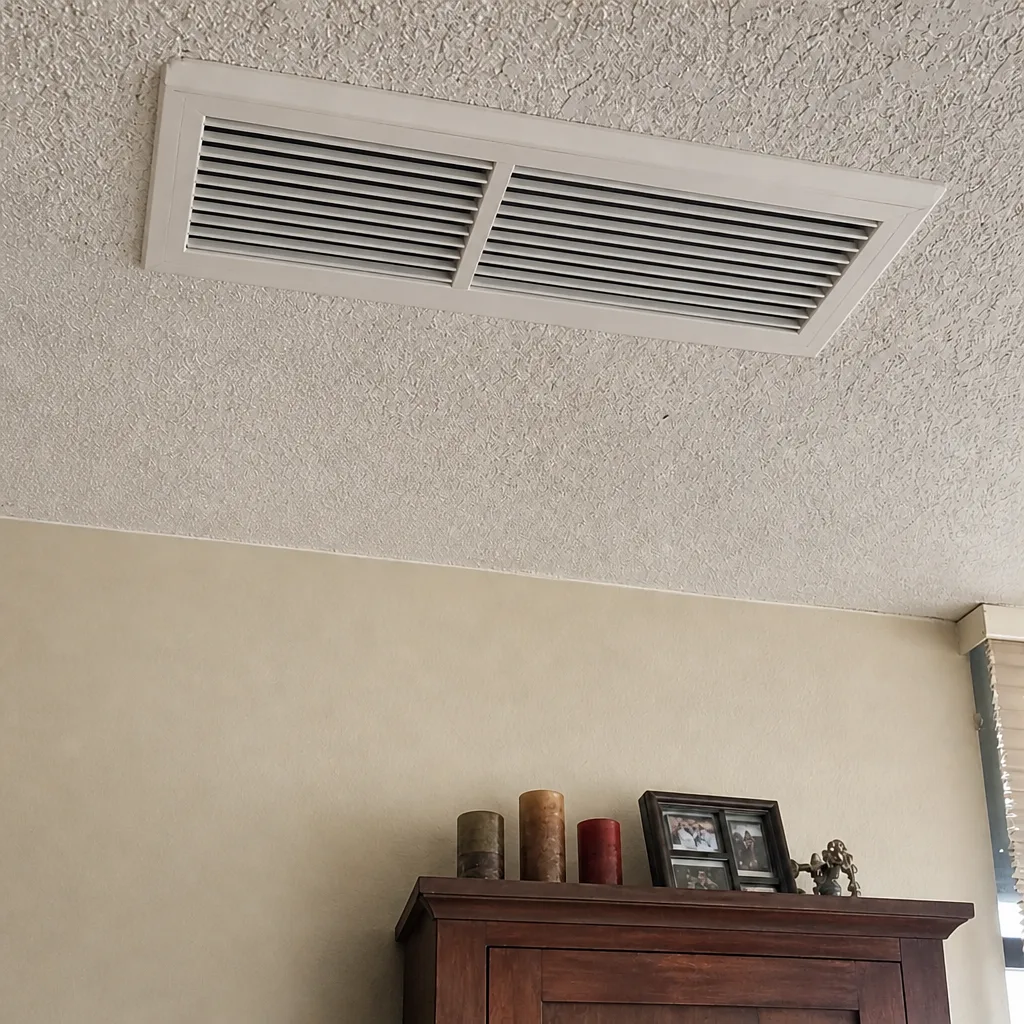 After
When to Call a Professional
Call us when a self-check turns up three or more warning signs together: a dust halo at a supply register, a single room that’s consistently dustier than others, and a startup smell that wasn’t there last year. Call us after a renovation where the system ran, a rodent problem, a prolonged vacancy, or a significant wildfire smoke event with the system running. Call us for a burning smell that doesn’t fade after the first heat cycle, or a chemical smell that’s persistent. Also call if the dryer is taking longer than it used to, or the lint trap is filling faster than normal. Air Duct Cleaning East Anaheim offers free estimates in East Anaheim: call (844) 834-1661. We answer 24/7. Fast dispatch from 7am to 7pm, Sunday through Friday.
Frequently Asked Questions
The clearest indicators are uneven dust around specific supply registers, a room that’s dustier than the rest of the house despite equal cleaning, and a stale or musty smell that’s strongest when the system first starts. Visible mold, a persistent chemical smell, or droppings in attic ductwork mean a professional inspection rather than a routine cleaning. Call (844) 834-1661 for a free estimate and an inspection that shows you what’s in the ducts before any work begins.
The price depends on the size of the system, the number of registers, and whether contamination is concentrated or spread across the ductwork. We set one flat price per system, agreed in writing before any work starts, so the final invoice matches the estimate. That’s the direct answer to the bait-and-switch reputation this trade has earned. Call (844) 834-1661 and we’ll give you a real number for your house, not a coupon figure.
Because they’re usually not doing the same job. A quote that comes in far below the rest is typically built around consumer-grade equipment, a short work window, and no camera inspection of the duct interior. That’s a shop vac and a promise, not duct cleaning. Our work uses Rotobrush and Nikro systems built for this trade, and the before-and-after photos of your own ductwork confirm what actually happened. Call (844) 834-1661 for a straightforward estimate.
You see the before-and-after photos of your own ducts. You get a written scope that describes what’s being cleaned and sealed, and the price is set by that written estimate. We use camera inspection and airflow diagnostics so the results are visible, not just claimed. If a contractor won’t show you the inside of your own ductwork before and after, that’s a reasonable reason to walk away. Call (844) 834-1661 to schedule an inspection.
There’s no universal schedule, and anyone who quotes you a strict interval is guessing. A clean, well-filtered home may go many years without needing it. A home with pets, recent renovation, a pest issue, or a wildfire smoke event is on a shorter cycle. Watch the signals in this guide rather than the calendar. Call (844) 834-1661 if any of the warning signs are showing up in your East Anaheim home.
They can, when the symptom pattern matches the system cycle: worse within half an hour of the system starting, better when it shuts off, and worse in one room than others. Dirty ducts aren’t the only possible cause of indoor allergy symptoms, and pollen seasons in East Anaheim run independently of your HVAC cycle. If the pattern points at the HVAC, an inspection is the smart next step. Call (844) 834-1661 for a free estimate.
The Bottom Line
The useful duct warning signs are quiet: dust halos at registers, one room that’s consistently dustier, a startup smell, dryer vent lint filling faster, a system that runs longer without delivering more comfort. Those signs point to specific causes, and the right response is a proper inspection before a cleaning. Skip the dramatic-only mindset, skip the cheap quote, and skip the assumption that the whole system needs the same treatment. When you’re ready for a real assessment, Air Duct Cleaning East Anaheim offers free estimates on duct cleaning, sealing, and air quality work across East Anaheim. Call (844) 834-1661. We answer 24/7. Fast dispatch from 7am to 7pm, Sunday through Friday.
Written by the team at Air Duct Cleaning East Anaheim.