
Last updated November 24, 2026
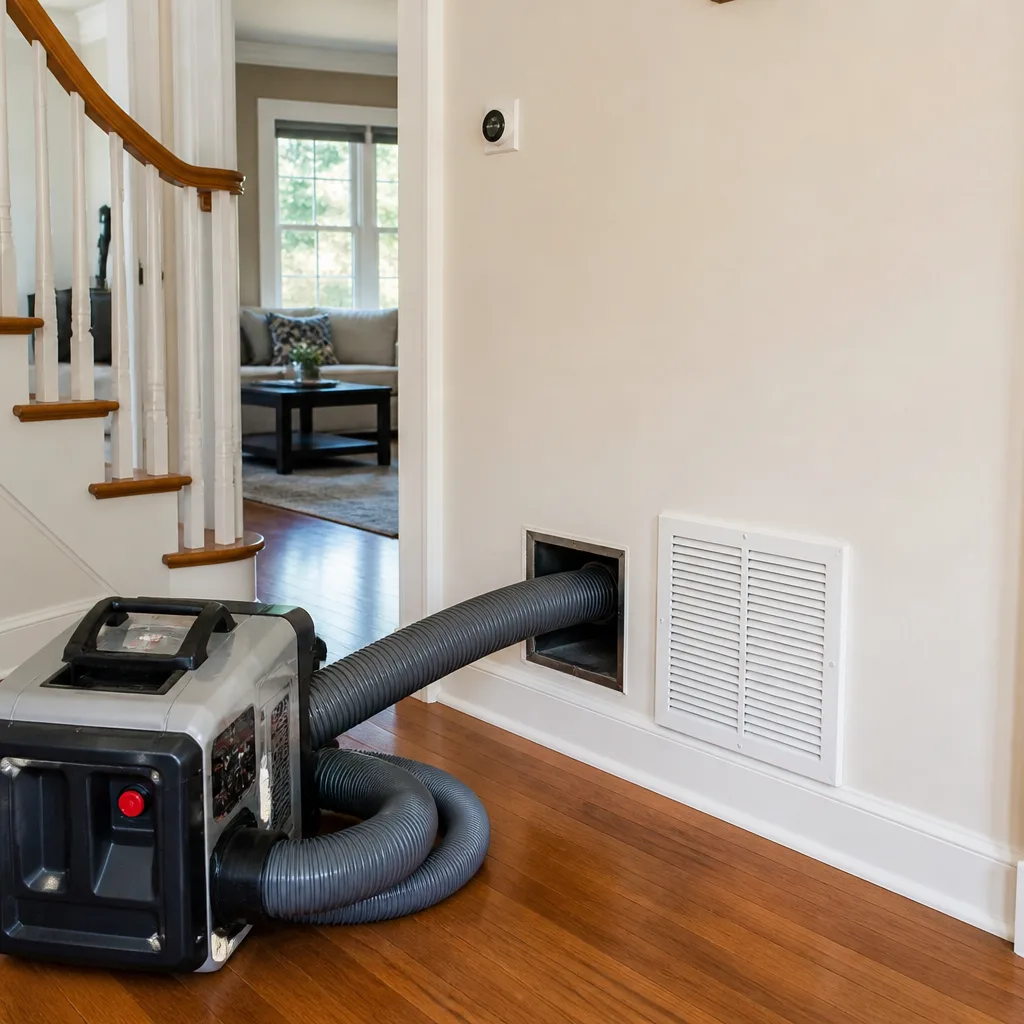 Whole-home duct cleaning
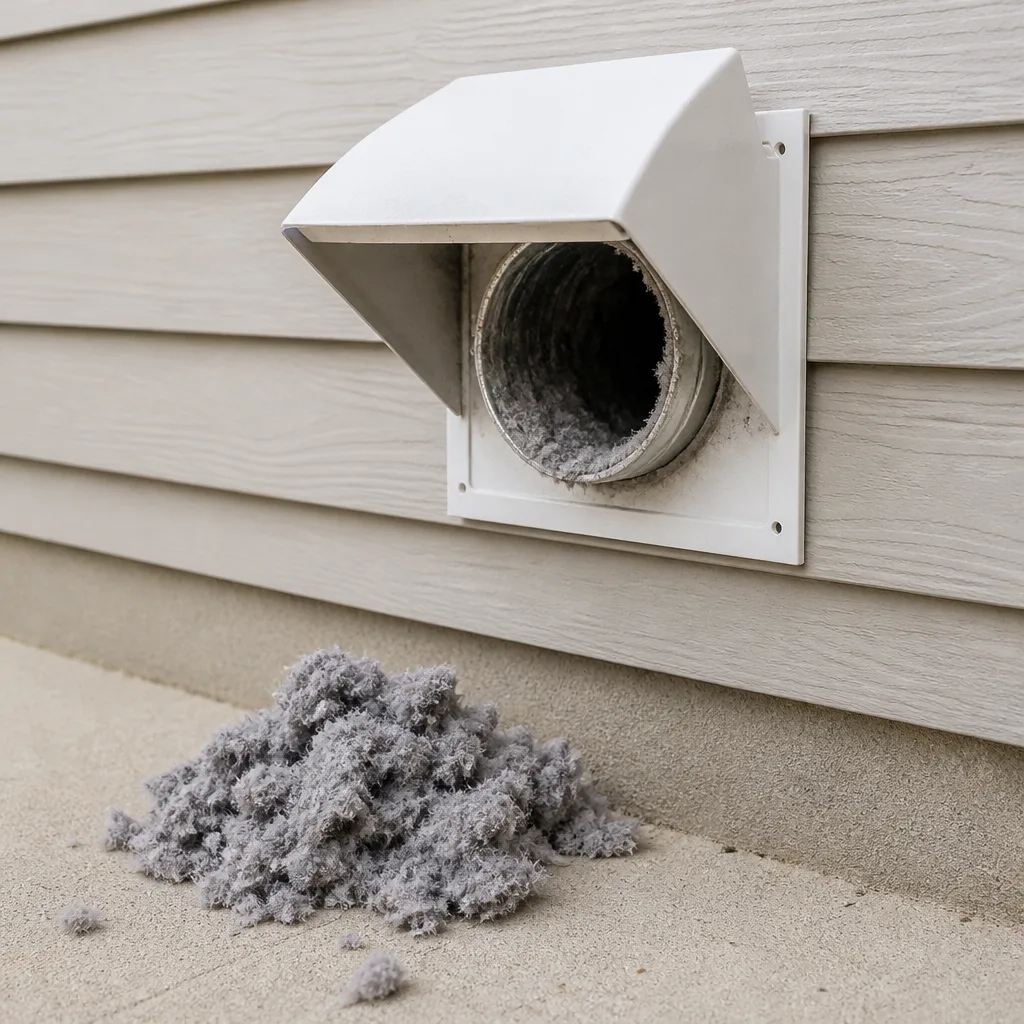 Dryer vent cleaning
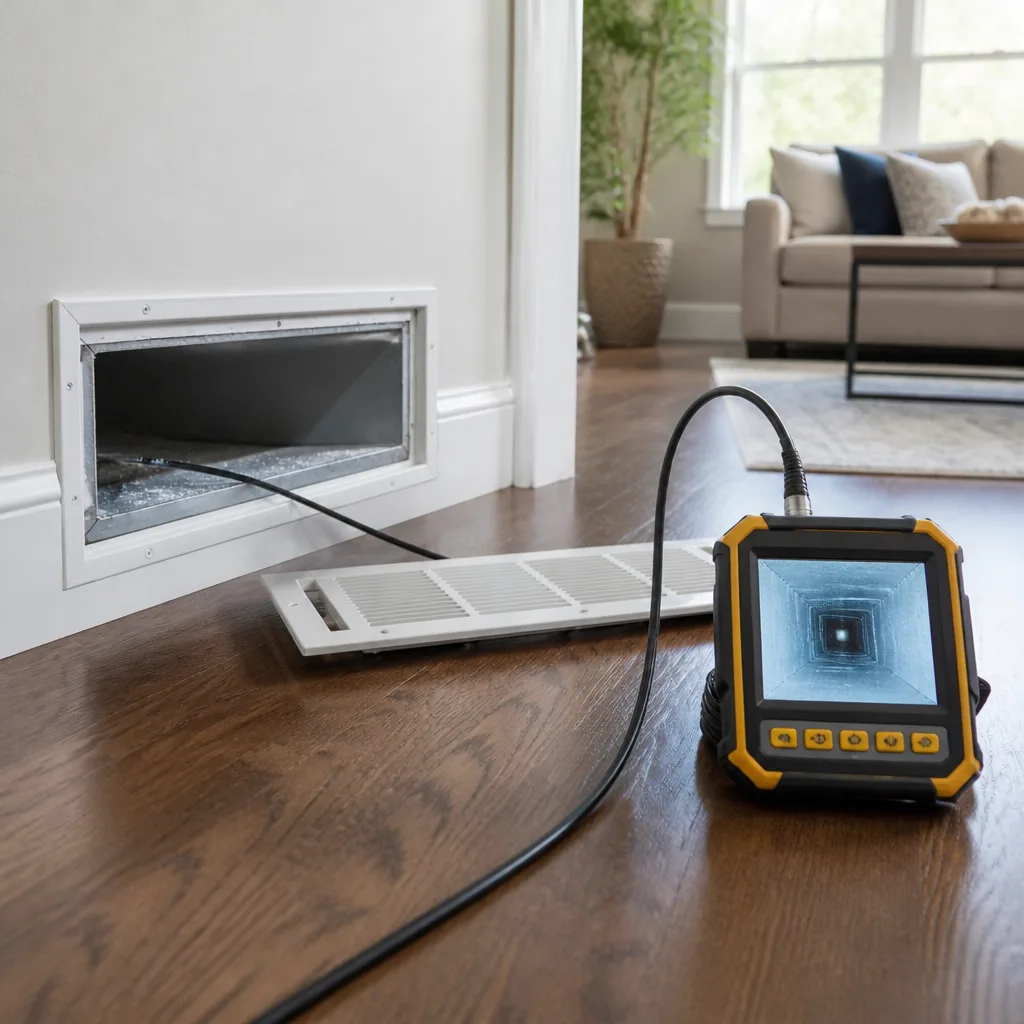 Camera inspection
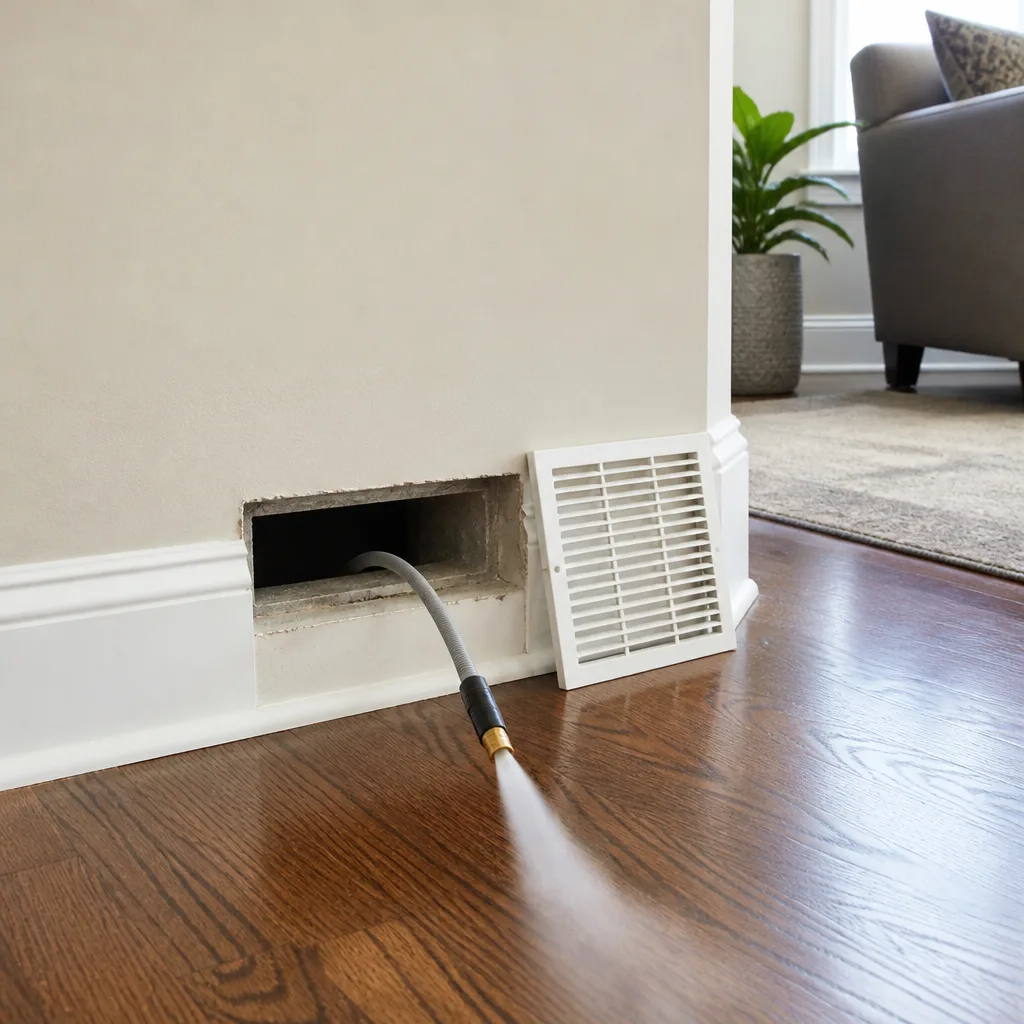 Sanitizing & deodorizing
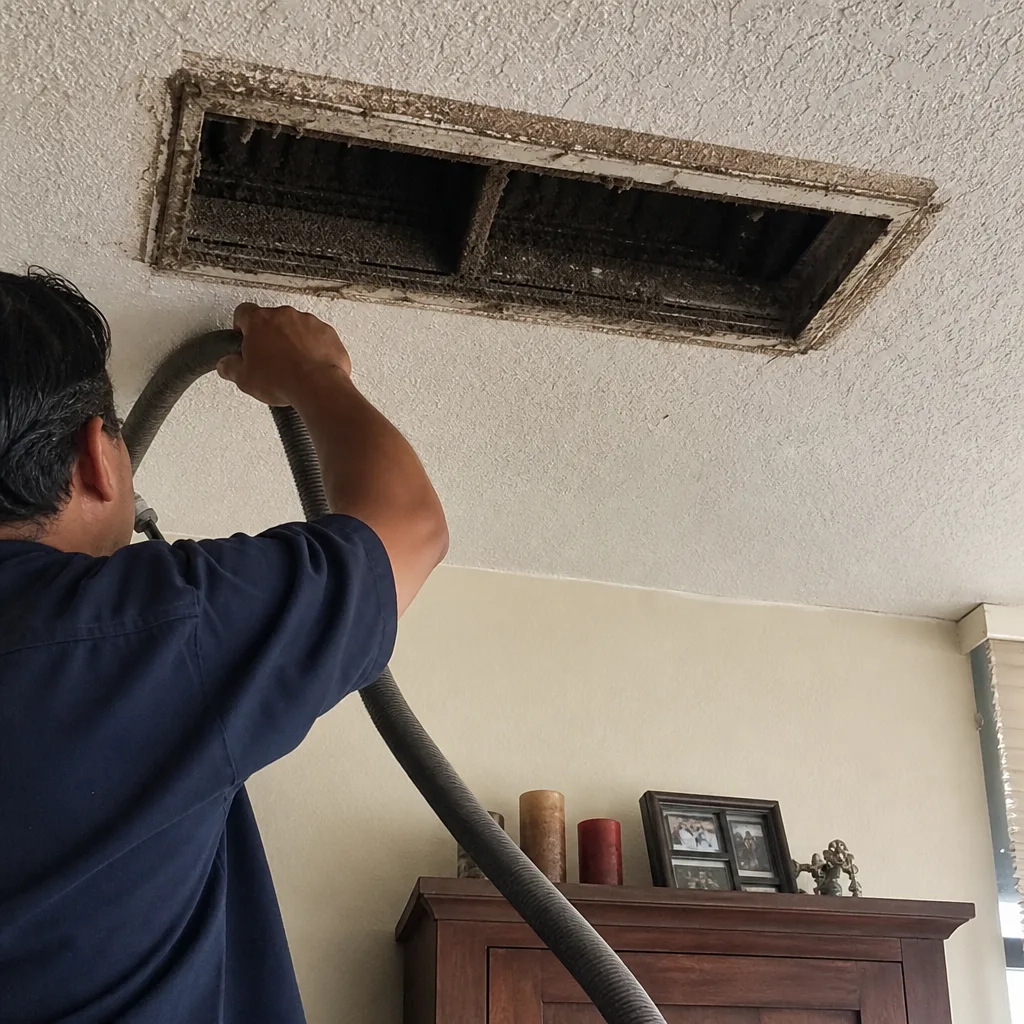
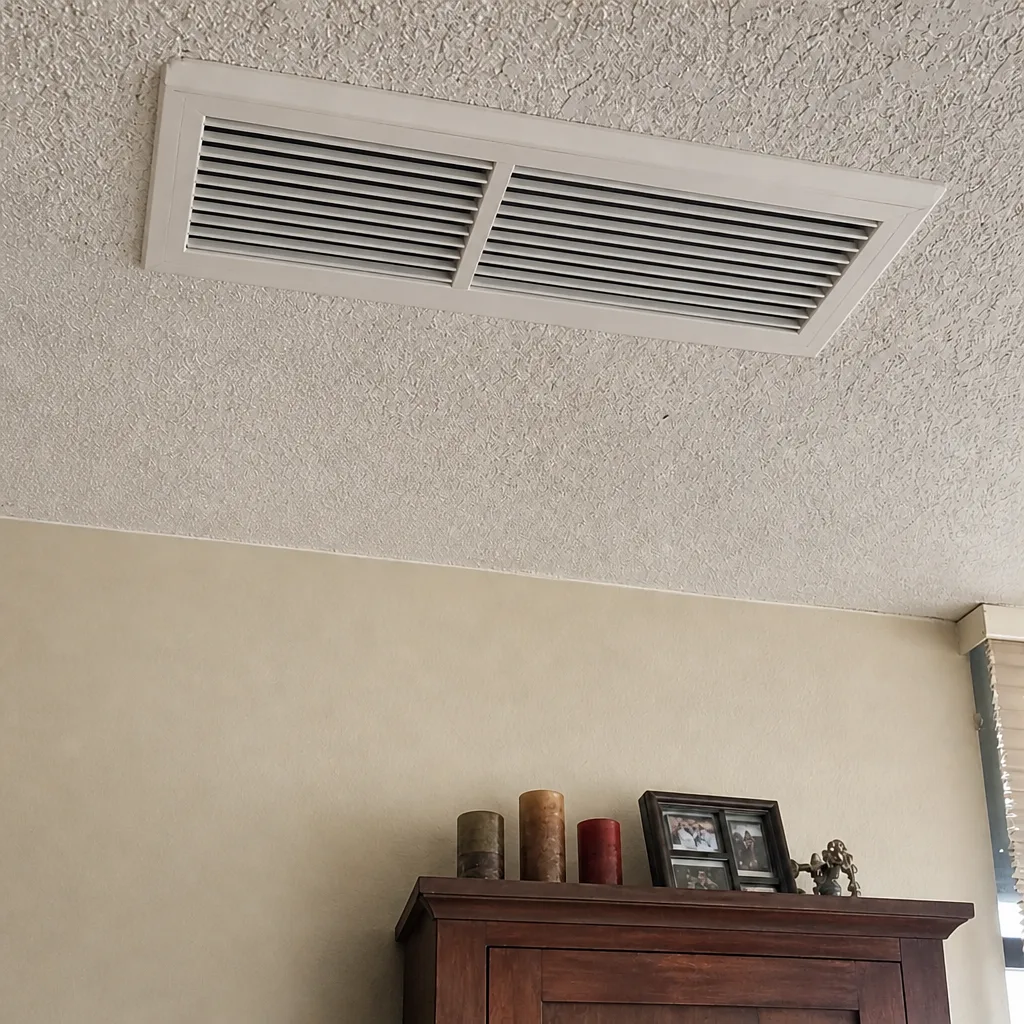
Whole-system duct and dryer vent check with before-and-after photos - you see exactly what came out of your vents
That "$99 whole-house special" is a bait ad - the real number appears once they are in your hallway, or the "clean" is a shop-vac at the register. We photograph the inside of your ducts before and after instead.
DIY vs Professional Air Duct Cleaning: The East Anaheim Homeowner’s Decision Guide
You can point a shop vac at a supply register. You can reach the first foot or two of duct with a dryer vent brush from a hardware store. That much is true, and it’s why so many East Anaheim homeowners decide to handle duct cleaning themselves. The problem starts about 18 inches in. Behind that point sits the actual duct run, often 30 to 40 feet of it, along with the plenum, the trunk lines and every branch feeding the rooms you sleep in. A consumer vacuum loses suction against that distance almost immediately. This guide explains what DIY tools can and can’t reach, where doing it yourself is genuinely fine, and how to tell when the job has outgrown your equipment.
Quick Answer
DIY air duct cleaning works for surface issues: a dusty return grille, a dryer vent run you can access, a visual check before you decide what’s next. It does not work for the interior of a duct system because consumer vacuums can’t hold negative pressure across a full run and consumer brushes can’t agitate contamination off the duct walls. A professional cleaning uses purpose-built equipment to create that pressure, agitate the whole system and verify the result with before-and-after documentation.
Styles & brands we work with
- Whole-home duct cleaning
- Dryer vent cleaning
- Camera inspection
- Sanitizing & deodorizing
Table of Contents
- What DIY Air Duct Cleaning Actually Reaches
- Equipment Comparison: Shop Vac, Consumer Kit, Professional Machine
- When DIY Is Genuinely the Right Call
- DIY Risks Specific to East Anaheim Housing Stock
- How to Use DIY Maintenance to Extend the Interval Between Cleanings
- What a Professional Job Produces That DIY Cannot
- How a Professional Duct Cleaning Actually Runs, Step by Step
- Common Mistakes to Avoid
- When to Call a Professional
- Frequently Asked Questions
What DIY Air Duct Cleaning Actually Reaches
A residential wet/dry vac is a short-range tool. It’s designed to pull debris from a floor or a workspace, not to hold pressure inside a closed duct system. When you feed the hose into a supply register, you get meaningful airflow for roughly the first foot. Past that, friction against the duct walls, the turns in the run and the sheer volume of air in the system overwhelm the vacuum. The dust sitting on the duct floor 20 feet away doesn’t move. In our experience, homeowners who try this come away satisfied that the register looks clean, and that’s accurate. The register is clean. The duct behind it isn’t.
Consumer duct cleaning kits sold at hardware stores extend the reach a little. Most pair a flexible brush with a shop vac adapter, which gets you perhaps 6 to 8 feet into a straight run. That sounds better than 18 inches, and it is, but a standard East Anaheim home has branch runs that branch again, flex duct that turns sharply, and transitions between rigid trunk and flexible supply that a stiff brush can’t navigate. The contamination that accumulates in a system tends to collect at the joints and the elbows, exactly where a consumer brush can’t follow.
Here’s what DIY reaches in practice:
- Supply and return grilles: fully accessible, worth cleaning, no special equipment needed.
- The first 1 to 2 feet of duct behind a register: a shop vac can pull loose surface dust from this zone.
- Straight runs of 6 to 8 feet with a consumer kit: partial cleaning at best, no wall agitation.
- The plenum, trunk lines, branch runs beyond the first turn, the evaporator coil housing: not reachable with consumer equipment.
The gap between a clean register and a clean duct system is the entire reason this decision matters. If the visible part is the only part you’re cleaning, you’re addressing appearance, not air quality.
Equipment Comparison: Shop Vac, Consumer Kit, Professional Machine
The honest way to compare DIY versus professional duct cleaning is by what each machine can physically do inside a duct run. Effort isn’t the dividing line. Reach and pressure are. Here’s the breakdown we walk homeowners through in East Anaheim.
- Residential wet/dry vac: 2 to 6 horsepower at the motor, but effective suction drops off sharply with hose length and duct distance. Reaches roughly 1 to 2 feet of usable cleaning inside a register. No agitation capability. Not designed to hold negative pressure in a closed system.
- Consumer duct cleaning kit (brush plus shop vac adapter): extends reach to 6 to 8 feet on straight runs. The brush agitates slightly but isn’t built to strip adhered dust from ductboard or flex liner. Cannot generate system-wide negative pressure, so loosened debris has nowhere to go except back into the room.
- Professional duct cleaning system: purpose-built units from manufacturers like Rotobrush and Nikro that combine high-volume negative air with agitation tools sized for the duct. These hold negative pressure across the full system, which means contamination is captured rather than redistributed.
- Negative air machines and HEPA capture units: equipment like Abatement Technologies units, used in contamination control work, creates a sealed pressure differential so debris exits the system through a filter instead of into your living room.
The critical difference isn’t raw motor power. It’s whether the equipment can pull a system into negative pressure while an agitation tool works the duct walls at the same time. One without the other either stirs dust into the air or vacuums a surface without dislodging what’s stuck to it. Professional setups do both together, which is why the results hold up. We use Rotobrush and Nikro systems for exactly this reason: they’re built for duct work, not adapted from shop tools.
When DIY Is Genuinely the Right Call
We’re not going to tell you every duct task needs a contractor. Several do not, and doing them yourself is sensible. Here’s where DIY earns its place.
- Dryer vent cleaning. If your dryer vent run is short, straight and accessible from the exterior, a vent brush kit and a shop vac handle it well. This is one of the highest-value DIY tasks in the house because lint buildup is a fire risk, and the run is usually reachable. If your vent runs long, turns multiple times, or exits through the roof, that changes and it’s worth a professional look.
- Clearing a single accessible return grille. Pull the grille, vacuum the face and the frame, wipe it down, put it back. No special tools, real benefit.
- Pre-inspection visual assessment. Before you decide whether to call anyone, pull a register and look inside with a flashlight. If you see heavy dust accumulation, debris or visible microbial growth, that’s your signal. If the duct interior looks clean, you may not need service at all.
- Filter changes. Not duct cleaning, but the single most effective thing you can do between professional cleanings. A clogged filter strains the system and pushes more particulate into the ducts.
Notice what’s on that list: tasks where the target is accessible and the tool matches the job. Dryer vents and grilles are open, reachable and short. Duct interiors are none of those things. That’s the line. In our experience, homeowners in East Anaheim who try to cross it end up calling us anyway, sometimes after making the problem harder to fix.
DIY Risks Specific to East Anaheim Housing Stock
East Anaheim homes span a wide range of construction eras, and the duct systems reflect that. Mid-century homes often have rigid metal ductwork. Later builds and renovations frequently use flex duct and ductboard, both of which are far less forgiving of a shop vac hose or a consumer brush. The risks below are the ones we see most.
- Puncturing flex duct liner. Flex duct has a thin inner liner that carries the air. A shop vac hose pushed hard around a bend, or a stiff consumer brush, can tear it. Once the liner is compromised, the duct leaks, loses efficiency and can pull attic air into your supply. That’s a repair, not a cleaning issue, and it costs more than the cleaning would have.
- Disturbing fiberglass insulation in older ductboard systems. Ductboard is rigid fiberglass with a foil face. Aggressive consumer tools can break the interior facing and release fiberglass particles into the airstream. That’s a health concern and a repair, in that order.
- Dislodging biological debris without containment. If there’s microbial growth in the system and you loosen it with a shop vac that isn’t sealed to the duct, you’re moving contamination into the room air. Professional equipment uses negative pressure and HEPA filtration specifically to prevent this.
- Pushing debris downstream. A vacuum without system-wide pressure can push loosened dust deeper into the run or into the coil housing, where it’s much harder to remove.
- Missing the coil and plenum entirely. DIY never reaches the evaporator coil, which is where a lot of the biological material in a system collects. Cleaning the ducts but not the coil leaves the source in place.
None of these are hypothetical. Flex liner tears and ductboard damage are common enough that we check for them on every East Anaheim inspection. A shop vac is a good tool for a floor. It’s the wrong tool for ductwork, and the failure mode is expensive.
How to Use DIY Maintenance to Extend the Interval Between Cleanings
The right way to think about DIY isn’t as a substitute for professional cleaning. It’s as maintenance that stretches the time between professional visits. A few habits do most of the work.
- Change your filter on schedule. Check it monthly and replace it when it’s loaded. A clean filter catches more particulate before it reaches the ducts, which directly reduces how fast they accumulate contamination. This single habit does more than any other DIY task.
- Vacuum your return grilles regularly. Grilles collect dust before it gets pulled into the system. A quick pass with a brush attachment every couple of weeks keeps that dust from becoming duct dust.
- Keep the return path clear. Furniture, rugs and storage blocking return grilles forces the system to pull harder and draw more debris from gaps. Clear returns mean cleaner ducts.
- Clean the dryer vent on a set schedule. Lint is a fire risk, but it’s also an airflow restriction. Handling the dryer vent yourself keeps that one system clean between professional visits.
- Watch for the signals. Visible dust streaks at registers, a musty smell when the system starts, increased allergy symptoms inside the house. These tell you it’s time to stop maintaining and start scheduling.
- Have the system inspected before you buy a house in East Anaheim. A pre-purchase duct inspection tells you what you’re inheriting. If the prior owner never cleaned the ducts, you’re starting from a deficit that DIY maintenance won’t close.
Handled this way, DIY has real value. It doesn’t clean the ducts. It slows the rate at which they need cleaning, and it keeps you aware of what’s happening inside the system so you’re not guessing.
What a Professional Job Produces That DIY Cannot
There are three things a professional cleaning delivers that no DIY setup can replicate, and they’re worth understanding because they define what you’re actually paying for.
Documented negative pressure across the system. Professional equipment seals to the ductwork and pulls the entire system into negative pressure before any agitation starts. That means contamination moves toward the capture point instead of into the room. Consumer vacuums can’t do this because they’re not sealed to the system and can’t hold the pressure. The difference shows up in your indoor air for weeks after the job.
Agitation throughout the full duct run. Contamination adheres to duct walls. Vacuum alone doesn’t remove it. Professional systems use rotary agitation tools sized for the duct, working the walls of the supply and return runs, the trunk lines and the plenum. Consumer brushes agitate a few feet. Professional agitation reaches the whole system.
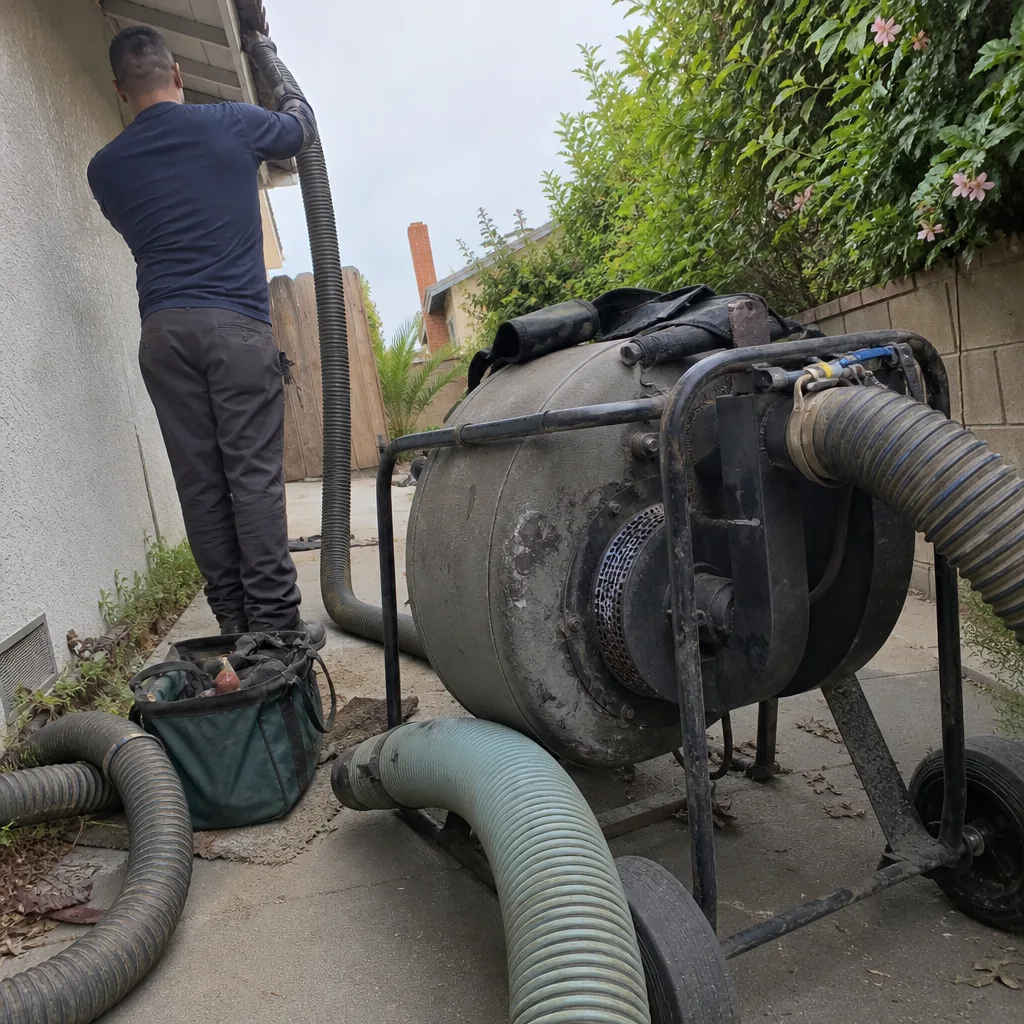
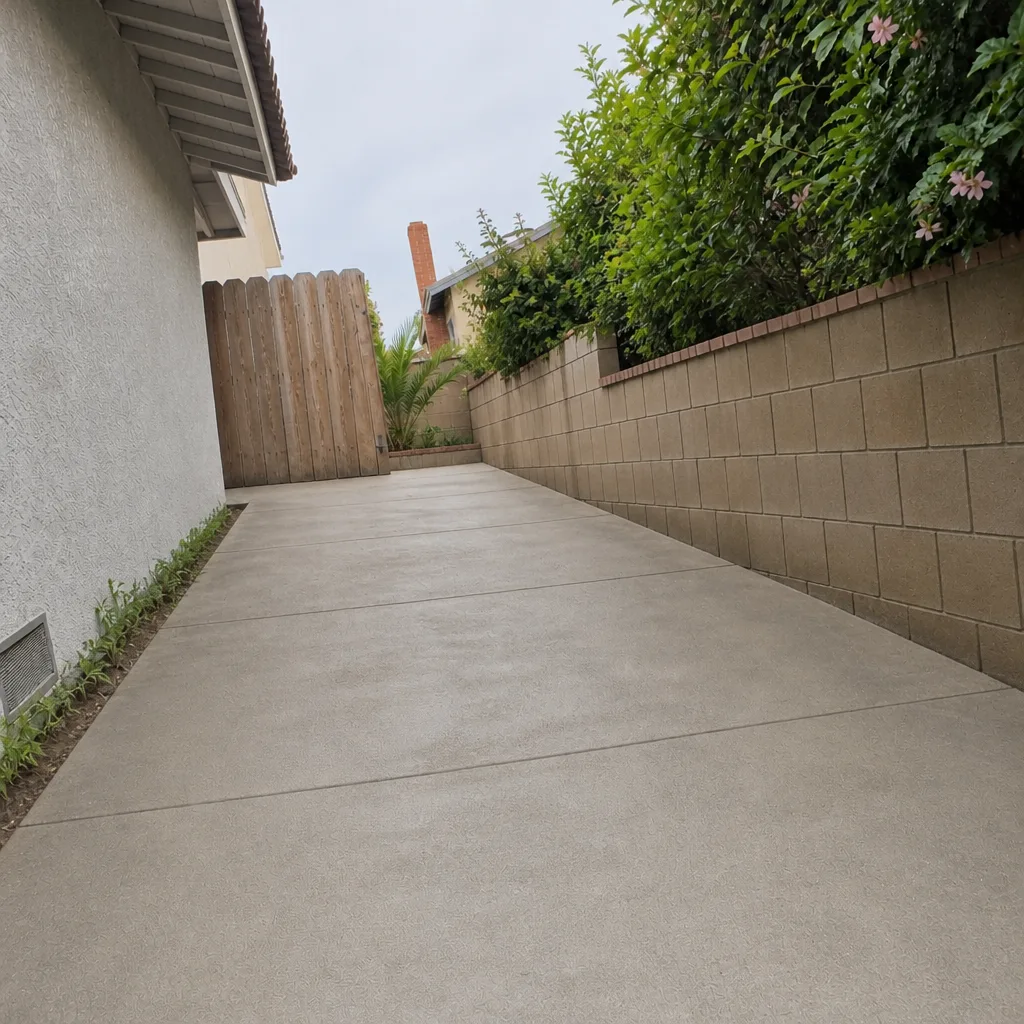
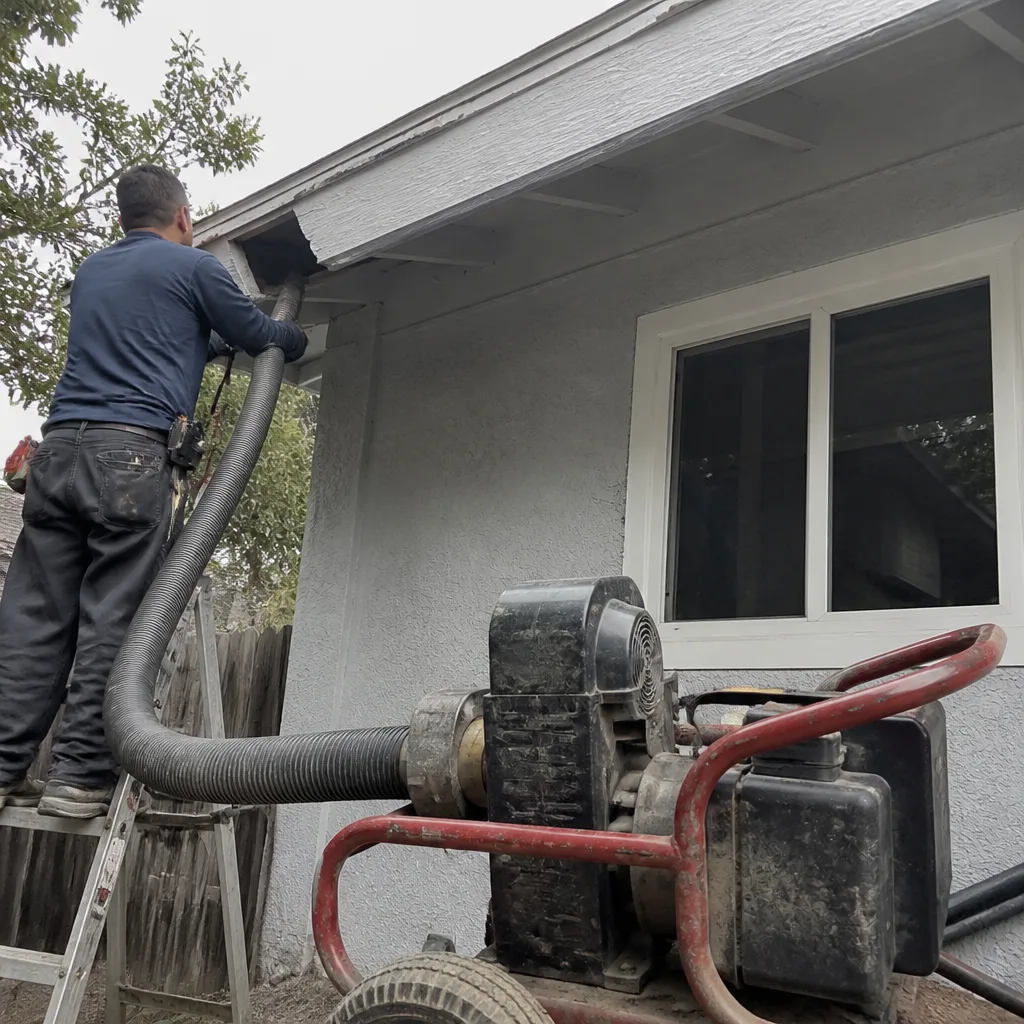
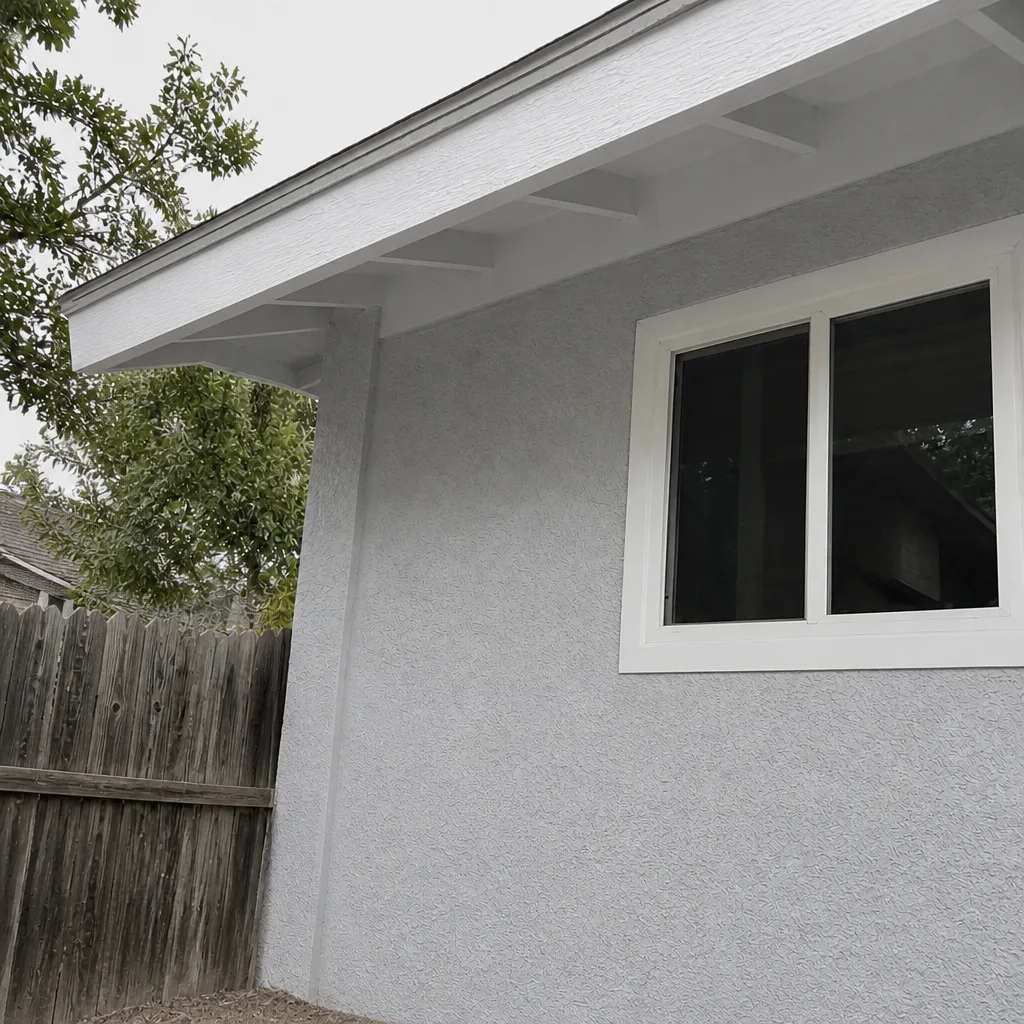
Before-and-after verification photography. A professional cleaning should show you what was in the ducts and what’s there after. We photograph the interior before we start, so you can see the condition for yourself, and again after. That documentation is how you know the work was actually done rather than just billed. If a company doesn’t offer it, ask why.
Beyond the cleaning itself, a full-service contractor can address what’s causing the contamination. Duct repair and sealing closes the leaks that let attic air and debris into the system. Sanitizing treats microbial growth. Working with Aprilaire and Honeywell systems means whole-home filtration and humidity control can be added where they make sense. Cleaning without addressing the cause means you’ll be back at the same starting point sooner. That’s the reason we offer air duct cleaning alongside repair, sealing, sanitizing and dryer vent cleaning as one scope of work.
How a Professional Duct Cleaning Actually Runs, Step by Step
Knowing the sequence helps you evaluate any quote you get, in East Anaheim or anywhere. A thorough job follows a predictable order.
- Inspection and documentation. The technician pulls registers, inspects the duct interior with a camera, and photographs the condition before any work starts. You see what’s in your ducts before we start.
- Setup and containment. Equipment is connected to the system and negative pressure is established. HEPA filtration captures what comes out. If the job involves contamination control, equipment like Abatement Technologies units handles the capture side.
- Agitation of the supply and return runs. Rotary tools work the duct walls from the registers back toward the trunk, loosening adhered material while negative pressure carries it out.
- Trunk line and plenum cleaning. The larger ductwork and the plenum get the same treatment. This is where a lot of the accumulated debris lives.
- HVAC and coil cleaning. The evaporator coil and the air handler components are cleaned as part of the system, since the coil is a major collection point. This is properly HVAC cleaning, and it’s a separate step from duct cleaning.
- Sanitizing where needed. If inspection found microbial growth, an air quality sanitizing treatment is applied after cleaning, not before.
- Repair and sealing where needed. Leaks, torn flex liner or failing ductboard get repaired and sealed. Sealing after cleaning is what keeps the result intact.
- Post-cleaning verification. After photos document the result. In our experience, the before-and-after comparison is the clearest answer to “was the work actually done?”
A company that skips steps 1, 7 and 8 isn’t doing the full job, even if the price looks attractive. Those three steps are what separate a cleaning from a vacuum pass.
Common Mistakes to Avoid
- Cleaning only the visible registers. A clean grille tells you nothing about the duct behind it. If that’s the whole job, you’ve addressed appearance and left the contamination in place.
- Using a shop vac without containment. A shop vac loosens dust but doesn’t filter it to a fine enough level to keep it out of the room air. If the ducts are contaminated, this makes the indoor air worse before it gets better.
- Forcing a brush through a tight flex duct bend. This is one of the most common ways homeowners in East Anaheim damage their own ductwork. Flex liner tears easily, and the repair costs more than a professional cleaning would have.
- Assuming a cheap quote means a cheap job. A low price usually reflects what’s not included: no documentation, no agitation, no coil cleaning, no sealing. Ask what the quote covers before you compare on price alone.
- Cleaning the ducts but not the coil. The evaporator coil is where a lot of biological material collects. Cleaning the ducts and leaving the coil is like washing a floor and leaving the drain.
- Skipping the dryer vent. Lint buildup is a fire risk, and most duct-only companies don’t clean dryer vents. If yours isn’t included in the scope, ask separately.
- Cleaning without sealing leaks afterward. Ducts that leak pull unfiltered attic or crawlspace air back in. Cleaning without sealing means the system recontaminates faster.
See the difference
 Before
 After
 Before
 After
 Before
 After
When to Call a Professional
Call a professional when the problem is inside the duct system rather than at the surface: visible dust blowback at the registers after cleaning them, a musty or stale smell when the system starts, worsening allergy symptoms indoors, a system that has never been cleaned, or visible debris or growth inside a duct you’ve inspected with a flashlight. Call before you have a contractor do any other HVAC work, so the ducts aren’t left contaminated. And call if a DIY attempt has already gone wrong: a torn flex liner, disturbed ductboard or a shop-vac job that ended with dust everywhere. Those are repair situations, not cleaning situations.
Air Duct Cleaning East Anaheim offers free estimates in East Anaheim. Call (844) 834-1661. We answer 24/7. Fast dispatch from 7am to 7pm, Sunday through Friday. Estimates are per job by written estimate, so the price is set before any work starts.
Frequently Asked Questions
You can clean the first foot or two behind a supply register with a shop vac, but you can’t clean the duct system. A shop vac loses suction against duct length, can’t agitate contamination off the walls and can’t hold the system in negative pressure. Past the first turn, the rest of the run stays as it was. For anything beyond surface cleaning, professional equipment is what reaches it. Call (844) 834-1661 for a free estimate in East Anaheim.
Most East Anaheim homes benefit from a professional cleaning every three to five years, though that depends on pets, allergies, renovation dust and how well the filters have been maintained. Homes with pets or family members with allergies may need it more often. The right answer comes from an inspection, not a calendar. If you’re unsure, an inspection will tell you whether it’s time.
Cheap quotes usually leave out the steps that make a cleaning effective: system-wide negative pressure, agitation through the full duct run, coil cleaning, before-and-after documentation and sealing. What’s left is a surface vacuum pass. Ask what a quote includes before you compare it on price. A free estimate from our team spells out the scope so you’re comparing like with like.
Usually yes, if the dryer vent run is short, straight and accessible from the outside. A vent brush kit and a shop vac handle it. If the run is long, has multiple turns or exits through the roof, a professional cleaning is safer and more thorough. Lint buildup is a fire risk, so don’t skip it. Call (844) 834-1661 if you want it handled as part of a larger duct cleaning.
Cleaning removes accumulated dust, debris and microbial material from the system, which reduces what’s circulating through your home. Many allergy sufferers report improvement after a professional cleaning, though results vary by person and by how much contamination was present. Combined with a quality filter and, where appropriate, whole-home filtration from Aprilaire or Honeywell, the effect is more consistent. A free estimate is the best starting point.
Ask for before-and-after photos of the duct interior. A professional cleaning documents the condition before work starts and again after, so you can compare. If a company can’t show you the difference, that’s worth asking about. We photograph the interior before we start and after the job is complete.
The Bottom Line
The DIY versus professional question comes down to reach and pressure, not effort. A shop vac and a hardware-store kit clean the visible surface: grilles, the first foot or two of duct, a short accessible dryer vent. They can’t clean the duct run, the plenum or the coil, and trying can damage flex liner or disturb ductboard. Handle the maintenance yourself: filters, grilles, the dryer vent, a visual check before you call. Then bring in professional equipment for the parts you can’t reach. That split gets you the best result for the least money, and it’s the approach we recommend to every East Anaheim homeowner who asks.
You can read more about the full range of services on the Air Duct Cleaning East Anaheim page.
Ready to see what’s in your ducts? Call (844) 834-1661 for a free estimate. We answer 24/7. Fast dispatch from 7am to 7pm, Sunday through Friday. The local pro is licensed and insured as their state requires, the estimate is per job by written estimate, and before-and-after photos are part of the job.
Written by the team at Air Duct Cleaning East Anaheim.