
Last updated November 24, 2026
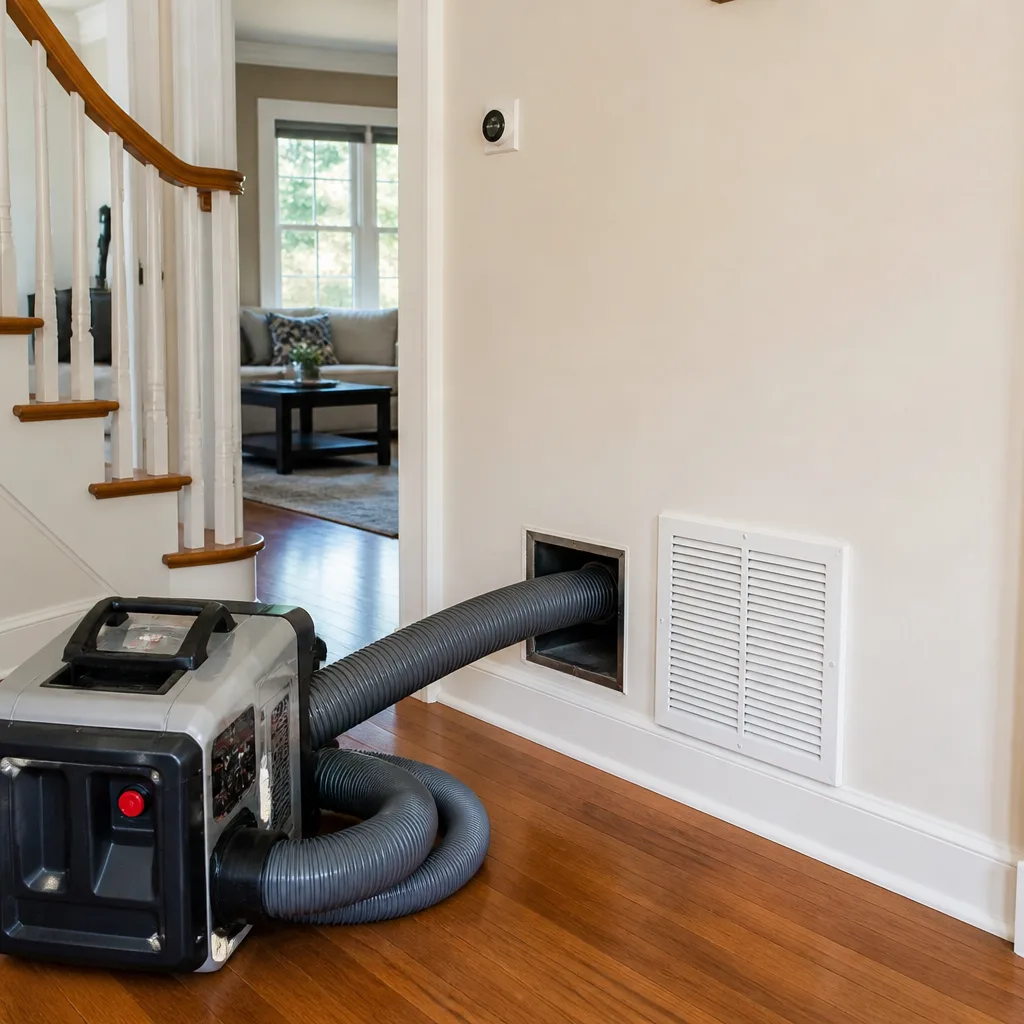 Whole-home duct cleaning
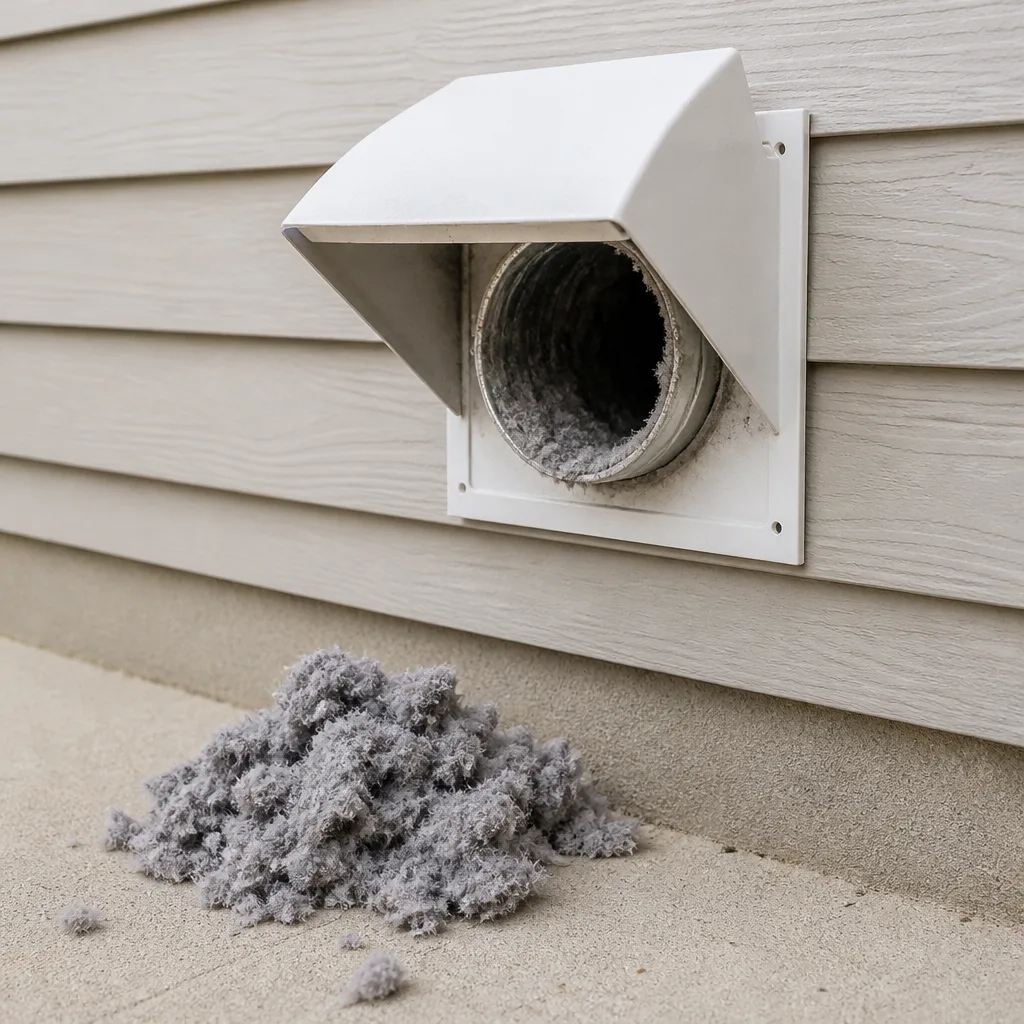 Dryer vent cleaning
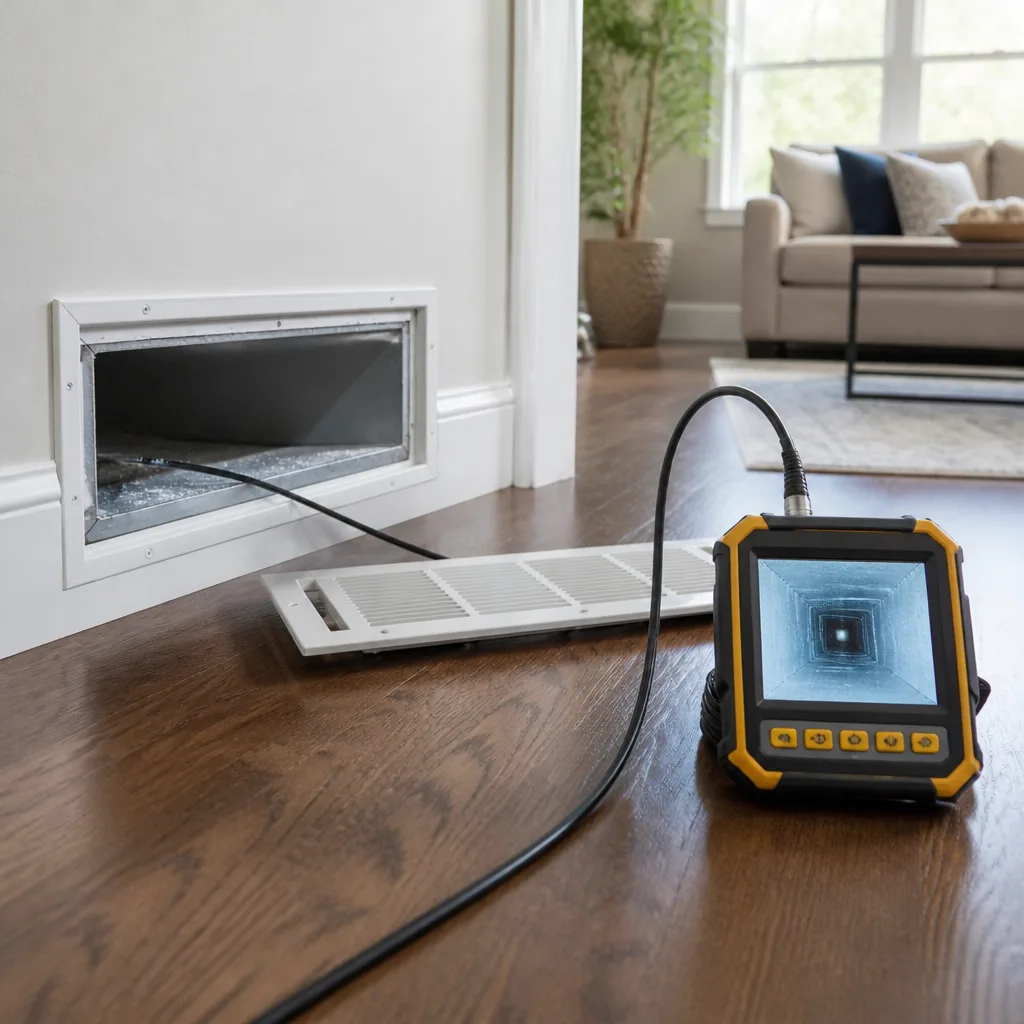 Camera inspection
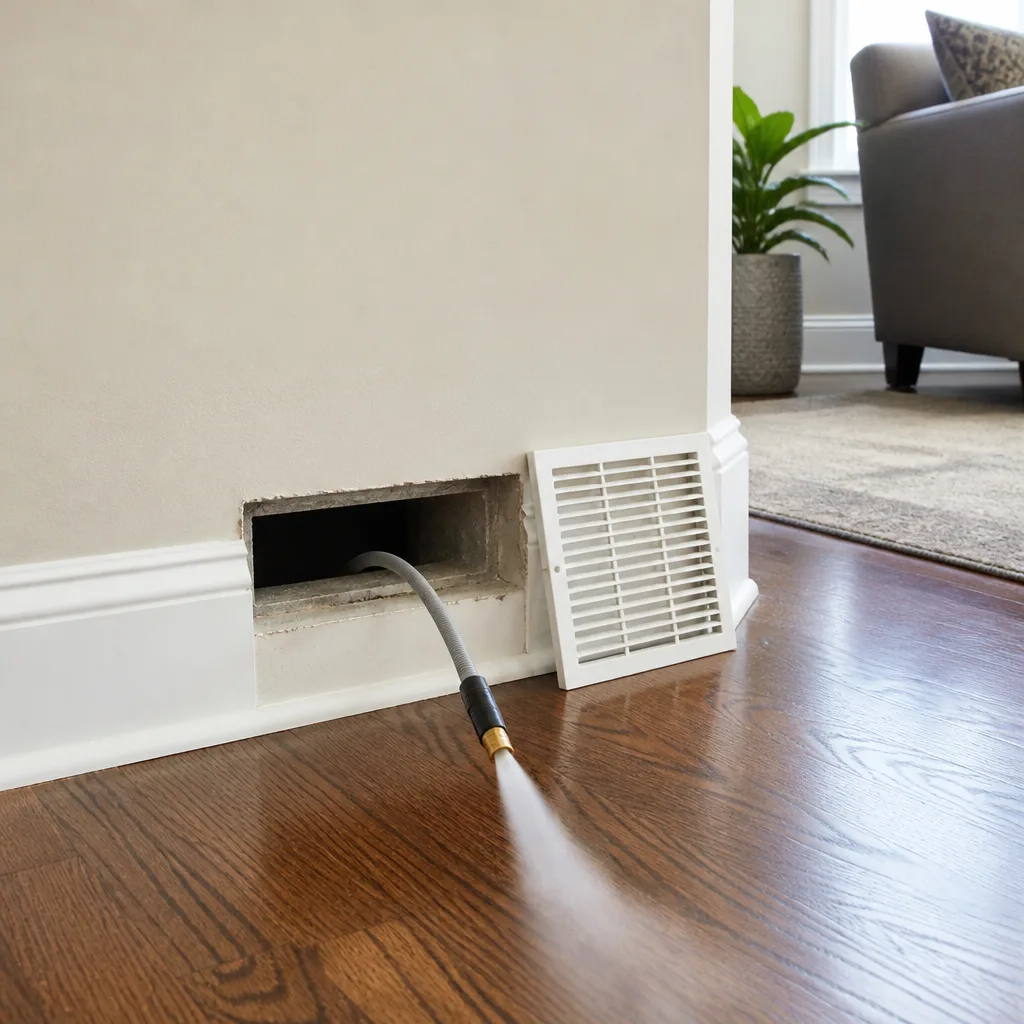 Sanitizing & deodorizing
Whole-system duct and dryer vent check with before-and-after photos - you see exactly what came out of your vents
That "$99 whole-house special" is a bait ad - the real number appears once they are in your hallway, or the "clean" is a shop-vac at the register. We photograph the inside of your ducts before and after instead.
The Complete Guide to Air Duct Cleaning in East Anaheim
A shop vac attached to a flex hose is not a duct cleaning system. It’s a prop, and a surprising number of East Anaheim homes have been “cleaned” with exactly that. The vacuum pulls a little loose dust from whatever it can reach near the register, the technician waves a flashlight into the return, and you’re left with the same dirty system and a lighter wallet. What actually separates a real cleaning from a cosmetic one is equipment, sequence, and documentation. This guide walks through all three, stage by stage, so you know what a thorough job looks like in East Anaheim before anyone shows up at your door.
Quick Answer
Air duct cleaning in East Anaheim is the process of putting the entire duct system under controlled negative pressure, agitating the interior surfaces with purpose-built tools, and extracting the loosened debris through a HEPA-filtered vacuum – then verifying the result with before-and-after documentation. A proper cleaning touches every supply and return run, not just the registers you can see, and it ends with a written scope of work and photos. If a contractor can’t explain which equipment they use, how they reach the far end of a trunk line, or what they’ll hand you at the end, the visit is likely superficial.
Styles & brands we work with
- Whole-home duct cleaning
- Dryer vent cleaning
- Camera inspection
- Sanitizing & deodorizing
Table of Contents
- Why Negative Air Pressure Changes the Whole Job
- The Sequence of a Proper Cleaning, Step by Step
- How East Anaheim Conditions Shape What Needs Cleaning
- Rotobrush, Nikro, Abatement: What the Equipment Actually Does
- Dryer Vent Cleaning: The Other Half of the System
- What You Should Receive at Job Completion
- How Often Do You Really Need It?
Why Negative Air Pressure Changes the Whole Job
Duct cleaning works on a simple principle: if the entire duct system is held under negative pressure while you loosen debris inside it, everything travels one direction – toward the vacuum. Portable units struggle with this because they generate far less airflow than a truck-mounted power unit, and they can’t hold a whole-house duct system sealed and under vacuum at the same time. Truck-mounted negative air equipment connects at one point (usually a return trunk or a temporary access port), seals off the rest of the system, and pulls continuous high-volume airflow through every branch. It’s the difference between sweeping a room with a dustpan and sweeping with a dustpan while someone vacuums the doorway.
What truck-mounted equipment actually does differently
- Generates the airflow volume needed to lift settled debris from horizontal runs, not just the loose dust near a register.
- Holds the duct system under continuous vacuum while the technician works the far ends, so loosened material can’t migrate back into occupied space.
- Filters the exhaust through HEPA-grade filtration, so what leaves the ducts doesn’t end up on your furniture.
- Allows one technician to agitate a run while another works the collection point, which is why the source-capture standard is closely tied to Abatement Technologies equipment in remediation work.
Orange County dust loads run high in dry months, and a system that’s been drawing unfiltered air through the returns for a few seasons tends to hold fine dust in the horizontal sections where airflow drops. Portable vacuums can’t move enough air to pull that material into suspension. Truck-mounted negative air can. That’s why the equipment distinction isn’t a marketing detail – it’s the difference between cleaning the air column and cleaning the duct.
If you’ve been running a portable unit or a consumer vacuum through your vents as a DIY attempt, you’ve mostly succeeded in stirring settled dust into the air you breathe. Real air duct cleaning starts from the extraction side and works backward.
The Sequence of a Proper Cleaning, Step by Step
Every cleaning job, whether it’s a single-story ranch near Salem Street or a two-story tract home off Rio Vista, follows the same broad sequence. The exact tools change; the order shouldn’t. This is what you should expect to see on a professional visit.
- System inspection and documentation. Before any equipment runs, the technician maps the duct layout, identifies supply and return trunks, notes the air handler location, and photographs the interior conditions. This baseline is what you’ll compare against at the end.
- Access point creation. Most residential ductwork doesn’t have enough built-in access for cleaning tools, so the technician cuts small, sealable access holes in strategic trunk locations. These are later fitted with gaskets or capped and sealed so the duct system doesn’t leak when the job is done.
- Negative pressure setup. The truck-mounted vacuum is connected at the main trunk, and the rest of the system is sealed with tape and foam blockoffs so the entire run is under controlled vacuum.
- Agitation, register by register. With negative pressure running, the technician works flexible rotary brushes, whips, and air tools through each supply and return run. The agitation breaks material loose from the duct walls so the vacuum can pull it out. Registers and grilles are removed and cleaned separately.
- Air handler and coil area cleaning. The blower compartment, evaporator coil face, and plenum are cleaned in place. This step is often skipped by duct-only contractors, and it’s the reason HVAC cleaning belongs in the same visit as duct work – a clean duct system connected to a dirty coil just re-contaminates itself.
- Sealing and finishing. Access points are sealed, gaps at joints and connections are closed, and where we find significant leakage we recommend duct repair and sealing as part of the same scope.
- Final verification. The technician re-inspects the interior with a camera, captures after-photos, and documents the completed scope in writing.
The whole job typically takes a few hours for a standard residential system, longer on homes with multiple zones or long trunk runs. If someone claims to clean a full home in under an hour, they are not doing all seven steps.
How East Anaheim Conditions Shape What Needs Cleaning
East Anaheim’s housing stock and climate leave specific marks inside a duct system that generic guides don’t address. If your home sits in the older tract neighborhoods on either side of Lincoln Avenue or near the Santa Ana River corridor, there’s a decent chance the ductwork is original, aluminum flex, or a mix of original rigid trunk and later flex branches added during a remodel. Those mixed configurations are exactly where airflow drops and debris collects.
Slab foundations and what they change
Much of East Anaheim is built on slab. That matters because the duct layout in a slab-foundation home usually runs through the attic or across the ceiling, not through a basement (there aren’t basements here). Attic duct runs take heat gain in summer that cools airflow in winter – it’s hard on the system, and it’s where small leaks at flex connections compound over years. Slab construction also means duct access is created from above, not below, which is a design factor the technician has to account for at the access-point stage.
Dry Santa Ana wind seasons
The Santa Ana wind pattern that shapes inland Orange County brings dry, particulate-heavy air through the region in fall and winter. During those stretches, homes run their HVAC more and open windows to let the dry air move through. That combination pushes more dust and pollen into the return side than a coastal house would see. In our experience, homes on the eastern side of Anaheim tend to need the return side of their system cleaned first because it captures more of that particulate load.
Older tract housing duct configurations
Anaheim tract homes built in the mid-twentieth century were designed when duct cleaning wasn’t a routine service, so they often have fewer access points and shorter junctures between rigid trunk and flex. Adding access is part of the work, not a shortcut around it. If a contractor tells you they can clean without creating access, they’re telling you they’re only going to clean the parts they can reach with a shop vac through the register.
East Anaheim also has pockets of mixed residential and commercial property – small offices, light industrial, and multi-family buildings. For those, the cleaning sequence is the same, but the scale and the documentation requirements are different. One call covers your entire air system, whether that’s a single-family home near La Palma Park or a small commercial building on Ball Road.
Rotobrush, Nikro, Abatement: What the Equipment Actually Does
The equipment list on a contractor’s website is worth reading closely, because it tells you what kind of job they’re set up to do. Purpose-built duct cleaning systems from Rotobrush and Nikro are designed specifically for the interior of ductwork: rotary brushes that match duct diameter, whip lines that flex through bends, HEPA-filtered extraction units sized for residential and light commercial runs. Repurposed shop vacs and general-purpose blowers are not in the same category.
Matching tools to the duct material
- Rigid metal duct takes rotary brush heads with stiffer bristles, and the technician monitors for sharp edges inside the run.
- Flexible duct requires softer agitation and slower feed rates, because aggressive tools can tear the liner.
- Fiberglass duct board, common in some mid-century Anaheim homes, needs light-touch agitation to avoid damaging the interior facing.
- Abatement Technologies equipment is used where contamination control and source-capture ventilation standards matter most – a remediation-grade approach rather than a general surface wipe.
On the air quality side, we work with Aprilaire and Honeywell systems because whole-home filtration and humidity control are the next logical step after a cleaning has removed the debris load. If your system has a media filter cabinet, a bypass humidifier, or a UV air treatment setup from either brand, the cleaning visit should account for those components rather than work around them. Sanitizing comes after cleaning, not before – fogging a dirty duct just seals in the problem. We clean it, seal it, and sanitize it, in that order, because each step depends on the one before it.
Guardsman-branded products in the finishing stage help protect the surfaces you don’t want degrading between cleanings. It’s a small piece of the process, but it’s part of why a good job lasts longer than the dust storm that comes through next fall.
Dryer Vent Cleaning: The Other Half of the System
Duct cleaning contractors who only clean HVAC ducts are missing a service that matters for fire safety. The dryer vent is a duct system too – corrugated, often routed through an exterior wall or up through an attic, and it carries hot, moist, lint-laden air out of the house. When it clogs, airflow drops, drying times climb, and the heat load inside the vent rises. That’s the mechanism behind dryer fires, and it’s why dryer vent cleaning should be on the same schedule as your duct maintenance, not treated as a separate errand.
East Anaheim homes with the dryer positioned against an exterior wall often have short, straight vent runs, which are easier to clean and stay cleaner longer. Homes where the laundry is in an interior closet or garage typically have longer runs with more bends, and those accumulate lint faster. The technician uses the same rotary agitation equipment scaled down for the vent diameter, plus a vacuum connection at the exterior termination. If the exterior flapper doesn’t open fully when the dryer runs, that’s a sign of a clogged run worth cleaning sooner rather than later.
The cleaning visit is a good time to have the dryer vent done because the equipment is already on site and the sequencing is already in place. Property managers across East Anaheim schedule both services in the same visit for exactly that reason.
What You Should Receive at Job Completion
Any contractor who has done a thorough cleaning can hand you three things before they leave. If they can’t, the job isn’t finished – and you shouldn’t accept the invoice yet.
- Before-and-after documentation. Photos of the interior of the ductwork at the trunk, a representative return, and at least one supply run. The photos should be of your ducts, not stock images or a sample project from another home.
- A written scope of work. A document that names which runs were cleaned, which access points were created, which registers were removed and reinstalled, and what (if anything) was sealed or repaired. This is what lets the next contractor or the next owner of the home know what’s been done.
- A statement of what was not done. If a portion of the duct system couldn’t be reached because of a physical obstacle or a configuration issue, that should be disclosed in writing. Honest scope documents include the limits of the work, not just the accomplished parts.
Questions to ask if they don’t offer these
- Can I see the before-and-after photos from this home?
- Which equipment did you use for the agitation and for the extraction?
- How many access points did you create, and how were they sealed afterward?
- Which parts of the system were not cleaned, and why?
- Is the written scope of work available today?
See what’s in your ducts before we start. The inspection and documentation process is the front end of the work, not an add-on. If a contractor shows up without a camera, without a plan to create access, and without any intent to document the result, you’re about to pay for the same superficial visit the last owner of the house probably paid for too.
How Often Do You Really Need It?
The generic advice to clean every three to five years is a starting point, not a rule. The right cadence depends on your household, the system, and what’s happening locally. Instead of following a number, calibrate against these factors:
- Pets in the home. Multiple pets or a long-haired breed pushes the schedule shorter, especially on the return side.
- Allergy or asthma in the household. A member with respiratory sensitivity is a reason to err on the shorter side.
- Young children. Their exposure to whatever circulates through the system warrants a closer cadence.
- Recent construction or remodeling. Drywall dust and construction debris settle deep into ducts, and a post-remodel cleaning is almost always worth doing.
- Duct material and condition. Older flex with visible interior wear or accumulated debris at the connections needs more attention than newer rigid duct.
- Local particulate load. East Anaheim sits in an inland Orange County stretch that catches a lot of Santa Ana wind dust – homes here tend to accumulate material faster than comparable homes a few miles west.
- Airflow changes. Weak airflow at certain registers, uneven room temperatures, or a dusty smell when the system starts are all signs the system needs a look, regardless of years since the last cleaning.
The way to calibrate is to inspect rather than guess. An inspection visit with a camera can tell you whether it’s been eight months or eight years since the last real cleaning. We use that inspection to recommend a schedule based on what’s actually there, not on a calendar rule that ignores your house.
Our technicians have up to 12 years of experience across a wide range of Anaheim-area homes, which means they’ve seen how systems from the 1950s, the 1980s, and last year age differently. A 1948 ranch near Pearson Park and a 2019 build off Artesia Boulevard don’t need the same schedule, and pretending they do is how generic advice fails.
Common Mistakes to Avoid
- Hiring on price alone. A low advertised number usually means a portable vacuum, no access creation, and no documentation. In East Anaheim’s older tract homes, that combination guarantees the job never touches the actual trunk lines.
- Accepting the “we cleaned the vents” version of duct cleaning. Cleaning the registers isn’t cleaning the ducts. Ask specifically which part of the system will be under vacuum and which runs will be agitated, or expect a cosmetic visit.
- Skipping the air handler and coil. If the blower compartment and coil face get cleaned in the same visit, you avoid re-contaminating the duct system within months. If they’re skipped, the cleaning has a short shelf life.
- Ignoring the dryer vent. It’s often overlooked because it’s not part of the HVAC system, but a clogged dryer vent is a genuine fire-safety concern and it costs little to add to the same visit.
- Not asking for documentation. A contractor who can’t provide before-and-after photos of your own ducts and a written scope has given you nothing to verify. This is the single most useful protection against the industry’s bait-and-switch reputation.
- Letting a contractor sanitize without cleaning first. Fogging a loaded duct system does not remove debris; it treats the surface. Sanitizing comes after extraction, sealing, and repair, never instead of them.
- Assuming slab construction means no attic duct concerns. In East Anaheim, the slab foundation pushes ductwork into the attic, where summer heat gain and connection leaks are worth inspecting visually while the technician is up there.
See the difference
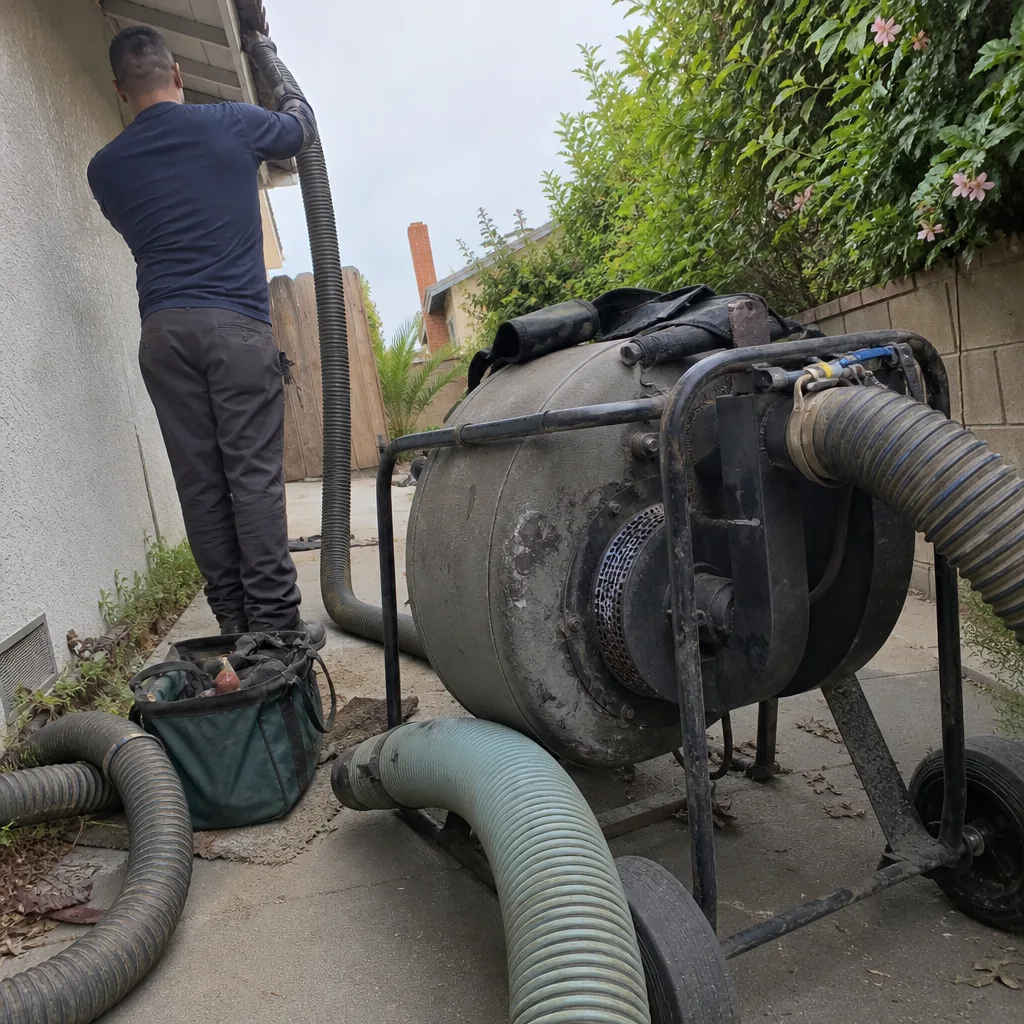 Before
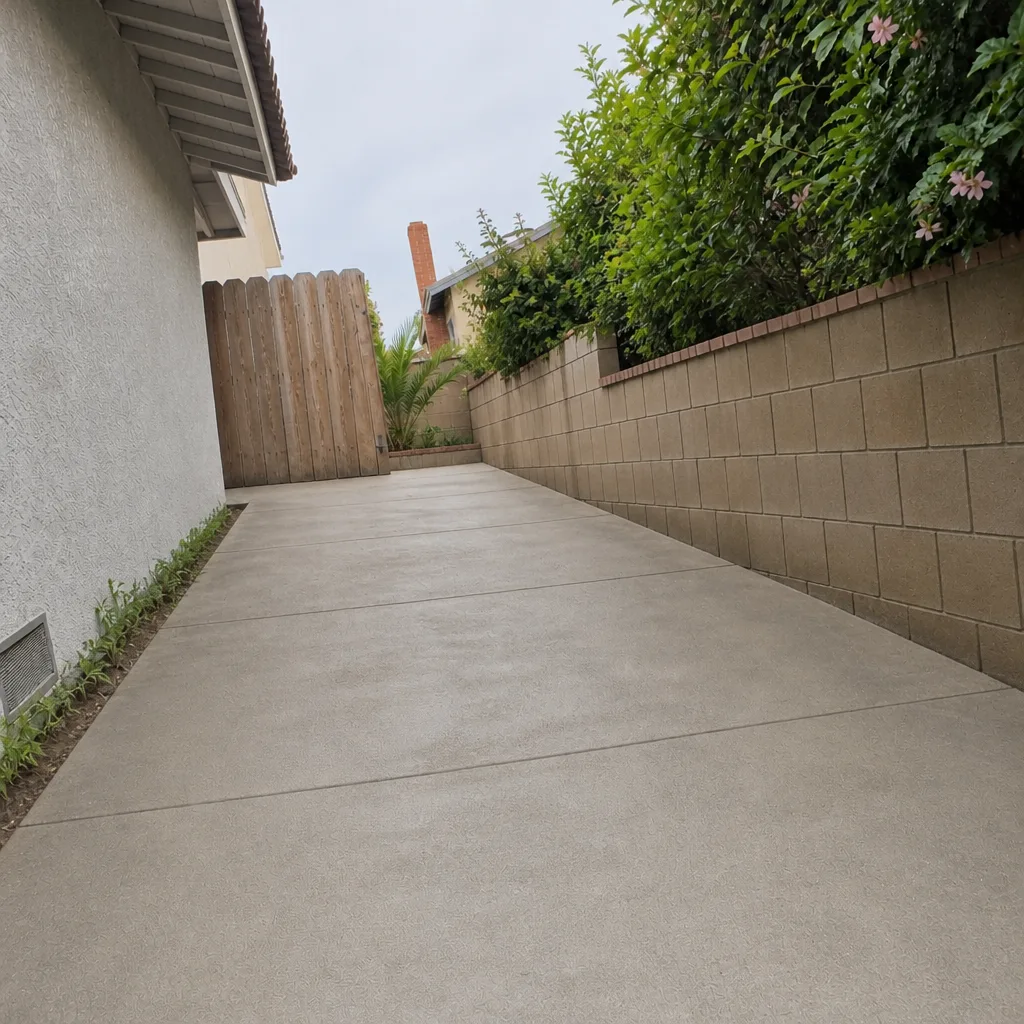 After
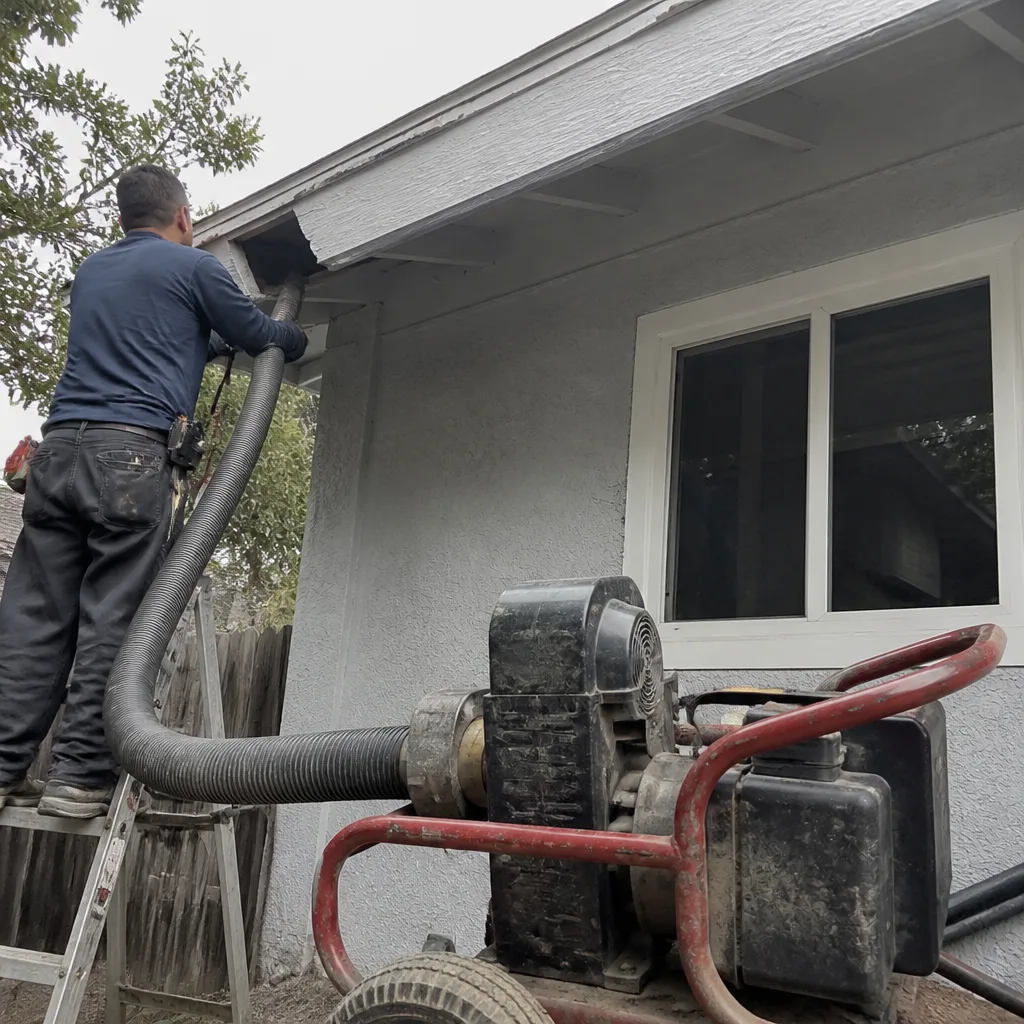 Before
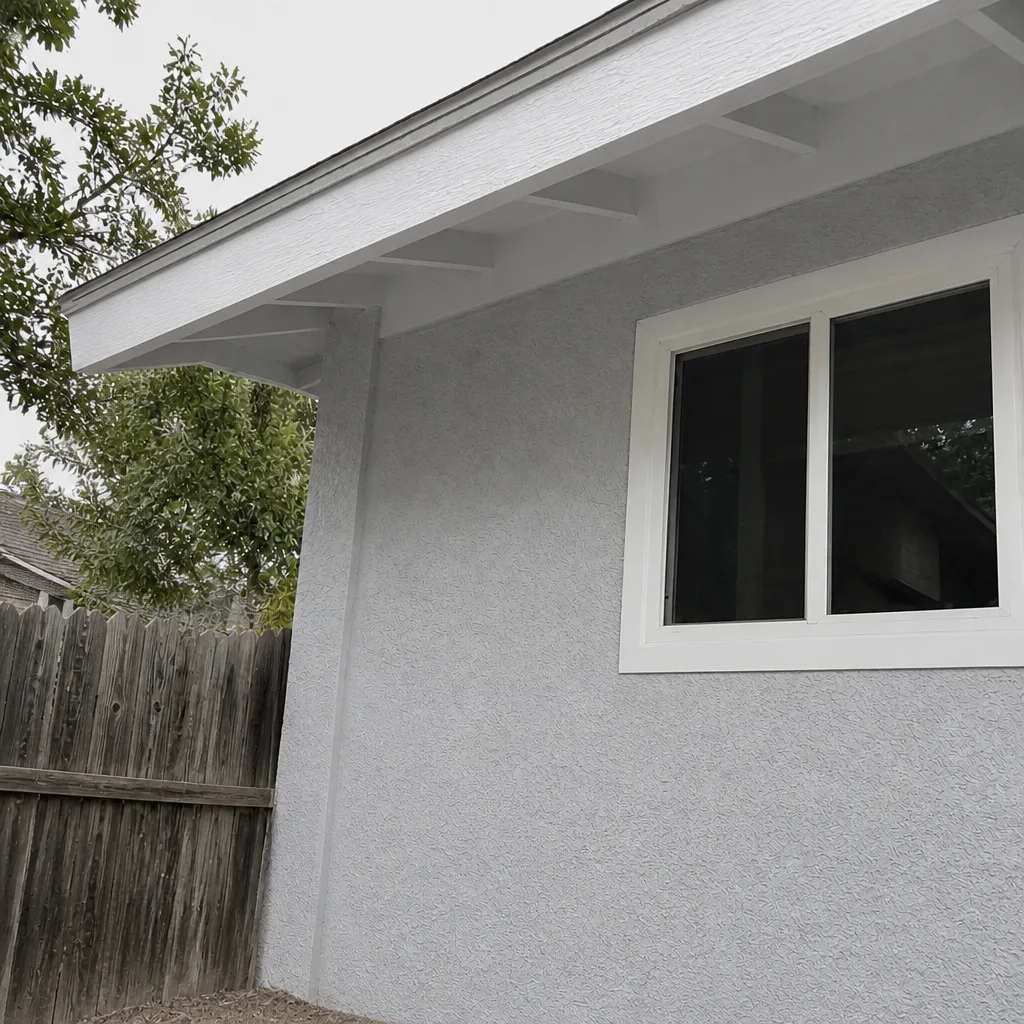 After
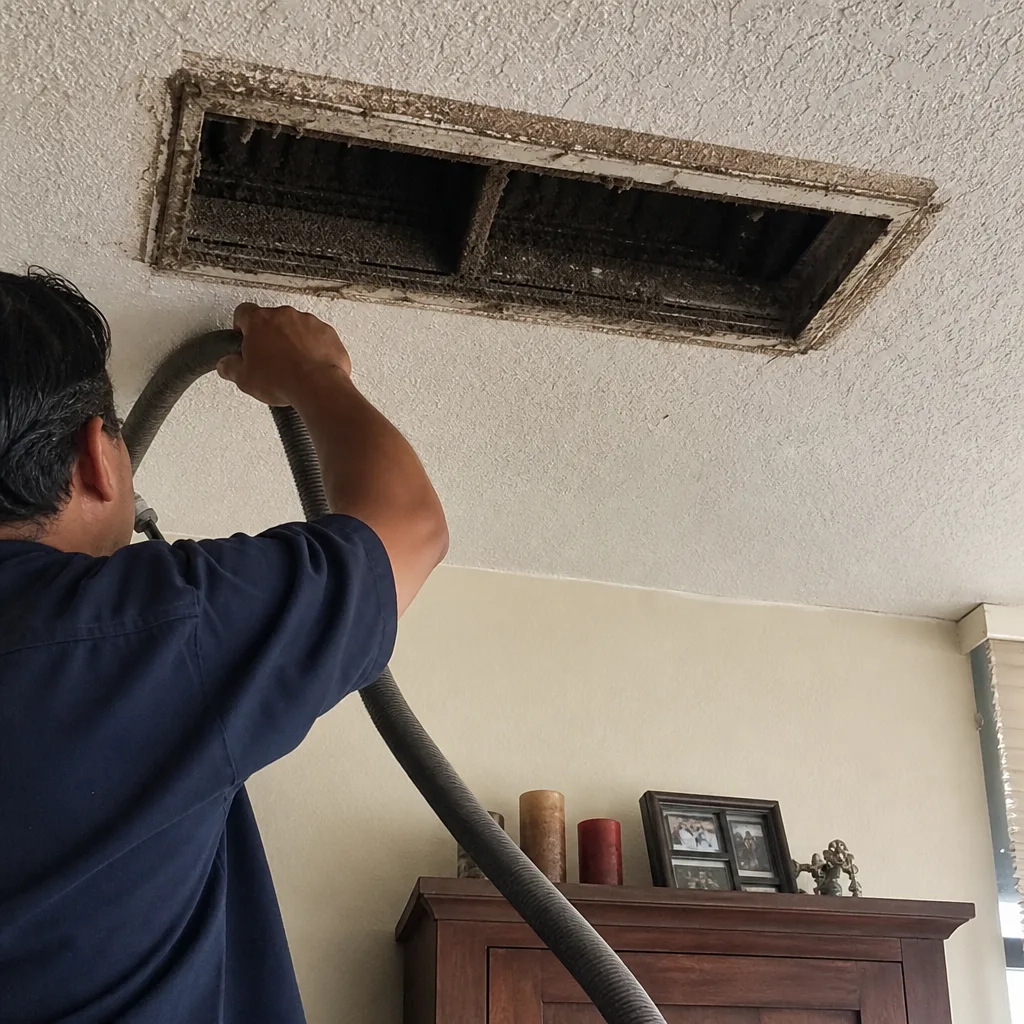 Before
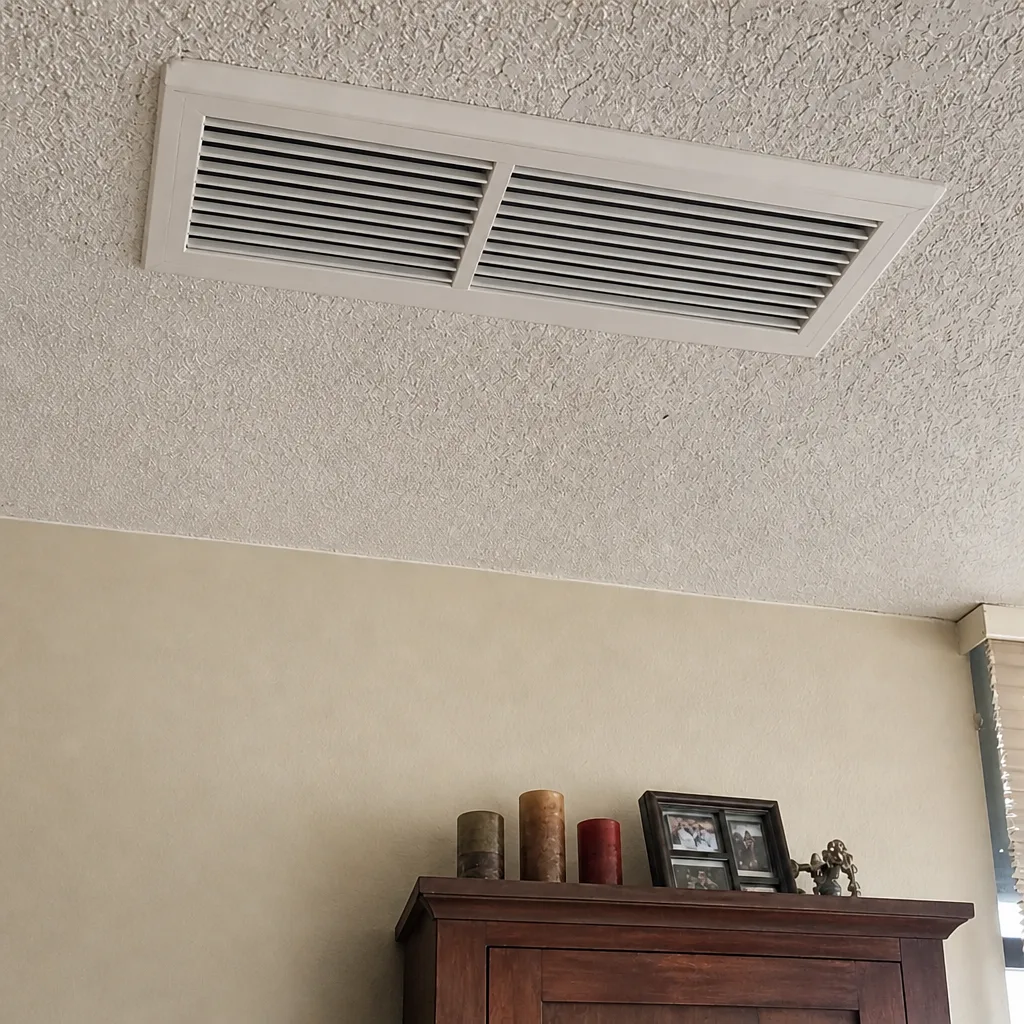 After
When to Call a Professional
Some situations make the decision for you. If you’ve just finished a remodel and the drywall dust is still settling, if you’ve moved into a home and don’t know its duct service history, if a household member has developed allergy or asthma symptoms that seem tied to the HVAC, or if your registers show visible dust streaks after every cycle, an inspection is worth scheduling. So is a visible drop in airflow to certain rooms, an odd smell when the system starts, or a dryer that’s begun taking noticeably longer to finish a load. Those are all indicators of a system that’s holding more debris than it should.
Our technicians have up to 12 years of experience with duct, HVAC, and dryer vent work, and we use purpose-built equipment for each. Air Duct Cleaning East Anaheim offers free estimates in East Anaheim – call (844) 834-1661. We answer 24/7. Fast dispatch from 7am to 7pm, Sunday through Friday.
Frequently Asked Questions
The honest answer is that pricing depends on the size of the system, the number of access points that need to be created, and whether duct repair or sealing is part of the scope. That’s why we set one flat price per system by a written estimate rather than a per-vent teaser figure. The estimate is free, and the written scope names exactly what’s included. Call (844) 834-1661 for an exact quote – estimates are free.
Low quotes typically skip the parts of the job that take real time: access creation, trunk line agitation, air handler cleaning, and before-and-after documentation. A discount visit with a portable vacuum and no access points cleans what the technician can reach with a hose, which is a small fraction of the system. If a quote is dramatically lower, ask which equipment will be used, how many access points will be created, and whether photos are included. The answers usually explain the difference.
You should see before-and-after photos of your own duct interior, a written scope naming the runs that were cleaned, and disclosure of any parts of the system that couldn’t be reached. If a contractor can’t produce those three things at the end of the visit, that’s the answer – the work wasn’t verifiable. We treat documentation as part of the job and hand it over before we ask for payment. Call (844) 834-1661 to schedule an inspection and see the process from the front end.
Household factors decide far more than a years-since rule. Pets, allergy or asthma in the household, young children, recent remodeling, and the local particulate load from Santa Ana wind seasons all push the schedule in different directions. East Anaheim homes tend to collect more return-side particulate in the dry months than comparable homes closer to the coast. An inspection with a camera is the practical way to know. Call (844) 834-1661 for a free estimate.
It removes an accumulated debris load that was circulating through the system, which is a genuine air quality improvement – but we won’t claim it cures anything. The bigger gains usually come from pairing the cleaning with a higher-efficiency filtration setup, which is why we work with Aprilaire and Honeywell systems for whole-home filtration and humidity control. If your return filter is currently a basic 1-inch model, that’s worth discussing during the estimate. Call (844) 834-1661 to talk through the options.
Schedule both in the same visit. The equipment and the technician are already on site, and the dryer vent is a fire-safety service that duct-only contractors routinely skip. Long vent runs with multiple bends in interior laundry closets and garages accumulate lint fastest, and East Anaheim homes with that configuration benefit from a cleaning every bit as much as the HVAC ductwork. Call (844) 834-1661 and we’ll scope both services in the same visit.
The Bottom Line
Real duct cleaning is a defined sequence: inspection, access creation, negative pressure setup, register-by-register agitation, air handler cleaning, sealing, and final verification with documentation. The equipment matters, because purpose-built systems from Rotobrush, Nikro, and Abatement Technologies do work that portable units can’t, and the documentation matters just as much because it’s how you verify you got the work you paid for. East Anaheim homes on slab foundations, drawing inland Orange County dust through older flex and rigid ductwork, benefit most from a cleaning that includes drying vent service and a fresh look at filtration. If you want the process mapped out for your house, call (844) 834-1661 for a free estimate and see what’s in your ducts before anything starts.
Written by the team at Air Duct Cleaning East Anaheim.